

Description
Plumulites bengtsoni
Early Ordovician (Arenigian)
Fezouata Formation
Mecissi-Zagora Region, Draa Valley
Morocco
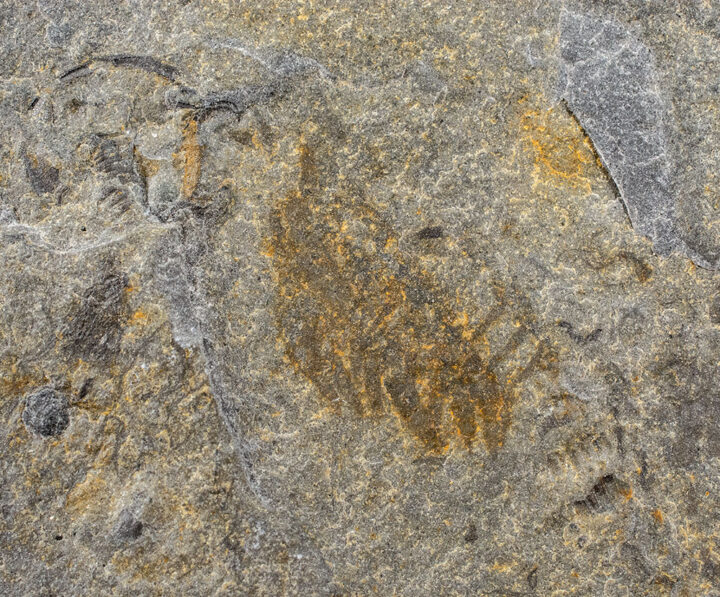
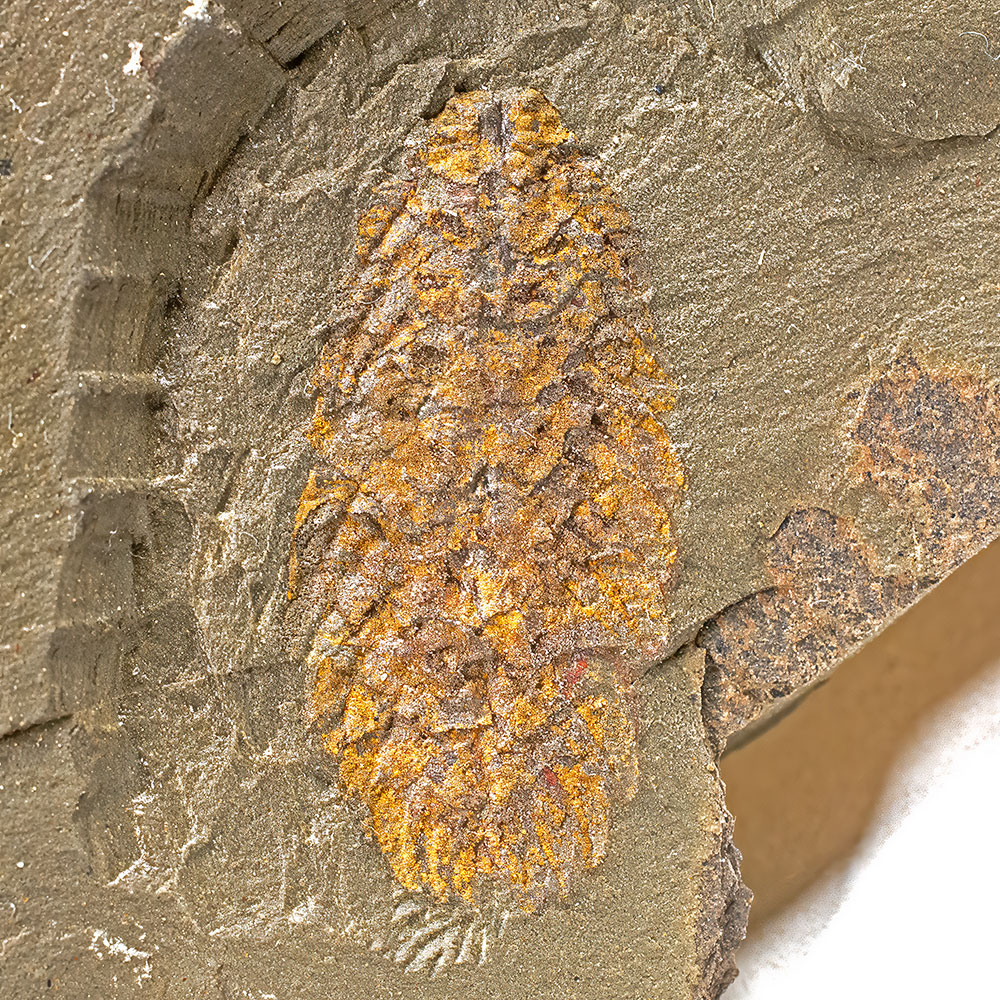
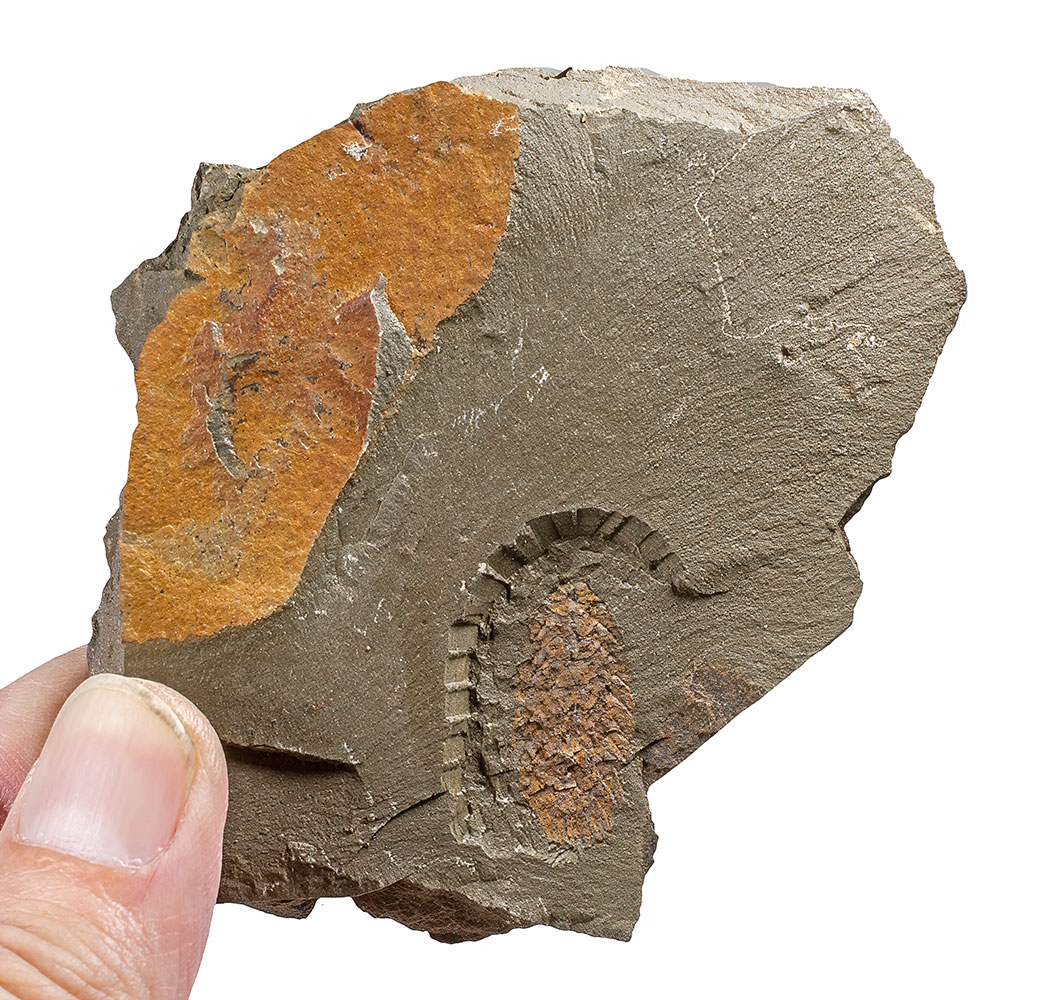
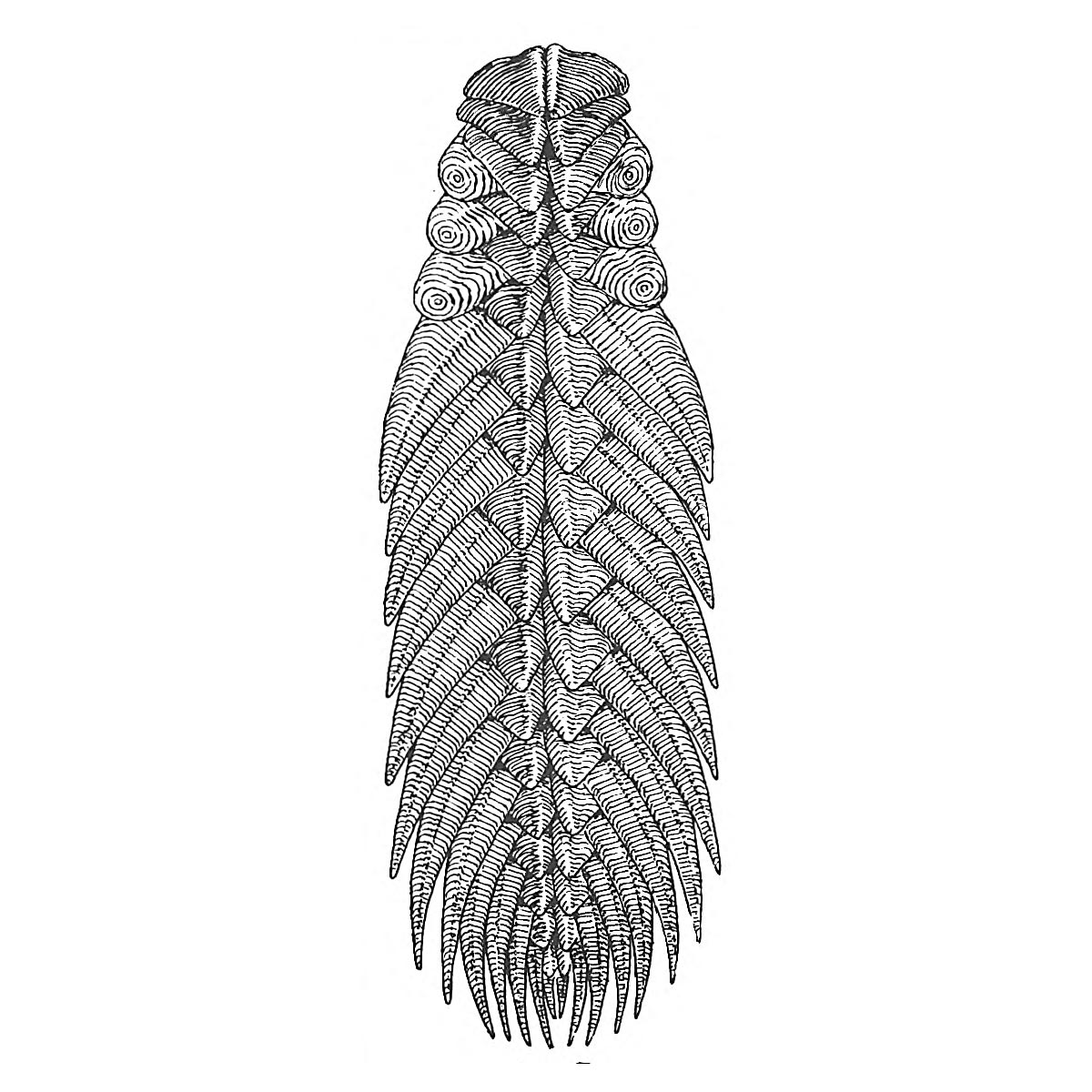
An exceptional fully articulated Plumulites bengtsoni, an extinct armored annelid related to modern scaleworms. Its body was protected by rows of overlapping mineralized plates, with segmented appendages and bristles along the sides. This species is especially important scientifically because exceptional specimens preserve soft body anatomy and helped establish the annelid affinities of these unusual Paleozoic animals.
25mm fully articulated on 105mm slab
Plumulites is an extinct genus of armored marine annelid worms belonging to the remarkable Paleozoic group called the machaeridians. They lived from roughly the Early Ordovician into the Devonian, approximately 480–370 million years ago.
For a long time, paleontologists had no idea what these fossils actually were. Their hard plates were so unusual that they had variously been interpreted as arthropods, echinoderms, mollusks, barnacles, and other groups. We now know that machaeridians were armored annelid worms, and Plumulites is one of the best examples.
The body was divided into numerous segments, with rows of hard, calcitic plates called sclerites covering the dorsal and lateral surfaces. In Plumulites, the armor consisted of several longitudinal rows of plates that overlapped toward the rear. Beneath the armor was a soft, segmented annelid body.
One of the most important species is Plumulites bengtsoni from the Early Ordovician Fezouata Formation of Morocco. This species was especially important because some of its fossils preserve the soft anatomy beneath the armor. The parapodia and chaetae are unmistakably annelid features, finally resolving the long-standing mystery of the machaeridians. Later work identified a jaw apparatus at the front of P. bengtsoni. Its morphology supports an affinity with phyllodocid annelids, the broader group containing modern scaleworms and their relatives.
The great machaeridian mystery
The story of Plumulites is particularly interesting because of how long its identity remained unknown. For more than a century, isolated plates were commonly found without the rest of the animal. A single plate looks rather like a tiny shell or scale, so paleontologists had difficulty determining what produced them. The crucial breakthrough came when specimens were found with the plates still attached to a soft, segmented worm body. The presence of parapodia and chaetae demonstrated that machaeridians were annelids.
This is a classic example of why exceptionally preserved fossils are so important: the isolated plates alone gave a misleading picture.