

Description
Nut
Eocene
Clamo Formation
Clamo’s Ferry
Oregon, USA.
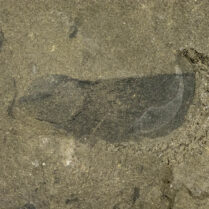
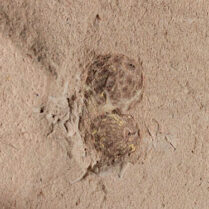
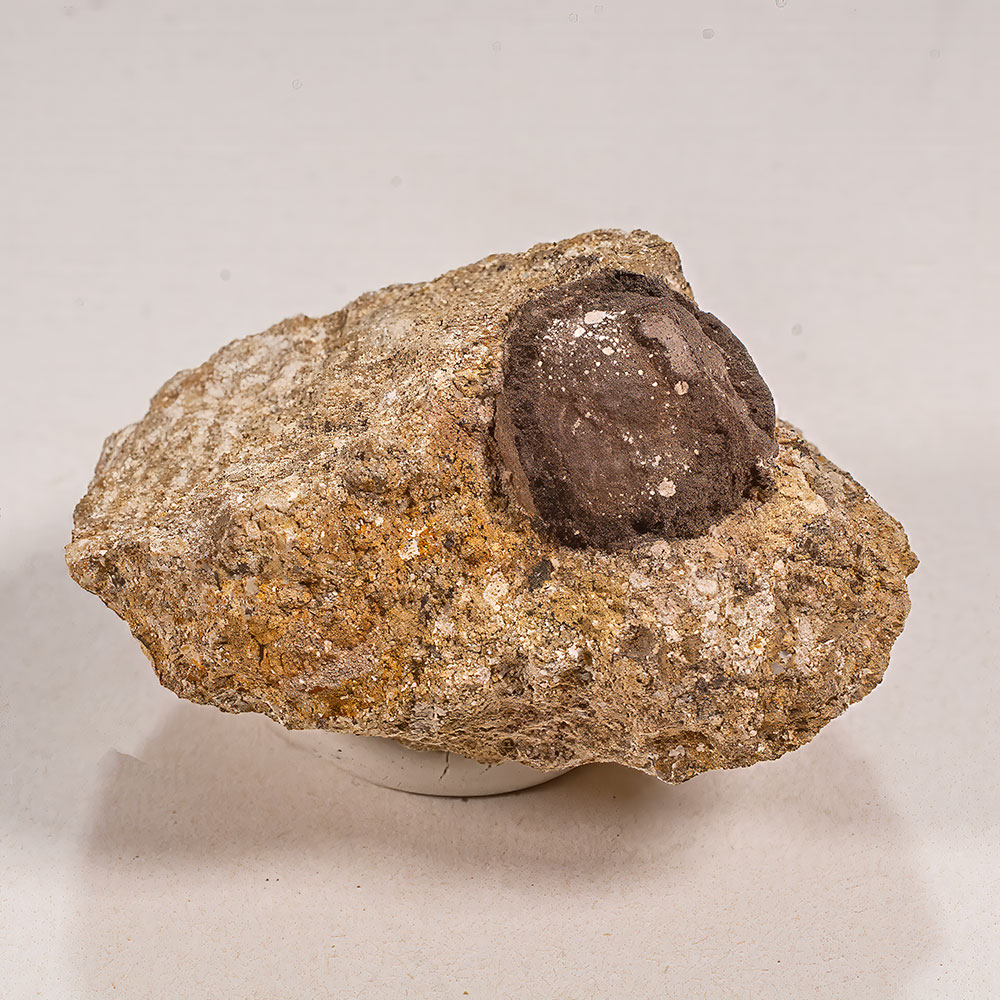
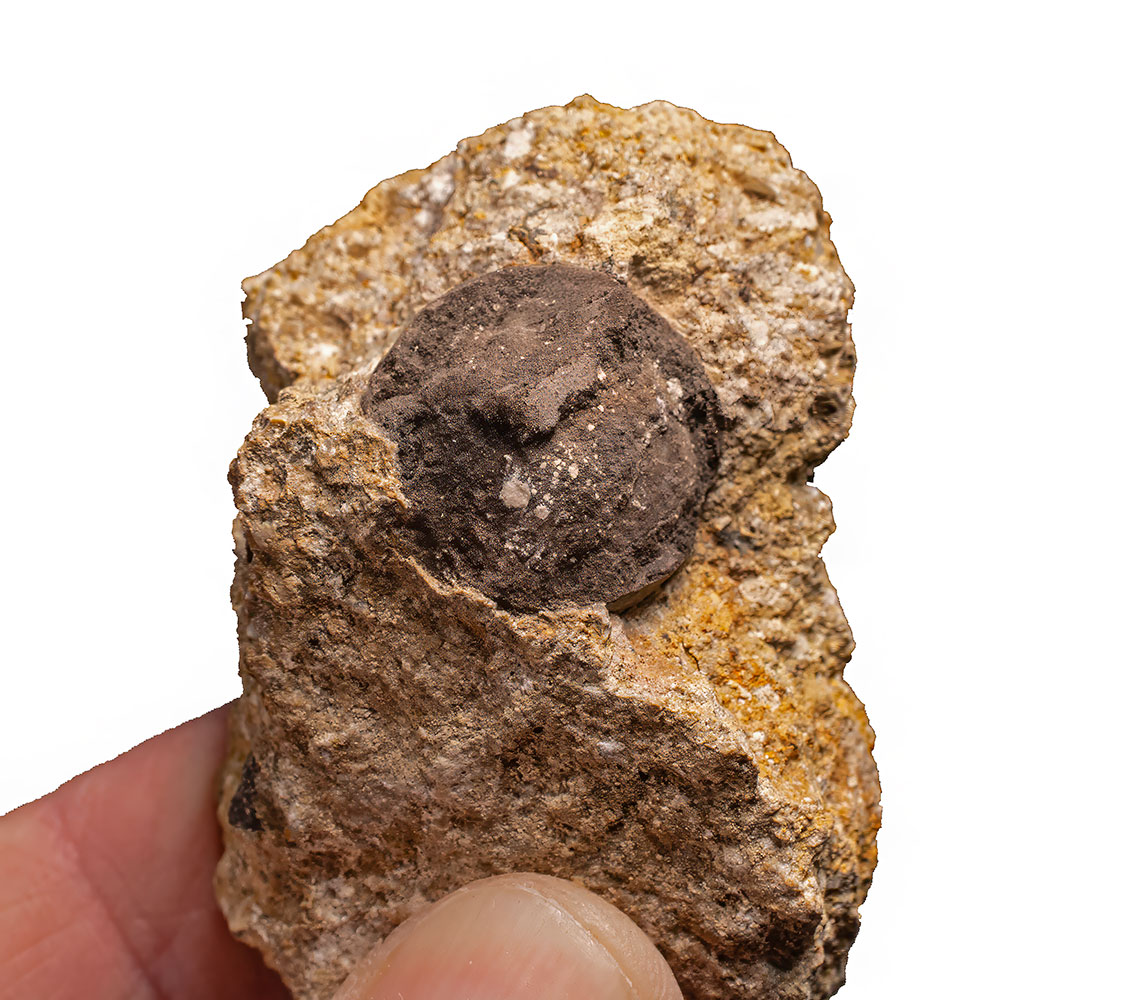
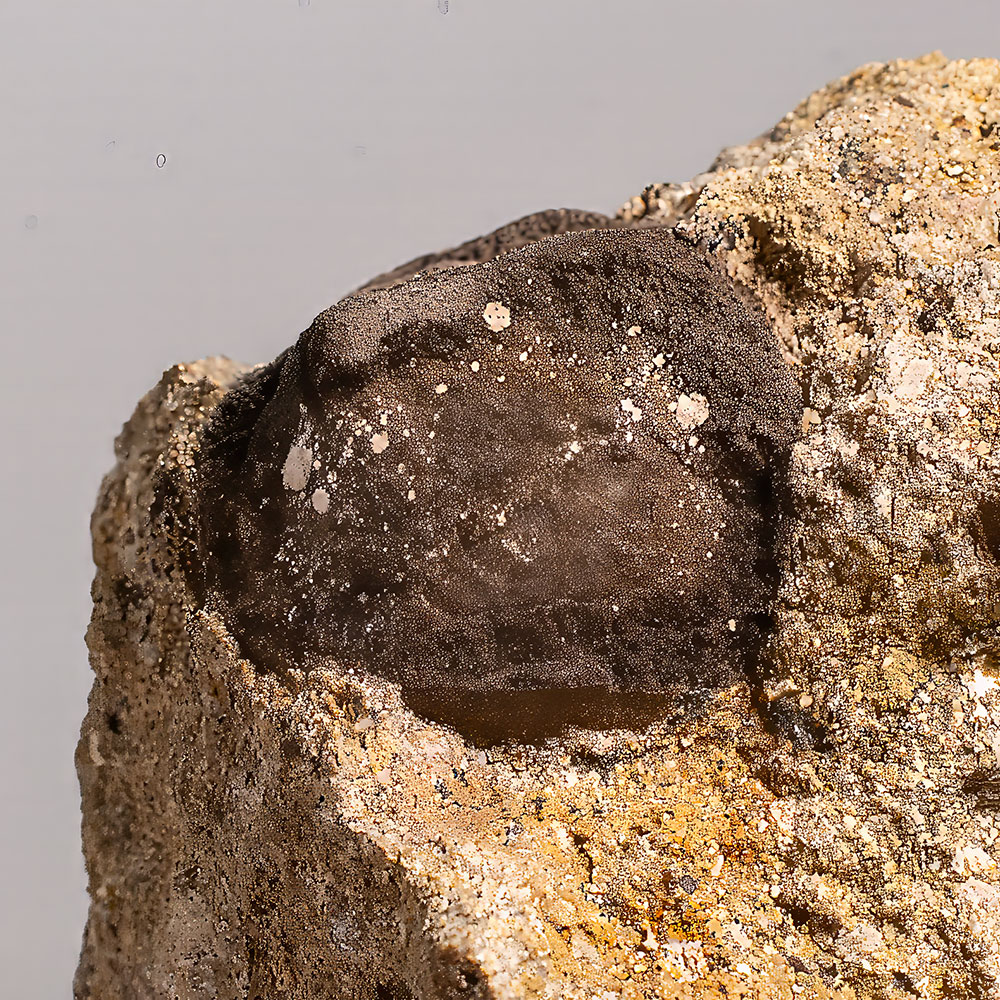
19mm nut on 58mm matrix from the famous Clarno Nut Beds locality. The seeds and nuts here are preserved as agate in a volcanic breccia. From the collection of Ruth Kirkby, a paleobotanist who made extensive collections all over the western United States between the mid 1940’s and the 1960’s. The site is now part of a national park and can no longer be collected.
The Clarno Nut Beds are one of the world’s most remarkable fossil plant localities. They occur in the Clarno Formation of central Oregon, within what is now John Day Fossil Beds National Monument. The main Nut Beds flora is about 44 million years old, placing it in the middle Eocene. What makes the site exceptional is that it preserves an extraordinarily diverse Eocene forest, including hundreds of kinds of fruits, seeds, nuts, leaves, and petrified wood.
Today’s central Oregon is relatively dry, but around 44 million years ago the region was almost unrecognizable. The Nut Beds record a warm, very wet, semitropical forest. Estimates indicate roughly 3 meters (10 feet) of annual rainfall, and the vegetation included plants related to:
🌴 Palms
🍌 Bananas
🌳 Magnolias
🌰 Walnuts
🌳 Oaks
🌰 Chestnuts
Avocados and other laurel-like plants
Ginkgoes
Yews
Numerous vines, shrubs, and other flowering plants
The forest grew in a landscape dominated by volcanic activity. The Clarno Formation contains lava flows, volcanic ash, tuffs, lahars, and volcaniclastic sediments. Periodically, volcanic debris and mud moved across the landscape, burying portions of the forest. The National Park Service suggests that silica cementation may have been aided by minerals associated with hot springs. This rapid burial was extremely important. It prevented the normal decomposition and dispersal of much of the plant material and many of these plants have no exact modern equivalent.
That’s important: when paleontologists say the forest contained plants related to modern walnuts, magnolias, bananas, palms, etc., they don’t mean that identical modern species were growing there, instead, these are ancient species belonging to lineages that survive today.
See: Manchester, S. R. (1994). Fruits and seeds of the Middle Eocene nut beds flora, Clarno Formation, Oregon. Paleoutographica Americana, 58, 1-205.