

Description
Furca mauretanica
Ordovician
Upper Fezouata Formation
Zagora, Draa Valley Morocco.
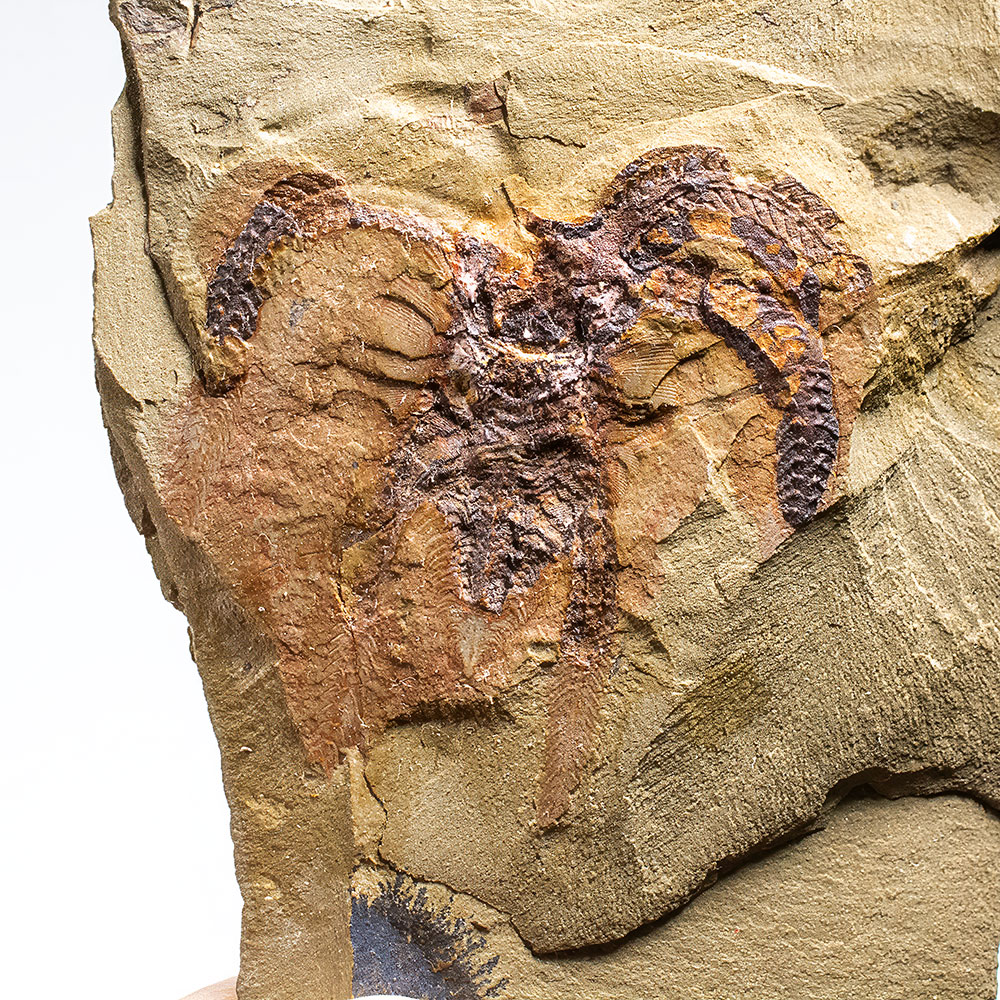
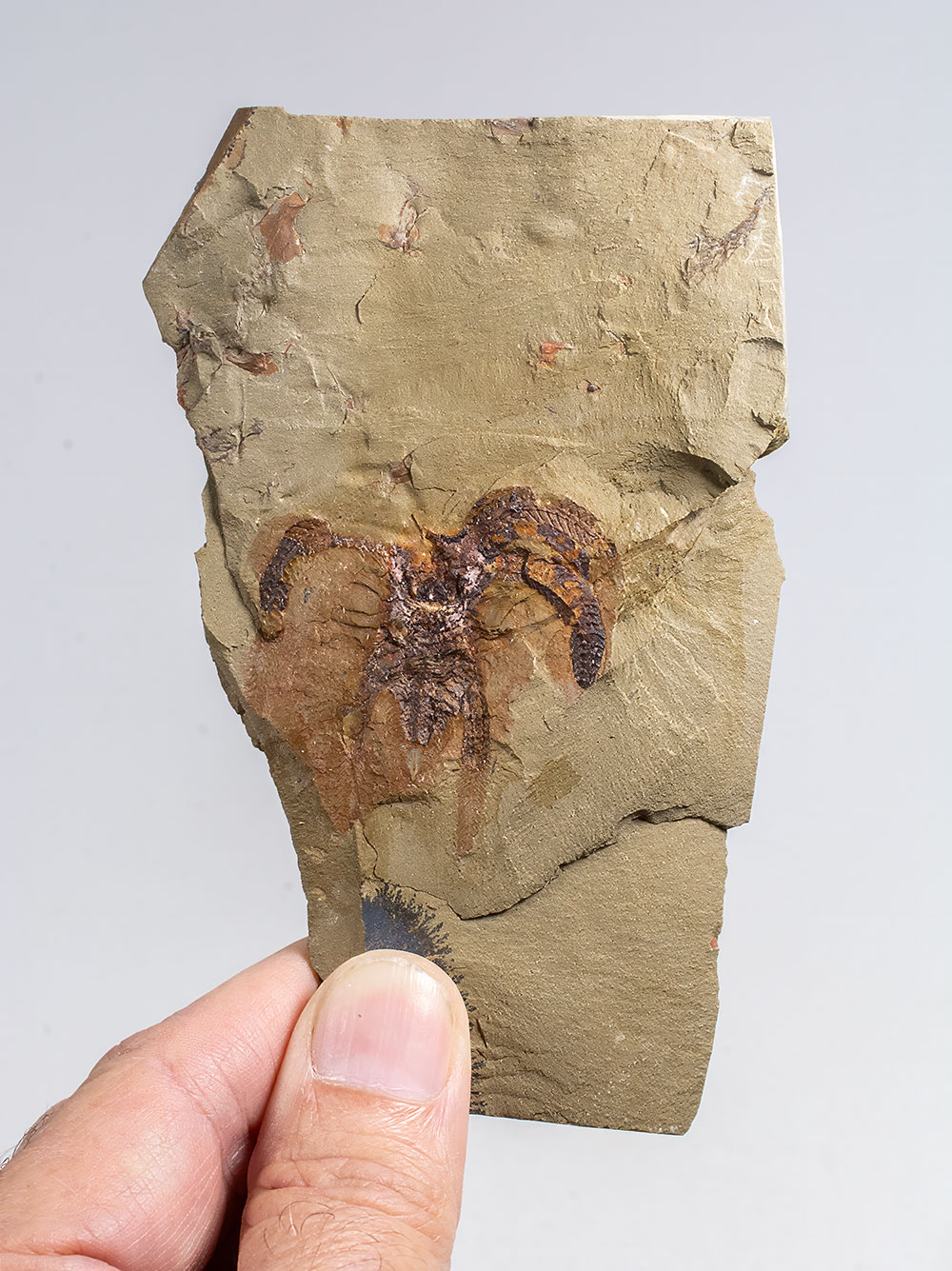
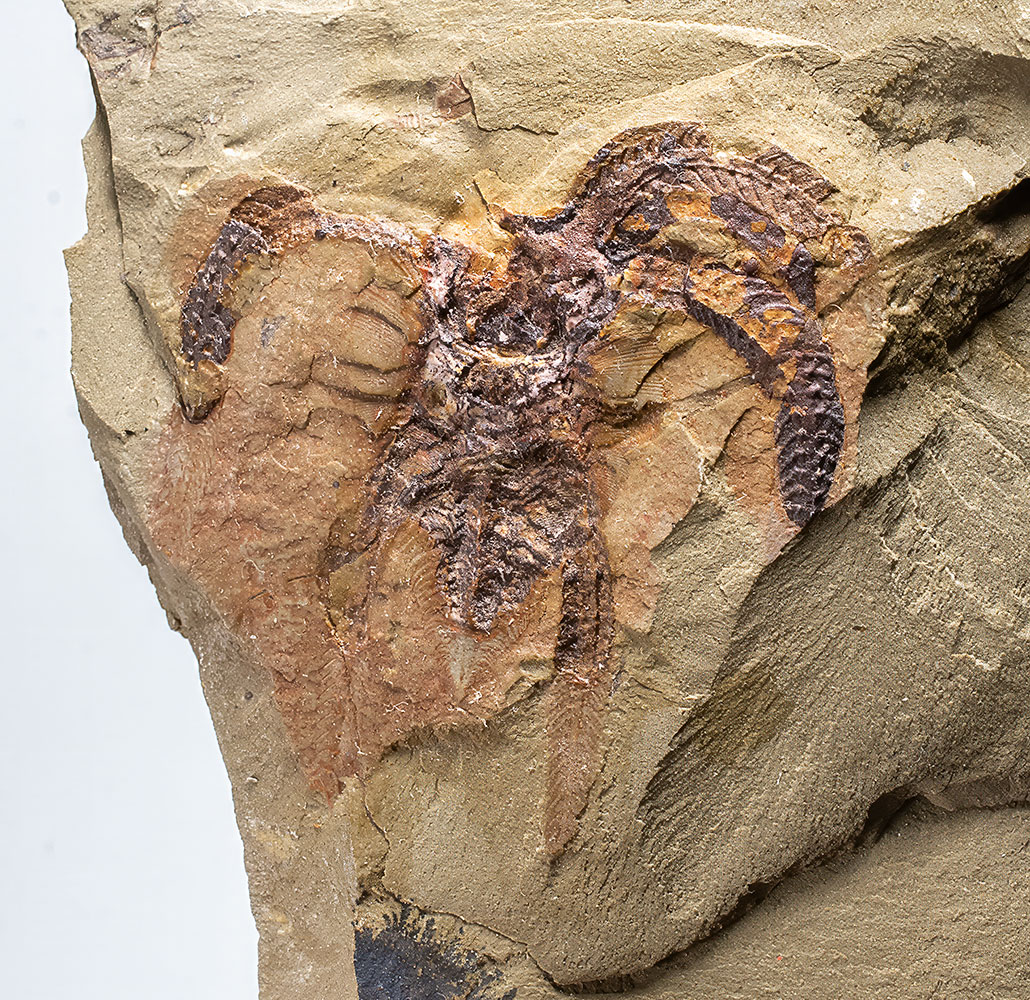
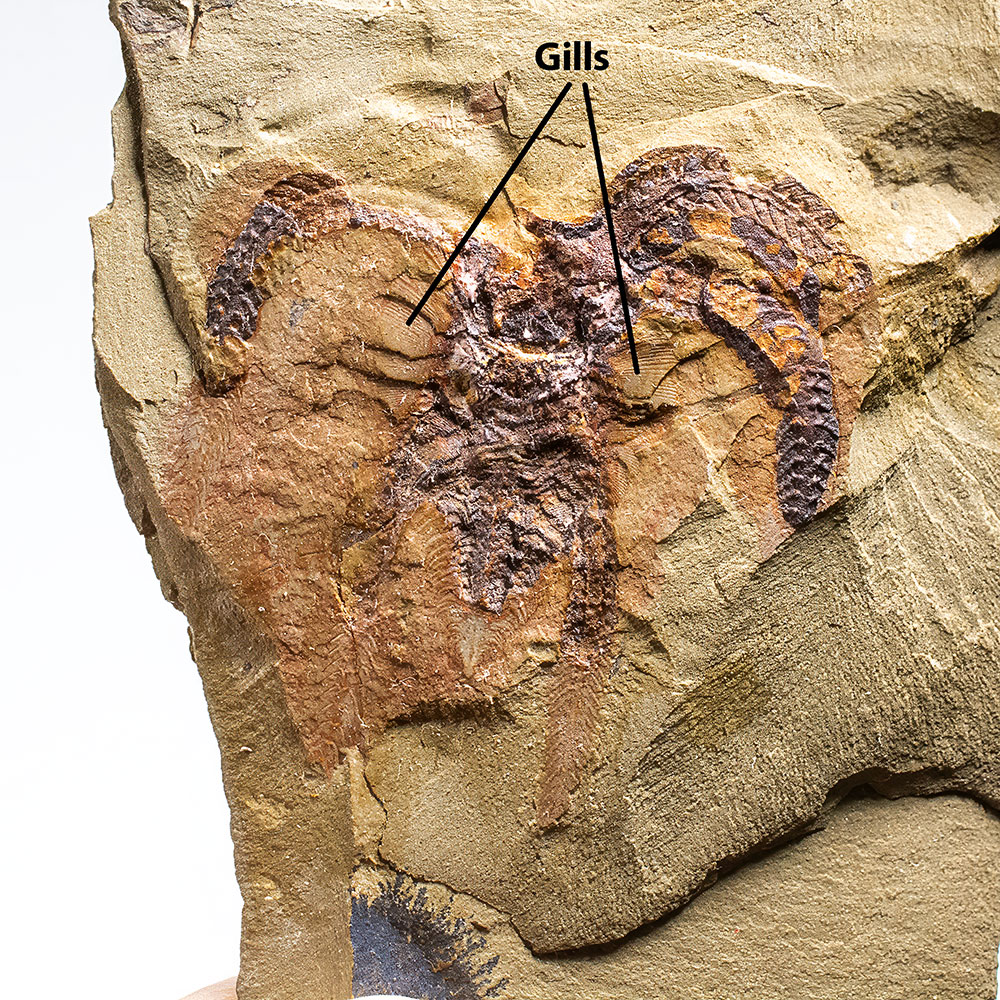
Unusually large 44mm arthropod on 118mm slab. A very clean and colorful example that even shows the gills. One of our best.
The Moroccan “Furca” is a different and much better-known animal in terms of preservation than Furca bohemica. It comes from the exceptionally fossil-rich Fezouata Shale of Morocco and is an Early Ordovician marrellomorph arthropod.
The Moroccan animal was a marrellomorph, an extinct group of arthropods famous for elaborate head shields. It was related to animals such as Marrella from the Cambrian Burgess Shale and Mimetaster from the Devonian of Germany. It was provisionally called “Furca mauretanica”, but there is an important taxonomic caveat: that name was never formally published as a valid species name. Modern papers generally call it the “Fezouata marrellid” or Furca sp.
In fact, researchers now think its differences from Furca bohemica may be large enough that it probably deserves its own genus once formally described.
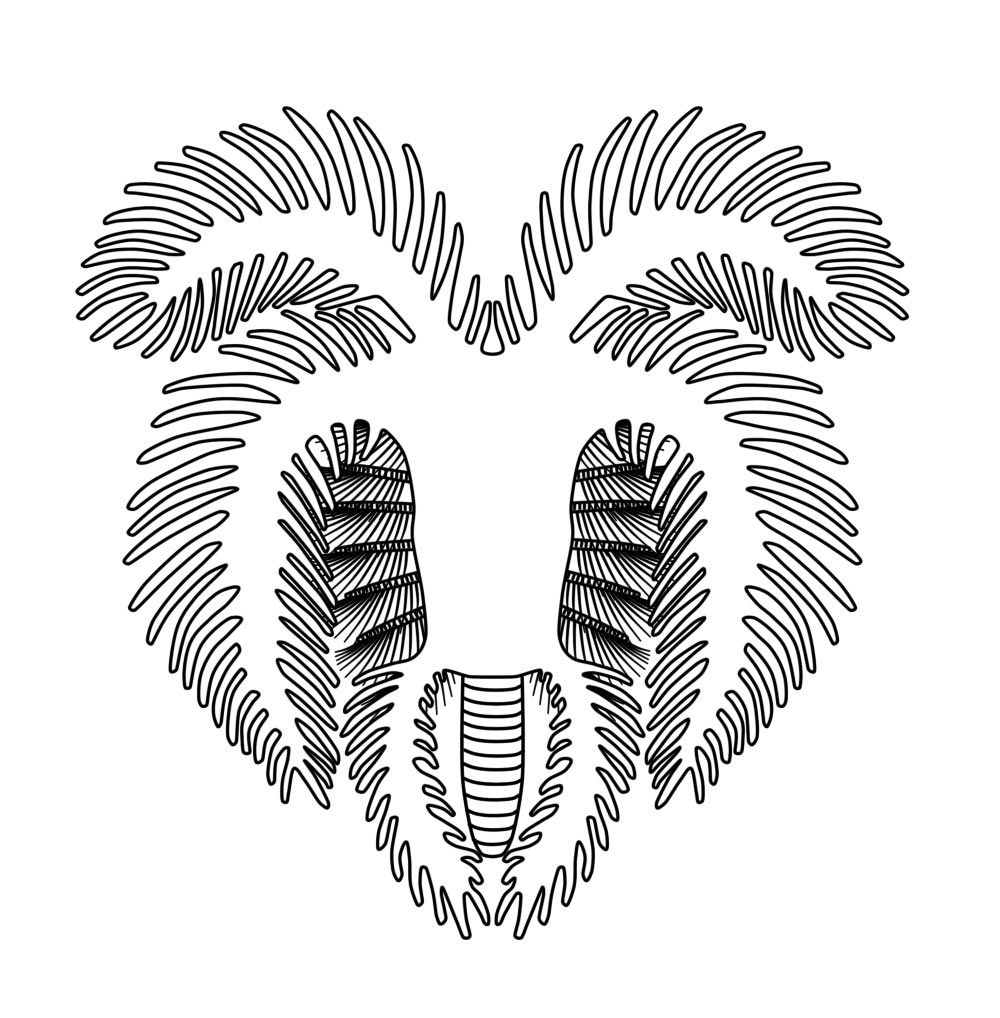
It had a spectacular cephalic shield with three pairs of long lateral spines, along with numerous smaller spines along the shield margins. This gives it the characteristic “forked” appearance that inspired the name Furca, meaning “fork” in Latin, but unlike the poorly known Czech Furca bohemica, the Moroccan specimens preserve much of the actual body. Some specimens are nearly complete, making the Moroccan animal one of the best-preserved marrellomorphs known.
See: Furca – Wikipedia