

Description
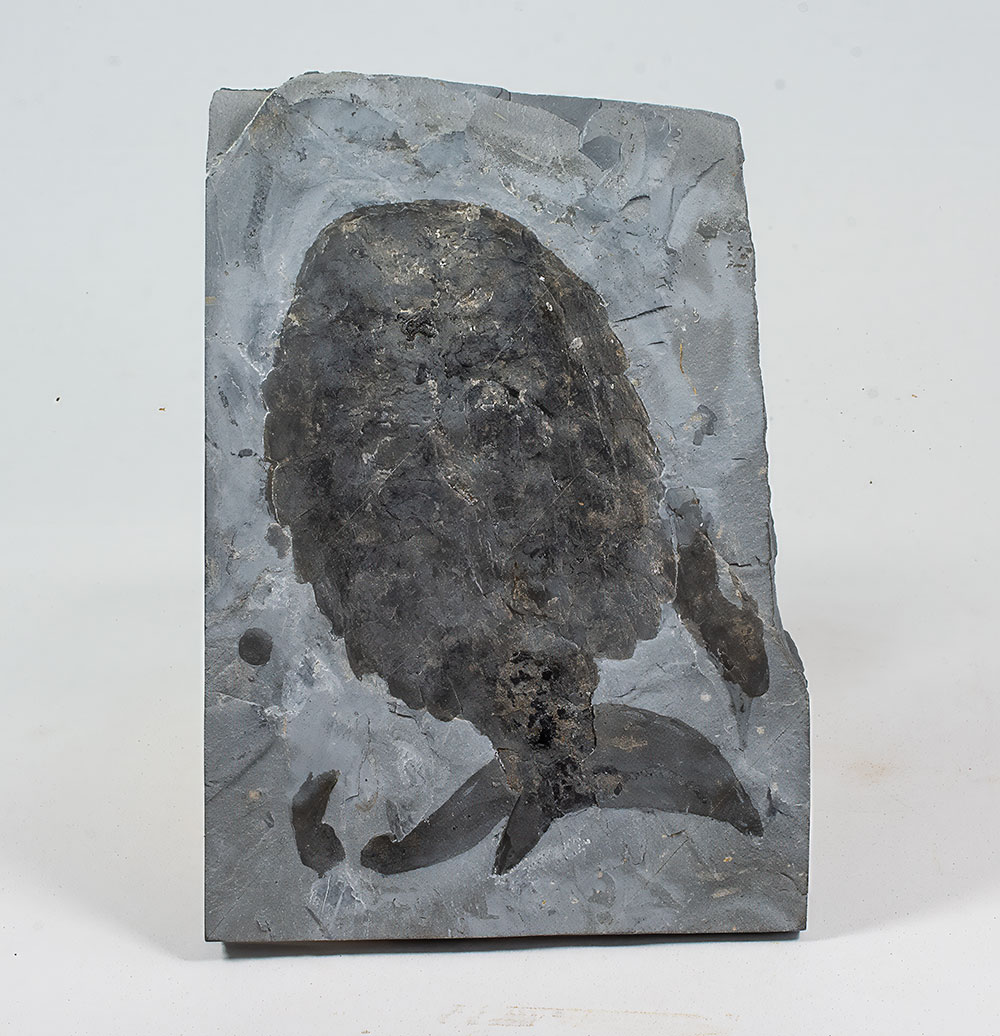
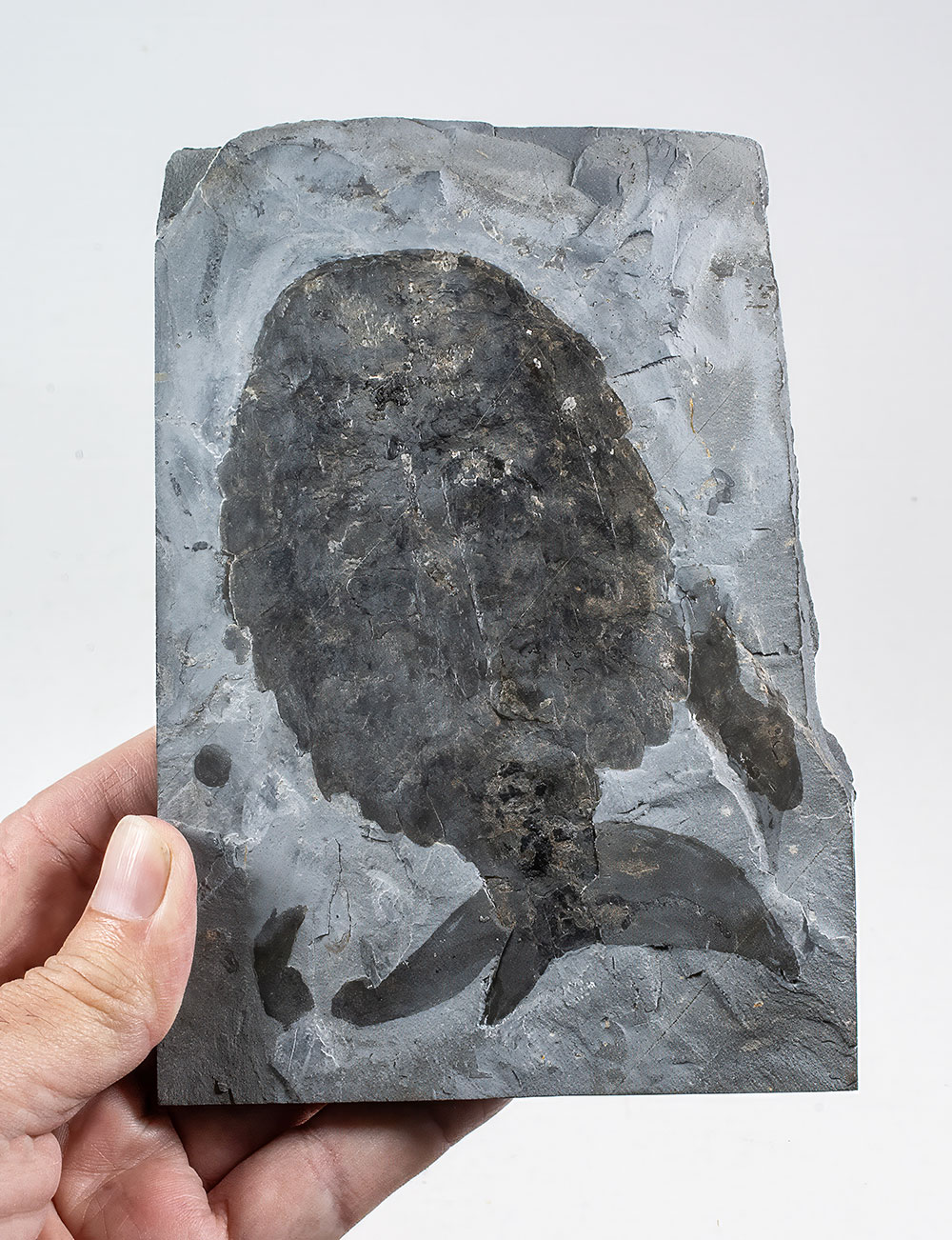
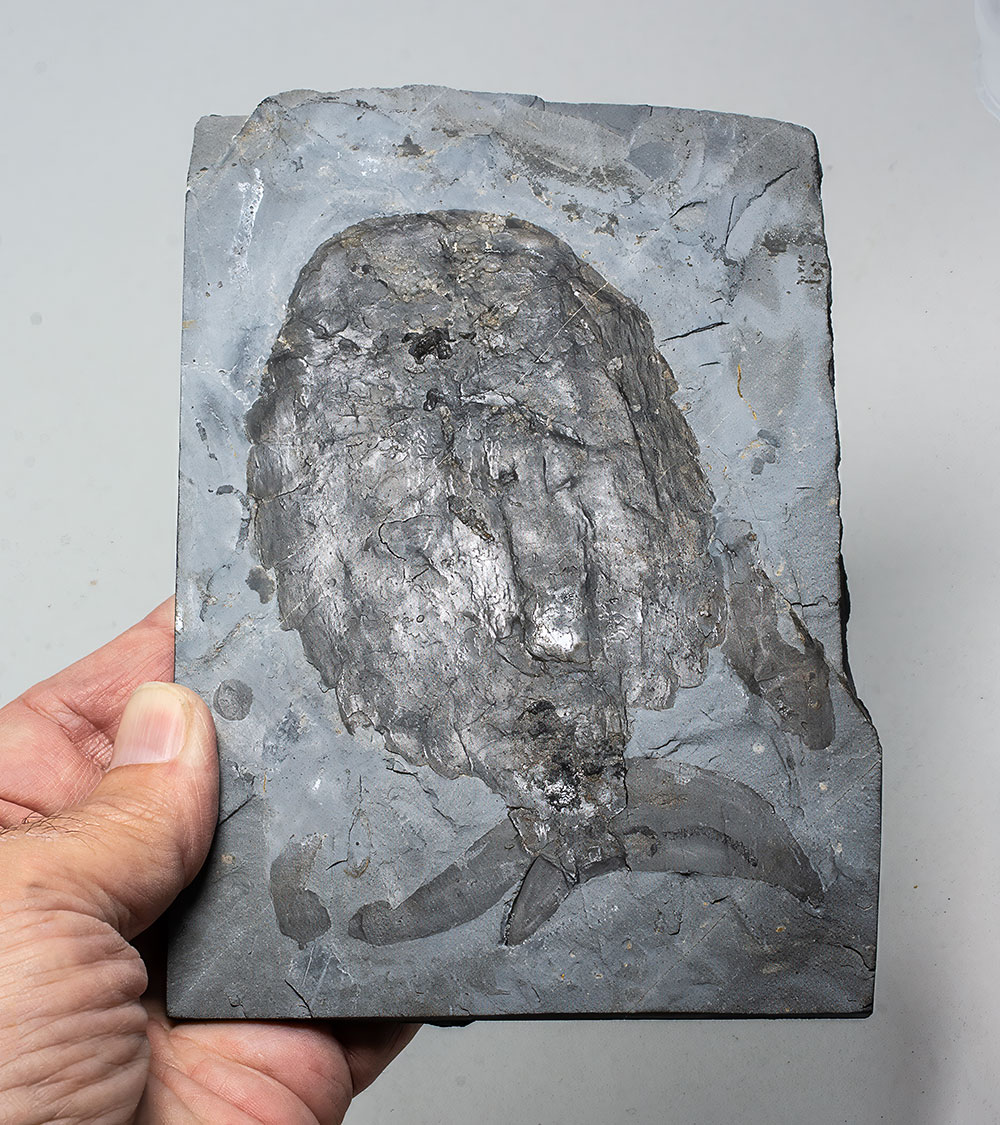
Sidneyia inexpectans, Ottoia prolifica and parts
Middle Cambrian
Burgess Shale, Stephens Formation
Field, British Columbia, Canada
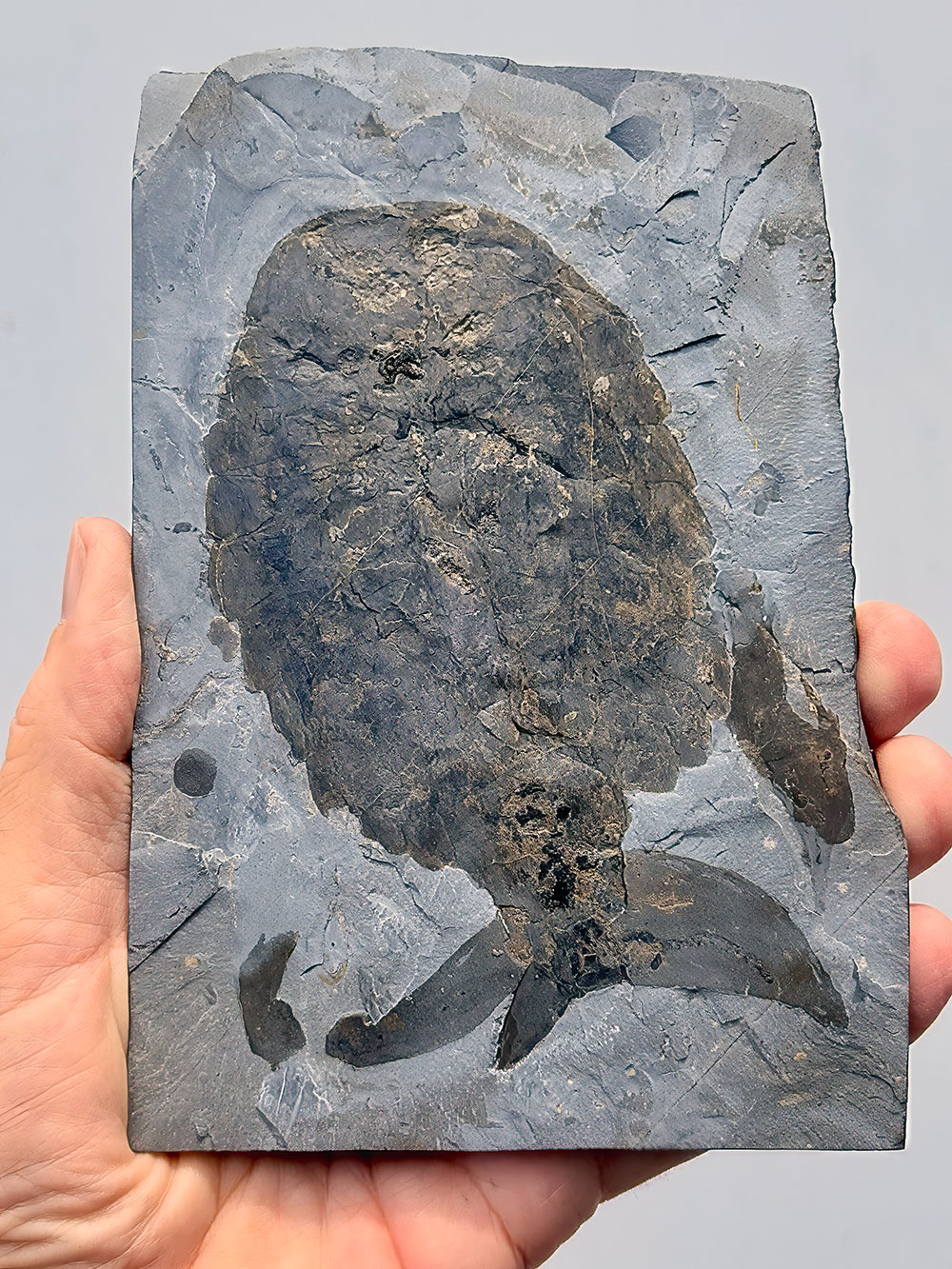
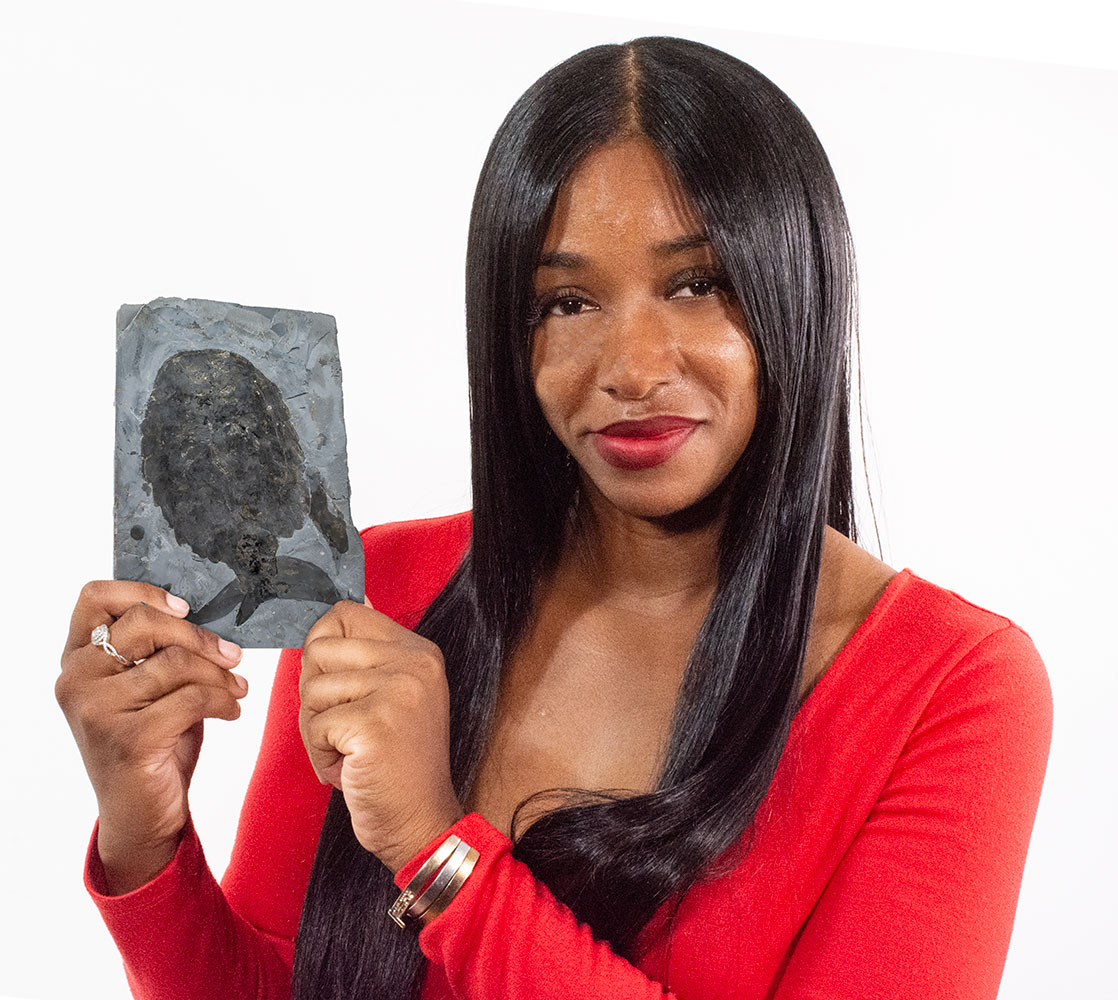
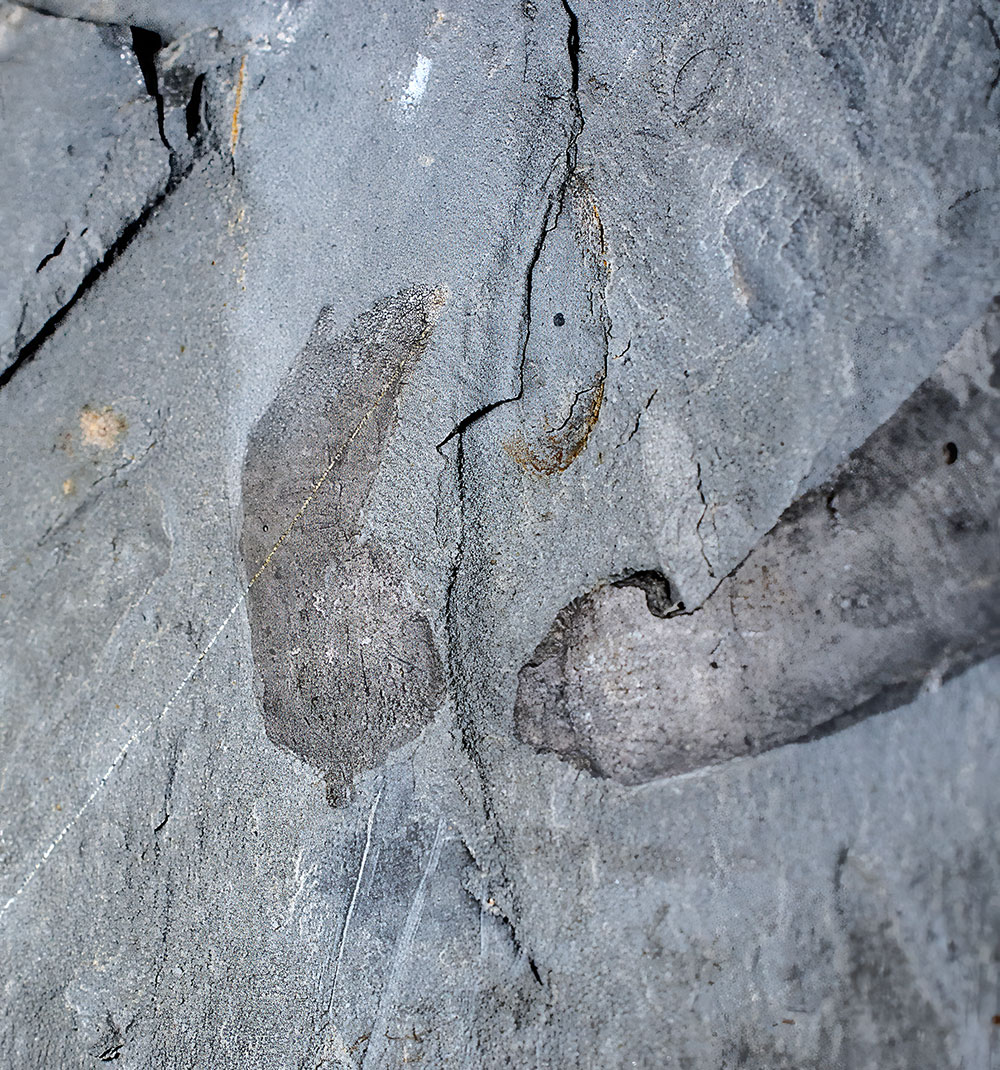
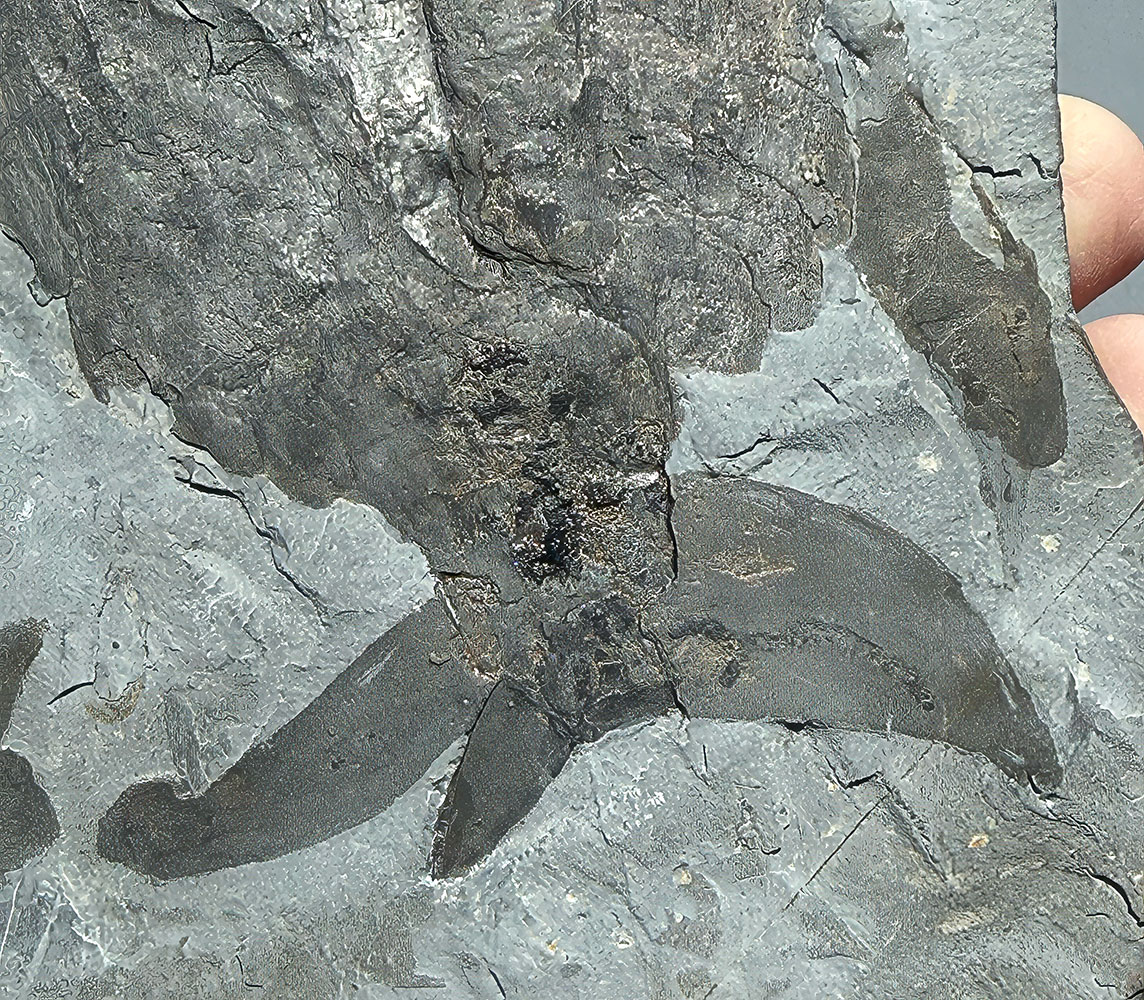
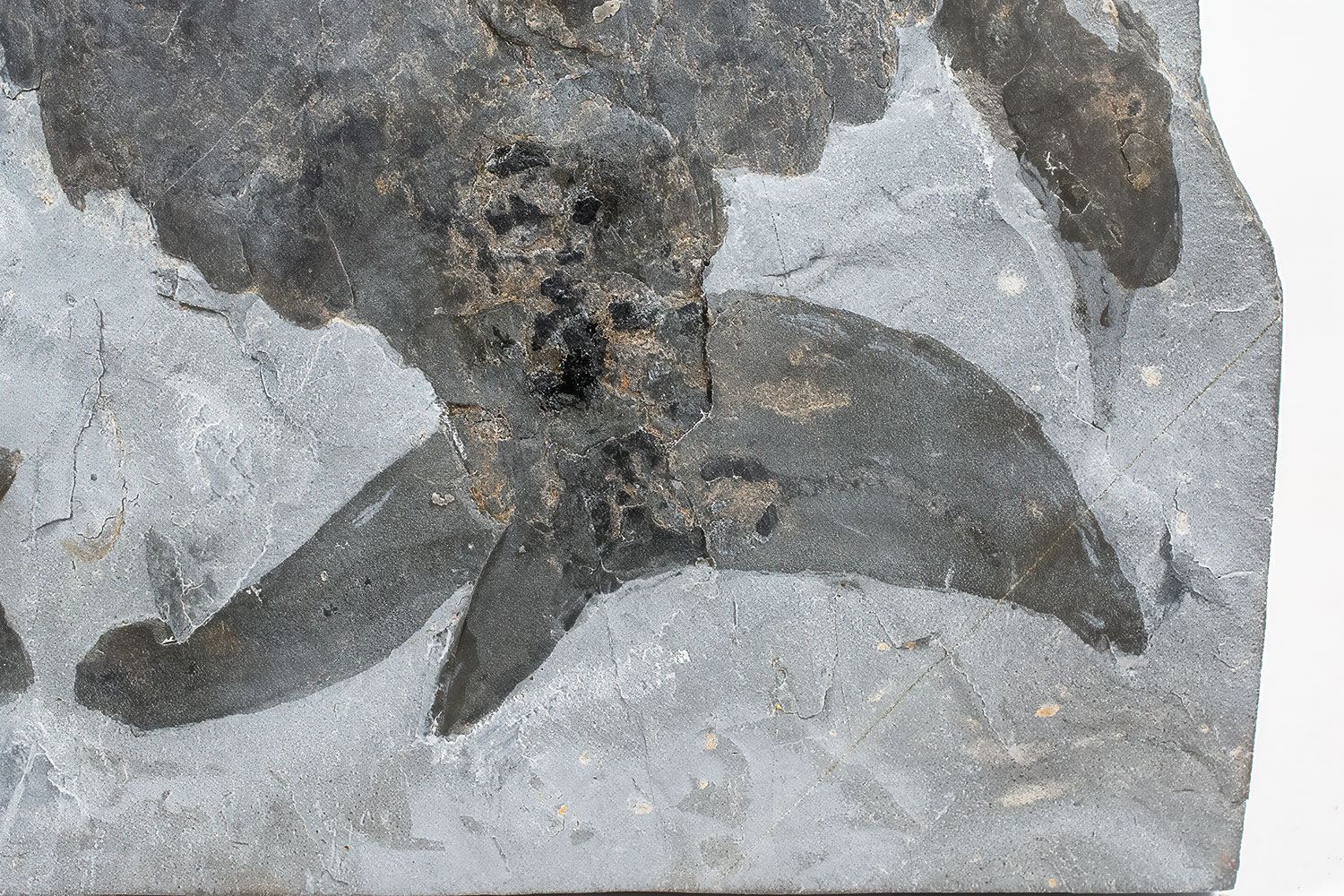
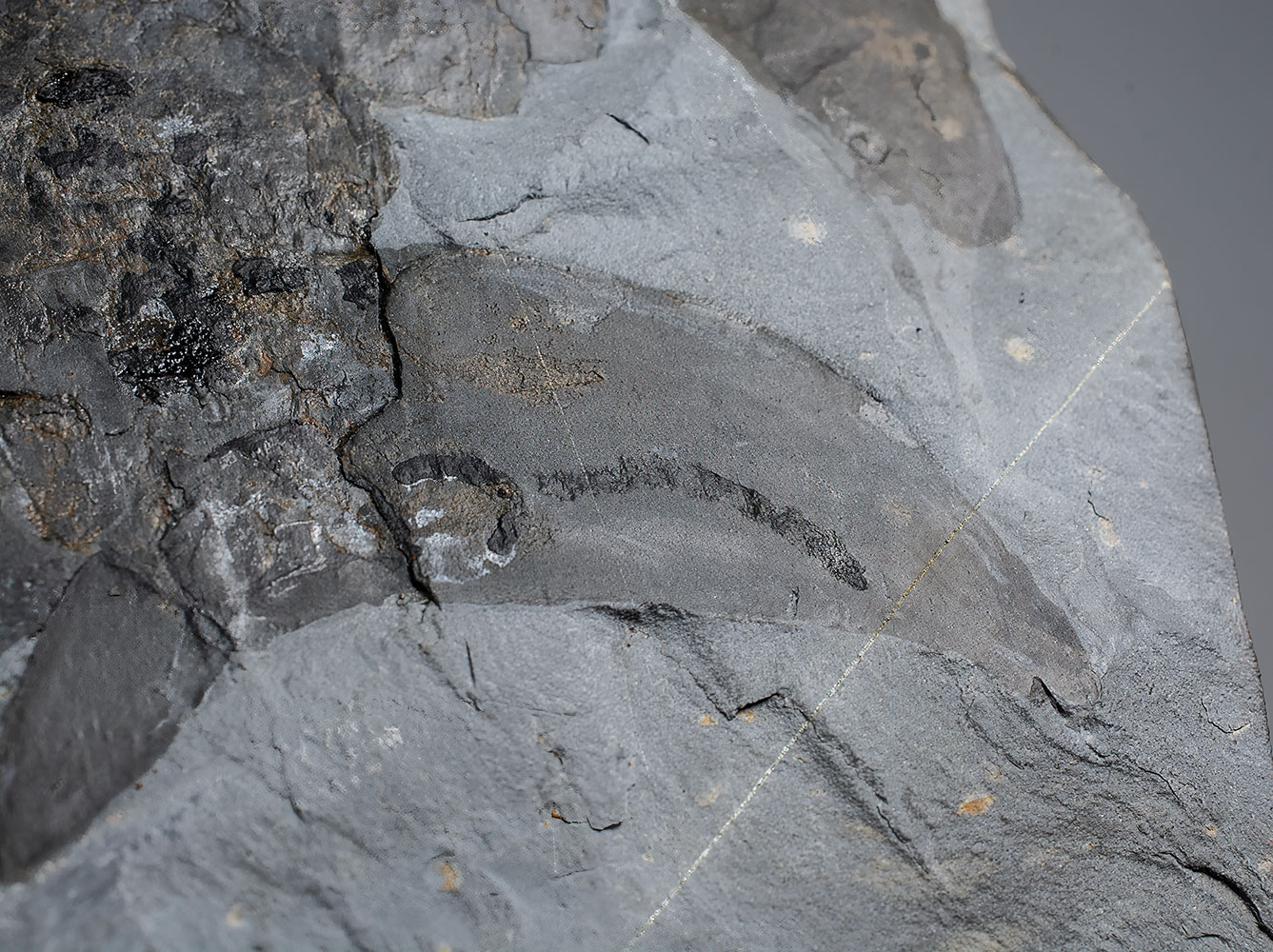
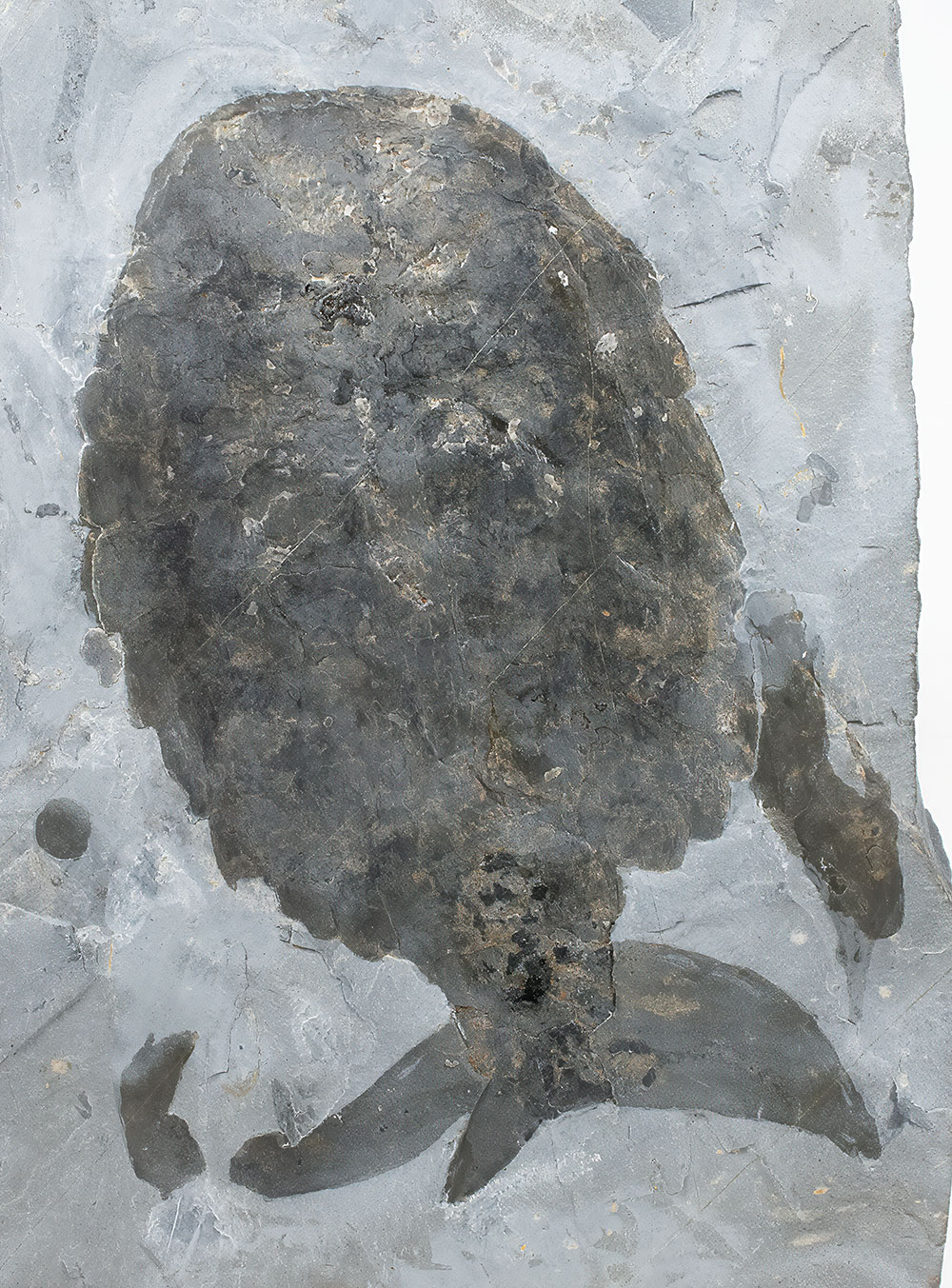
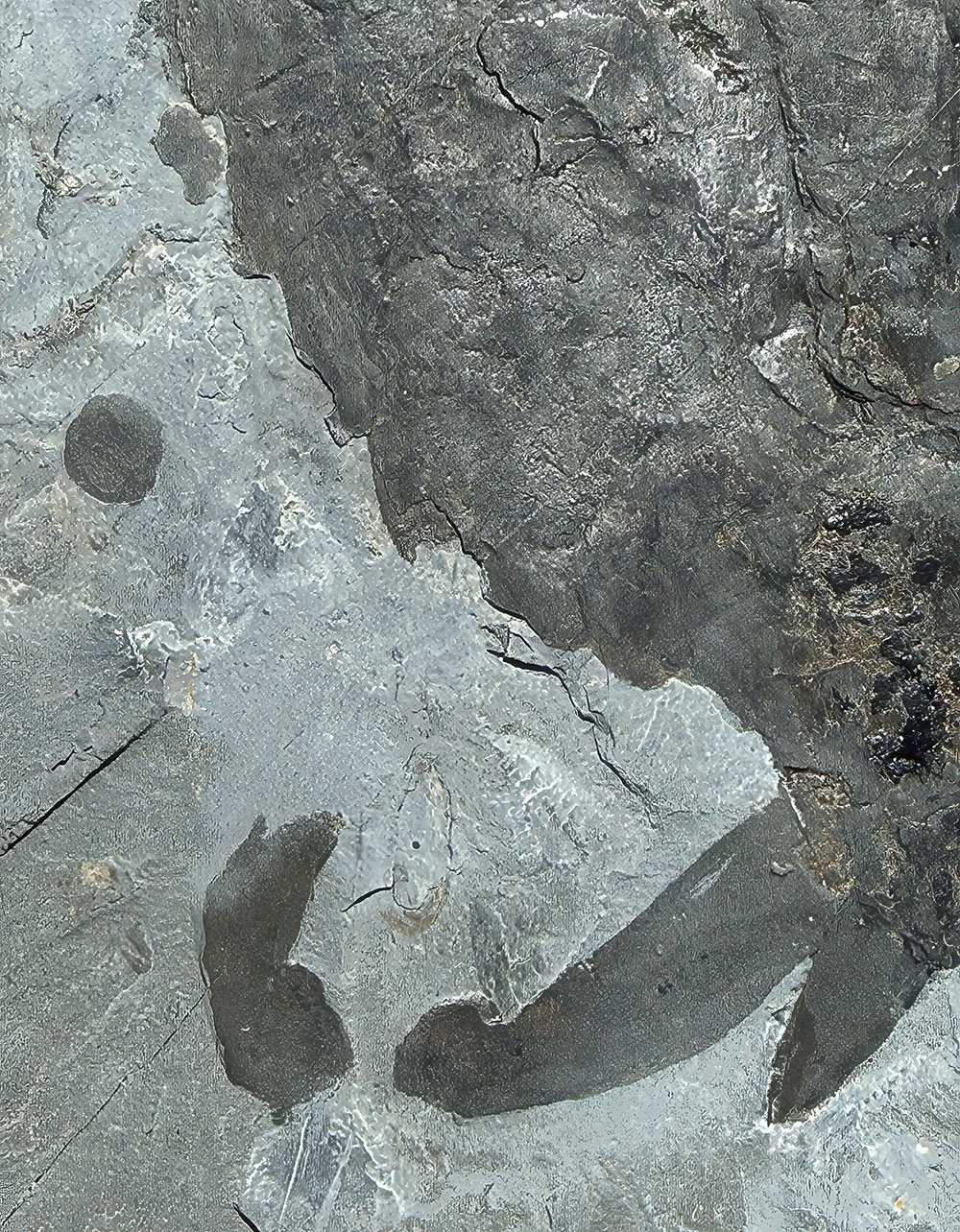
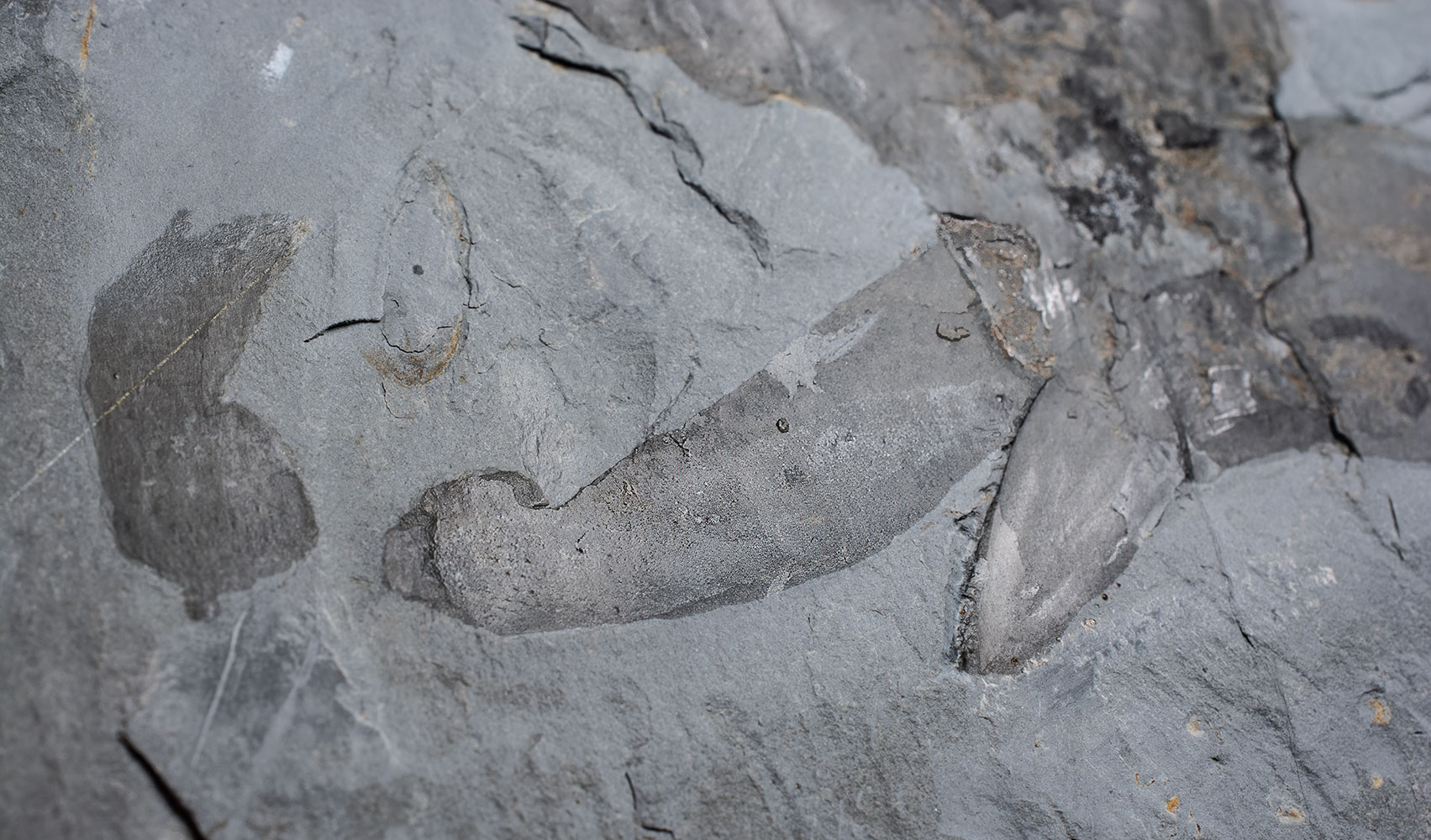
Extremely rare Burgess Shale fossil with multiple large animals. Huge 170mm (6.7 inch) slab with 130mm (5 inch) Sidneyia, 75mm (3 inch) Ottoia, 18mm Ottoia head region and parts of another large arthropod. We’ve never had anything quite like this before.
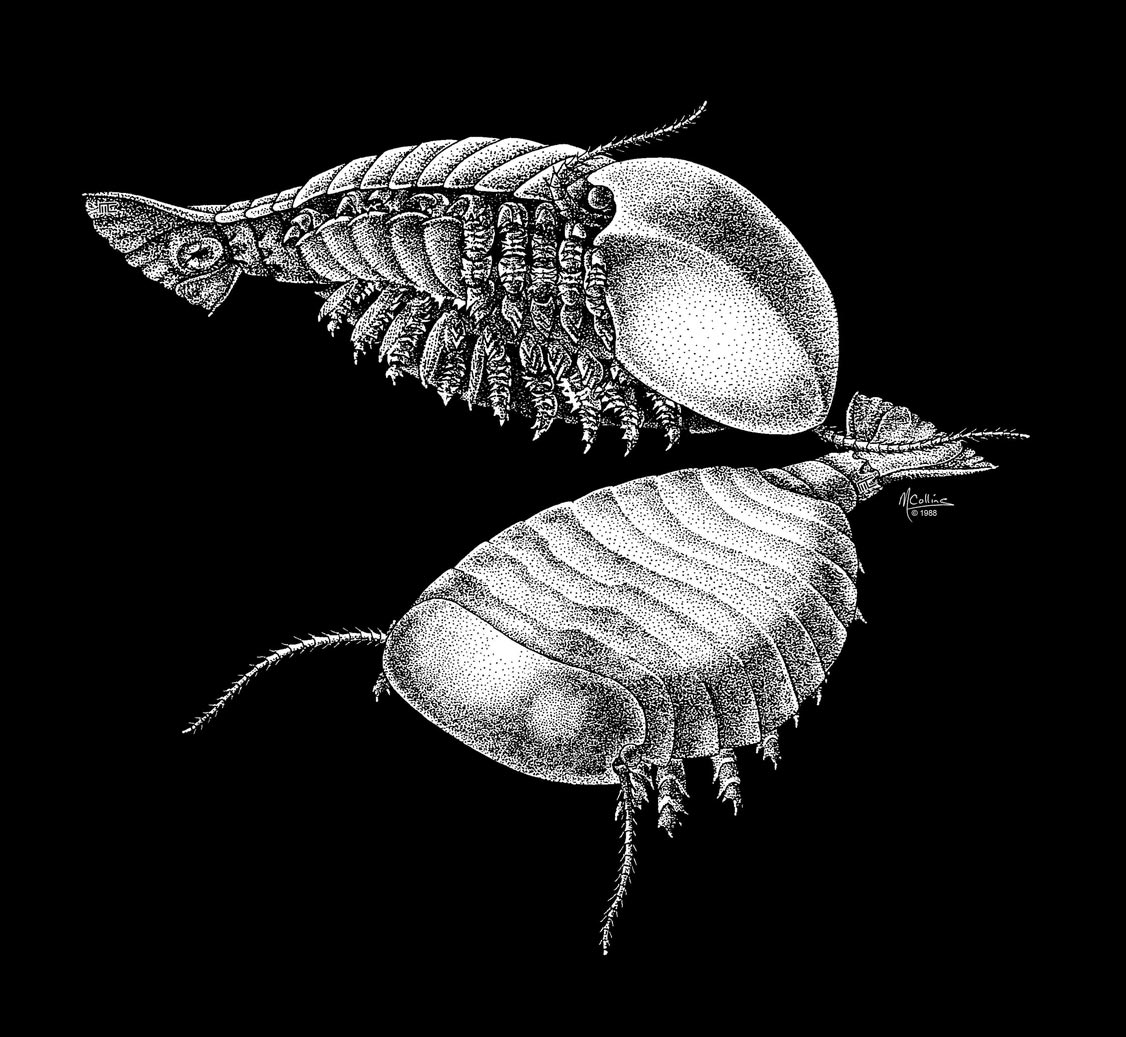
Sidneyia inexpectans was a marine arthropod of the Middle Cambrian, about 505 million years old, best known from the Burgess Shale of British Columbia, Canada. It was one of the larger active arthropods in that ecosystem, reaching about 16 cm (6.3 in) in length. It looked somewhat like a flattened, armored horseshoe crab crossed with a trilobite, although it was not a horseshoe crab.
Sidneyia had a distinctive three-part body: a broad and roughly square or oval, with large stalked eyes and a pair of long, segmented antennae and nine broad segments. The front four carried robust walking appendages with heavily spined bases, much narrower, ending in a triangular telson and a pair of structures forming a small tail fan. The front limbs were particularly important. Their enlarged bases, called gnathobases, carried spines that could work like crushing surfaces.
One of the most interesting things about Sidneyia is that we know quite a lot about what it ate. Fossilized gut contents contain fragments of:
small trilobites
brachiopods
possibly agnostid arthropods
worms
other small animals
This indicates that Sidneyia was primarily a durophagous carnivore—an animal adapted to eating hard-bodied prey. It could apparently grasp prey, crush it with its spiny limb bases, and then pass the fragments toward its mouth. It may have been both an active predator and a scavenger so despite its relatively ungainly appearance, it was probably an important predator of small animals living on or immediately above the Cambrian seafloor.
Sidneyia is now generally regarded as an artiopodan, a major group of Paleozoic arthropods that includes trilobites and their close relatives. A detailed study of its head and appendages found features consistent with artiopodan anatomy.
Earlier researchers had sometimes considered Sidneyia to be related to chelicerates, the group containing horseshoe crabs, spiders, scorpions, and sea spiders. Its crushing limb bases do indeed look remarkably similar in function to the gnathobases of horseshoe crabs. However, its current placement among artiopodans is better supported.
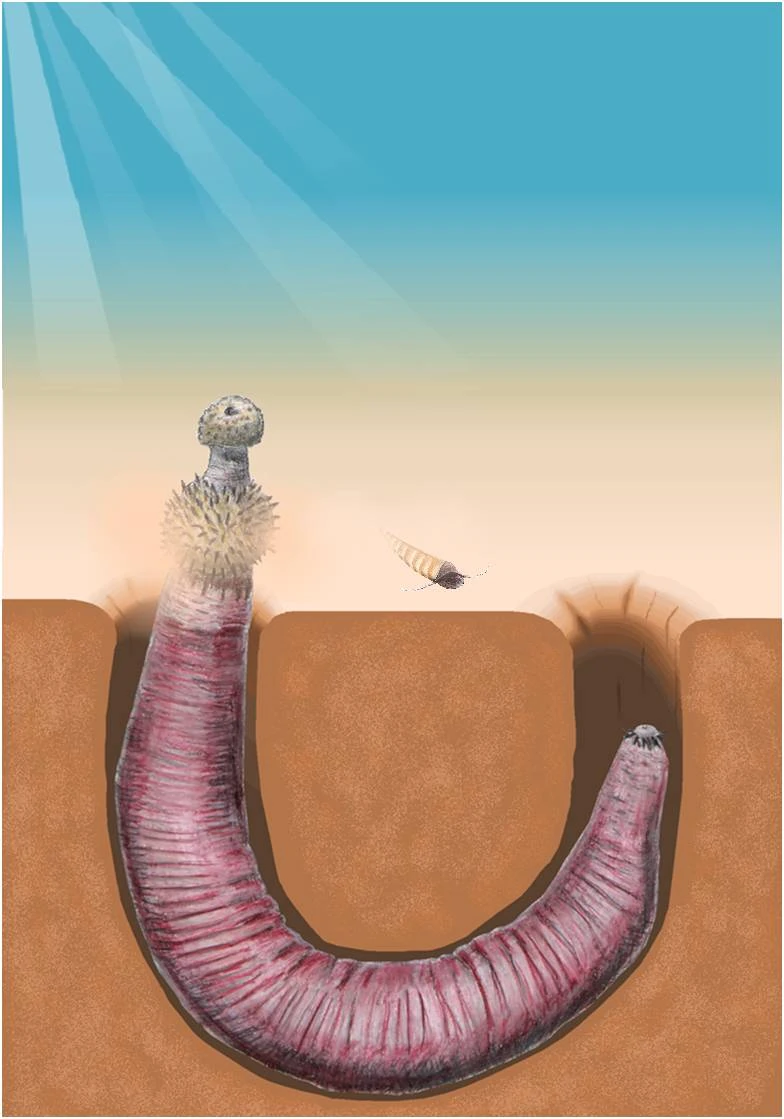
Ottoia prolifica was a priapulid worm that lived in the oceans during the Middle Cambrian, about 505 million years ago. It is one of the most abundant and best-studied worms from the Burgess Shale of British Columbia, Canada. It was essentially a burrowing, predatory marine worm, although its diet was broader than that description suggests.
Ottoia had a long, cylindrical, segmented body that could reach roughly 15 cm (6 inches). Its most remarkable feature was its eversible proboscis. The proboscis could be extended outward from the front of the body and was covered with numerous hooks, spines and teeth. When not in use, it could be pulled back inside the body.
The mouth was located at the tip of the proboscis.
The animal’s trunk was annulated, giving it a superficially segmented appearance. At the rear were additional hooks and spines. Modern priapulid worms have a broadly similar arrangement, making Ottoia an excellent example of how some aspects of priapulid anatomy have remained recognizable for hundreds of millions of years. The hooks and teeth on the proboscis could seize prey and pull it toward the mouth. Its fossilized gut contents provide direct evidence of its diet. Researchers have identified remains of:
Hyoliths, particularly Haplophrentis
Brachiopods
Small arthropods
Polychaete worms
Wiwaxia
Other small Cambrian animals
It also appears to have consumed dead animals and carrion, making it more of a generalist predator/scavenger than a highly specialized hunter. One particularly spectacular specimen contains several Haplophrentis individuals inside its digestive tract. There is even evidence suggesting that Ottoia could scavenge large carcasses: a Burgess Shale slab preserves several Ottoia associated with a dead Sidneyia so this may be the exact same scenario in this very fossil!
Read about the feeding habits of Sidneyia here (PDF): Zacaï, A., Vannier, J., & Lerosey-Aubril, R. (2016). Reconstructing the diet of a 505-million-year-old arthropod: Sidneyia inexpectans from the Burgess Shale fauna. Arthropod Structure & Development, 45(2), 200-220.
See also: Wikipedia – Sidneyia
And also see: Wikipedia – Ottoia