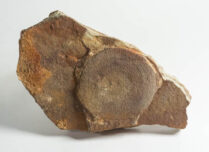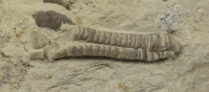


Description
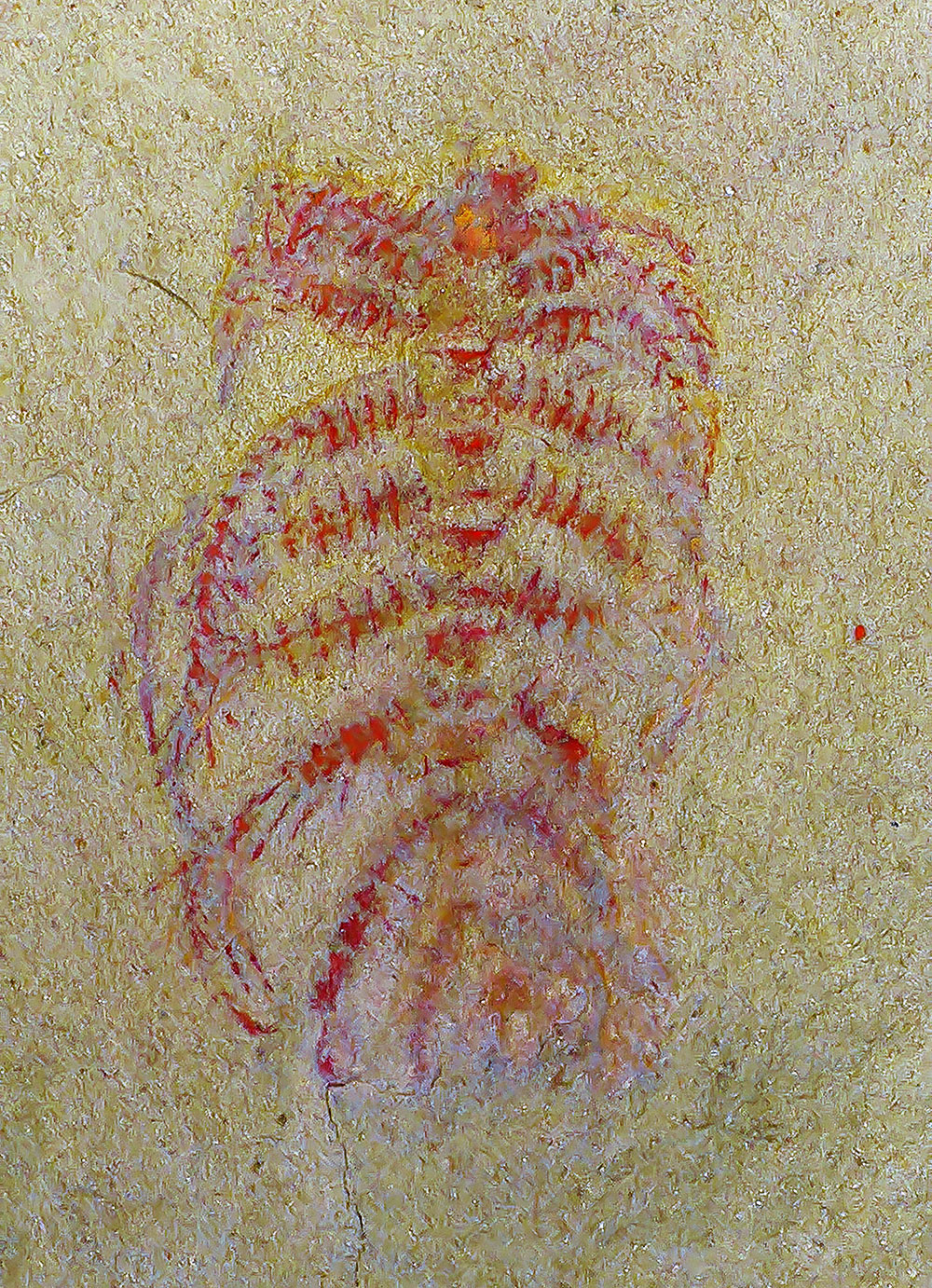
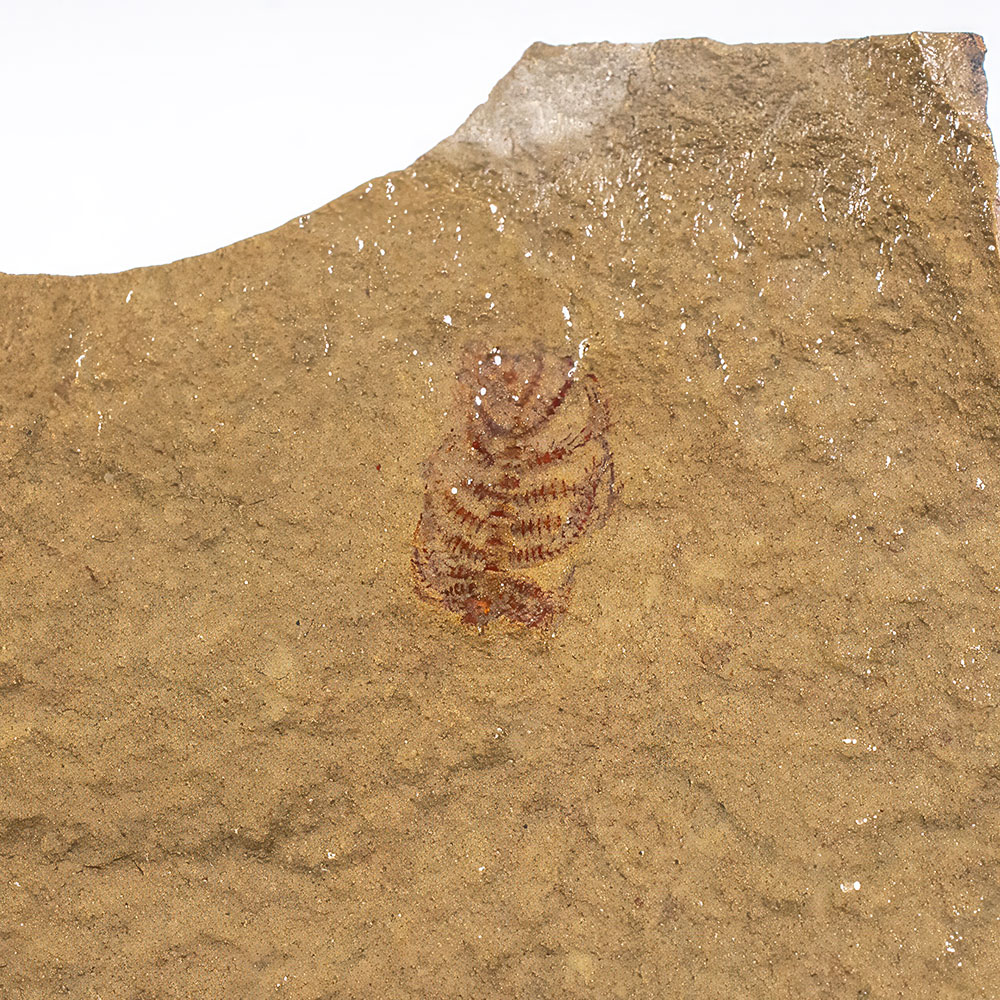
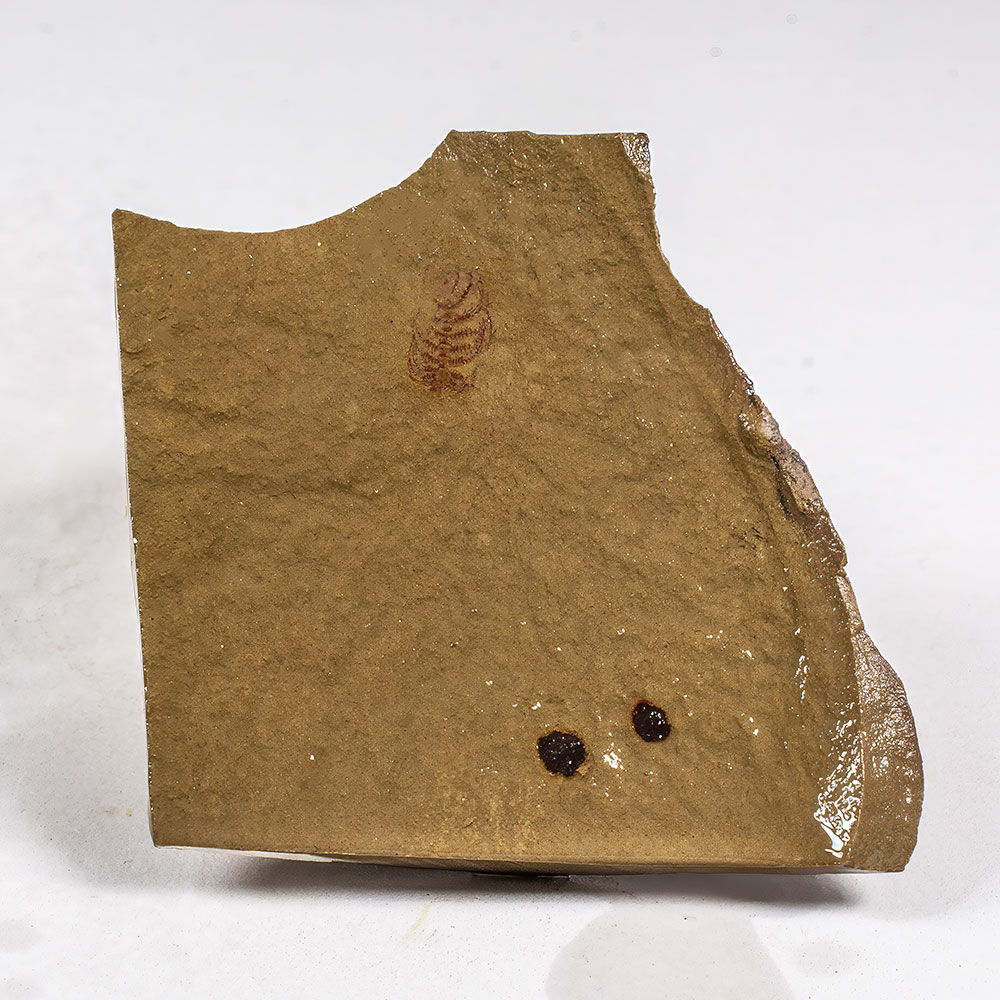
Diania cactiformis
Early Ordovician (Arenigian)
Fezouata Formation
Mecissi-Zagora Region, Draa Valley
Morocco
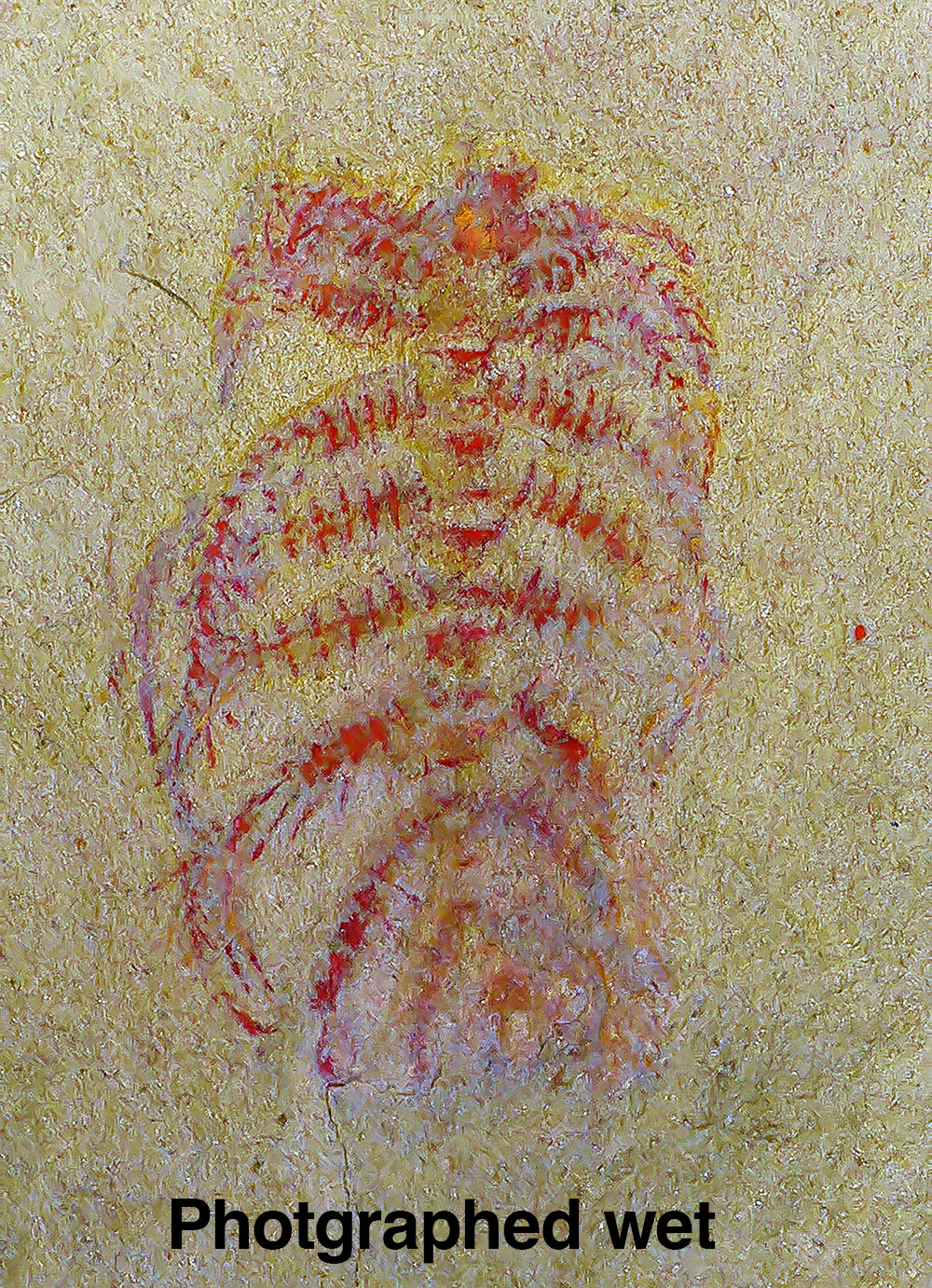
15mm on 58mm slab. Note that this soecimen is best seen when wetted with isoproply alcohol.
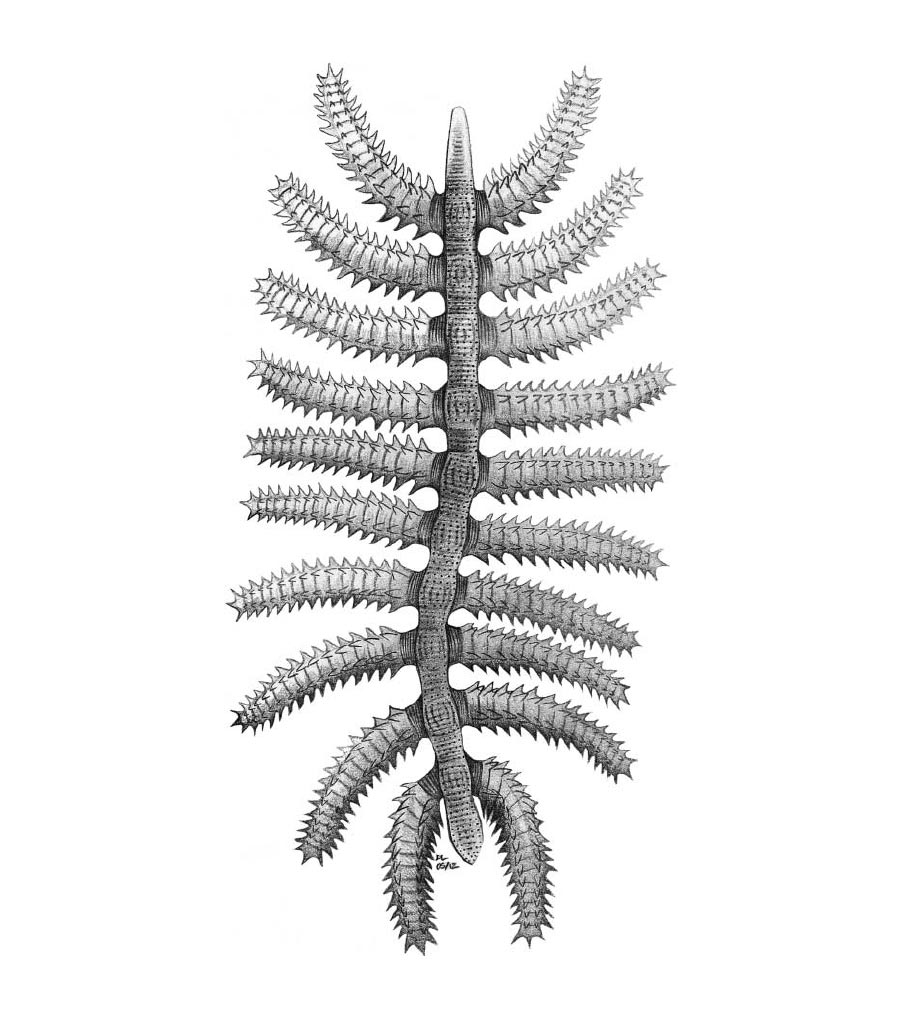
Diania cactiformis was a small, soft-bodied animal belonging to the lobopodians—extinct worm-like panarthropods that possessed pairs of fleshy legs. Diania was only a few centimeters long, but it looked remarkably unusual. Its body was relatively slender and carried 10 pairs of robust, spiny legs. Originally described exclusively from the Cambrian of China, recent discoveries have found this same taxon in the Ordovician of Morocco, giving this genus an amazing span of 34 million years. The Moroccan specimens are as of yet undescribed.
The original description emphasized the apparent segmentation and rigidity of the legs that led to a very interesting hypothesis about arthropod evolution.
When Diania was described in 2011, its authors proposed that its legs might represent an evolutionary stage immediately preceding the jointed limbs of arthropods. This made Diania extraordinarily important because arthropod limbs are one of the defining features of the group, however, this interpretation has been challenged.
Subsequent research argued that the apparent joints in Diania weren’t necessarily true arthropod-style joints. Some of the structures interpreted as hardened segments may instead represent soft annulations or folds. Consequently, Diania is now better regarded as an early panarthropod/lobopodian, rather than confidently being placed directly on the stem leading to arthropods.
See: