


Description
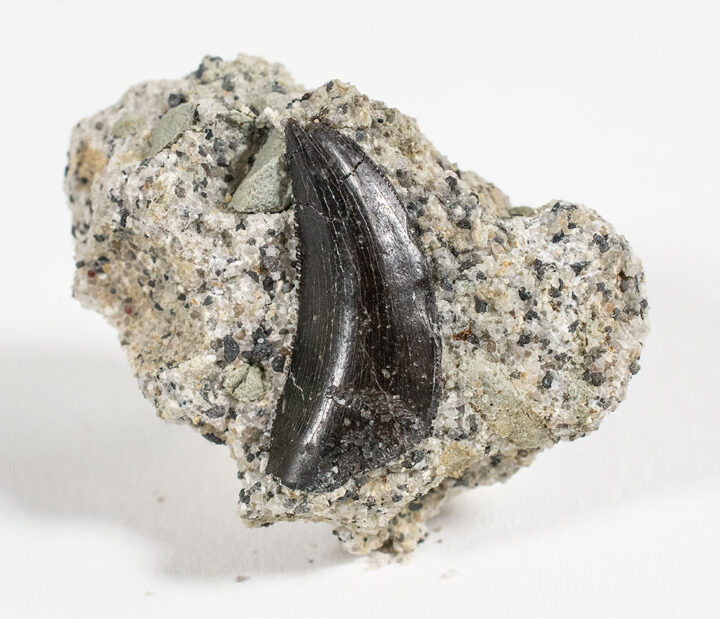
Suchomimus tenerensis- Theropod Hand Claw
Early Cretaceous (Aptian)
Elrhaz Formation, Tegama Beds
Gadoufaoua, Tenere Desert
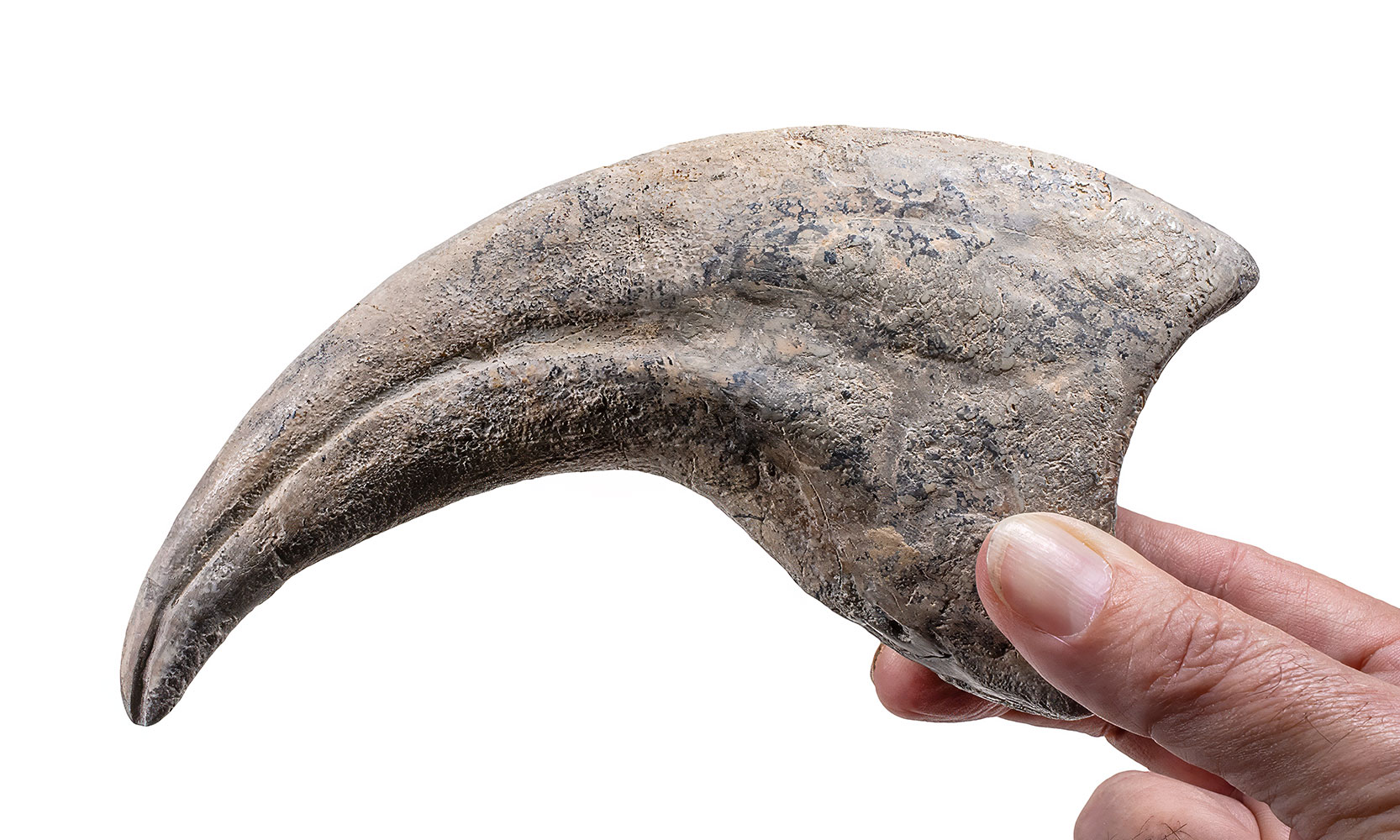
Huge hand claw from a spinosaurid believed to be synonymous with Baryonyx. A whopping 24cm (9.5 inches) on the curve.
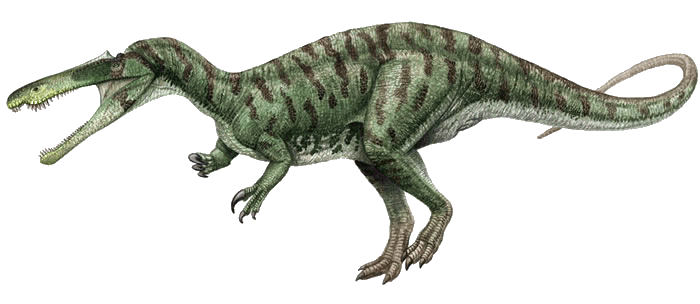
Suchomimus was a large spinosaurid theropod dinosaur that lived in what is now Niger, West Africa, during the Early Cretaceous, roughly 125–115 million years ago. Its name means “crocodile mimic”, referring to its long, crocodile-like snout.
Suchomimus was a member of Spinosauridae, the group that includes:
Spinosaurus
Baryonyx
Suchomimus
Irritator
Ichthyovenator
It was probably around 9–11 meters (30–36 feet) long, although estimates vary depending on which skeletal material is assigned to it. Unlike most large theropods, it had a long, narrow skull and relatively slender jaws. Instead of the deep, robust skull of something like Tyrannosaurus, Suchomimus had a long, narrow rostrum. Its jaws contained numerous conical, relatively straight teeth. This combination is strongly reminiscent of crocodilians and gives a strong clue to how it hunted. The teeth weren’t ideal for slicing through large chunks of flesh. Instead, their shape was excellent for gripping slippery prey.
In general, its anatomy strongly suggests that fish were an important part of its diet. Its narrow jaws, conical teeth, elongated snout, and relatively long forelimbs are consistent with a predator that frequently hunted aquatic prey. It may have used its jaws somewhat like a giant pair of forceps, snapping up fish from shallow rivers and lakes, however, it probably also consumed terrestrial animals and carrion when opportunities arose.
Suchomimus also had unusually large and powerful forelimbs for a theropod. Each hand possessed three functional fingers, with large curved claws. The first claw was particularly large. They were not simply vestigial little arms like those of Tyrannosaurus.
The sail question
Here’s an interesting distinction between Suchomimus and Spinosaurus. Spinosaurus possessed extremely elongated neural spines that supported a prominent sail-like structure along its back. Suchomimus also had somewhat elongated neural spines, particularly toward the hips, but they were nowhere near as spectacularly elongated. It may have had a modest raised back or muscular ridge, but we shouldn’t reconstruct it with a giant Spinosaurus-style sail.
Suchomimus and Spinosaurus were close relatives so a simplified family tree is:
Spinosauridae
├── Baryonychinae
│ ├── Baryonyx
│ └── Suchomimus
└── Spinosaurinae
├── Irritator
└── Spinosaurus
The exact arrangement of spinosaurid relationships remains debated, but Suchomimus is generally regarded as a baryonychine spinosaurid.