

Description
Furca bohemica
Arthropod
Upper Ordovician (Sandbian)
Letna Formation
Beroun, Vesela, Czech Republic
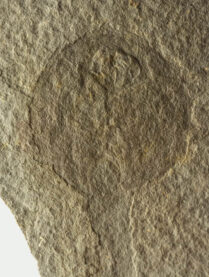
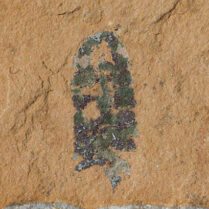
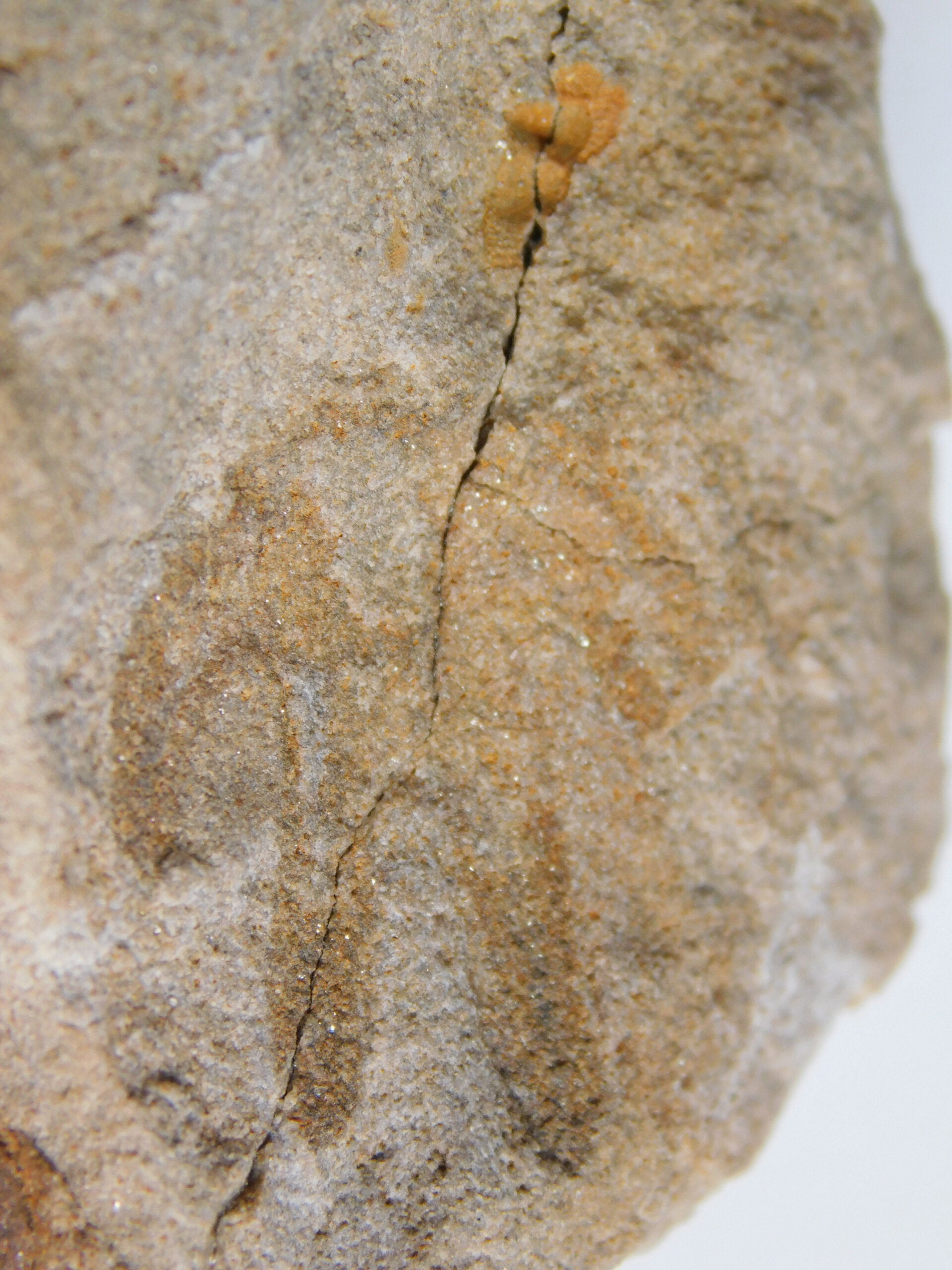
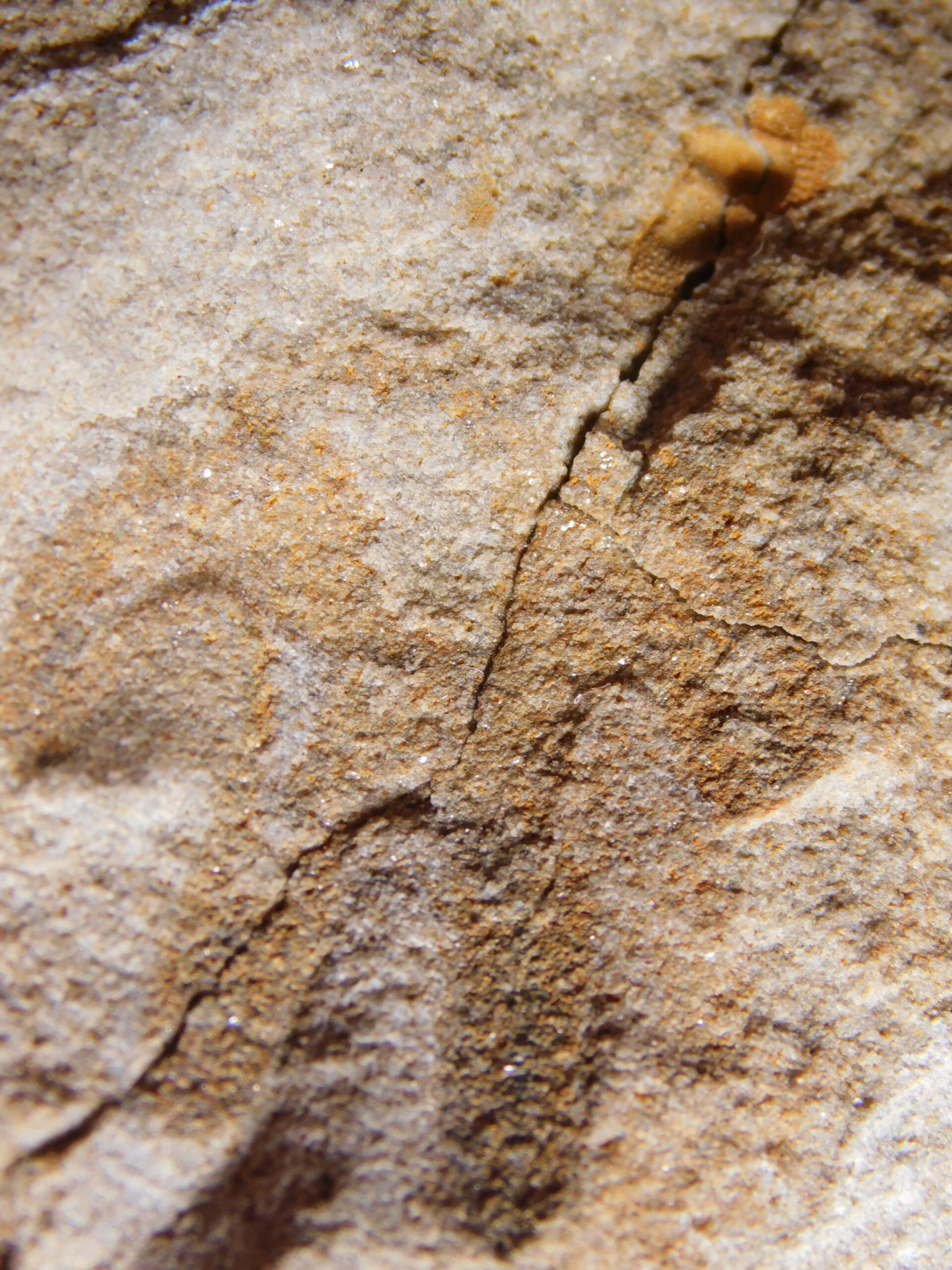
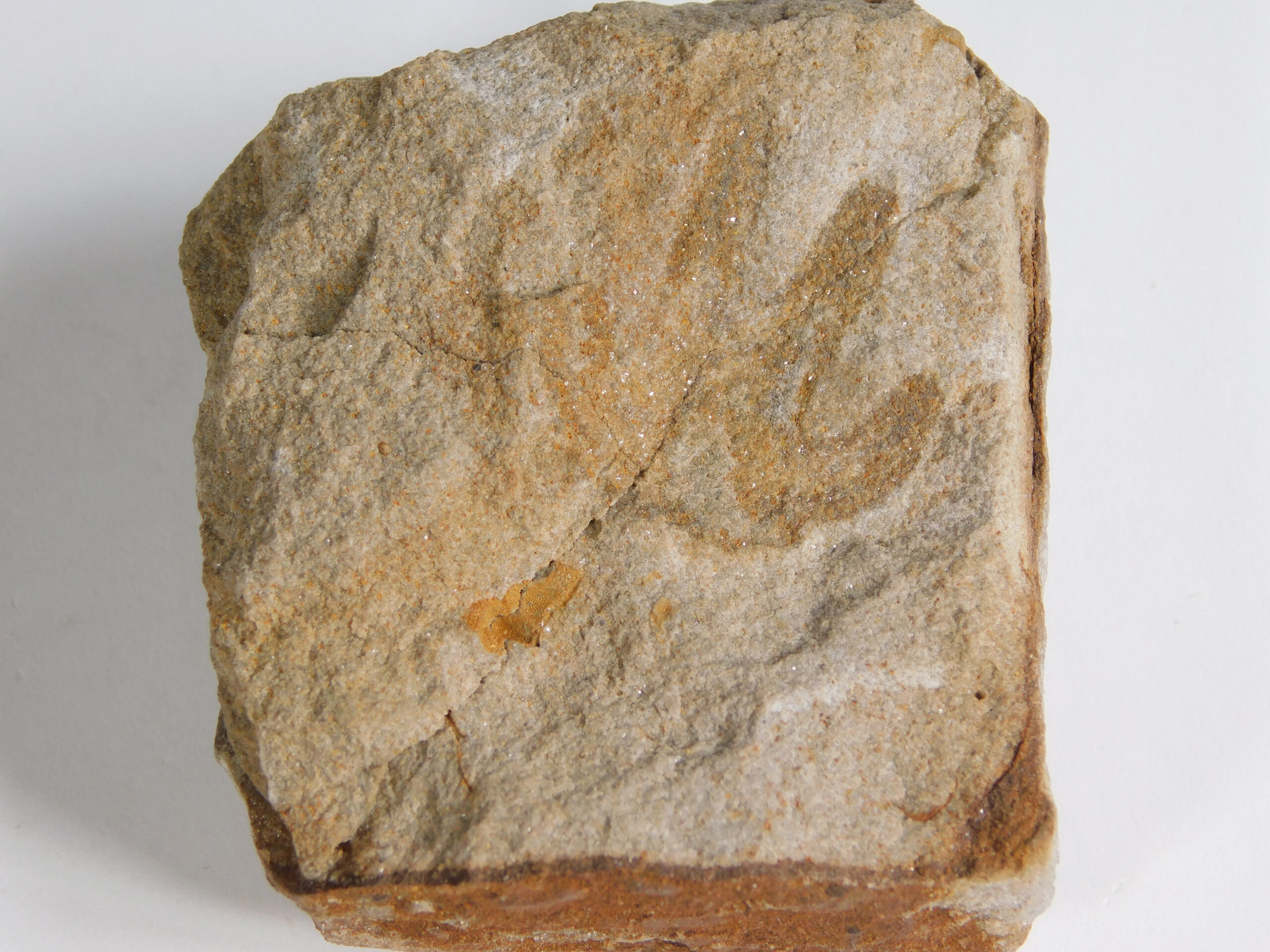
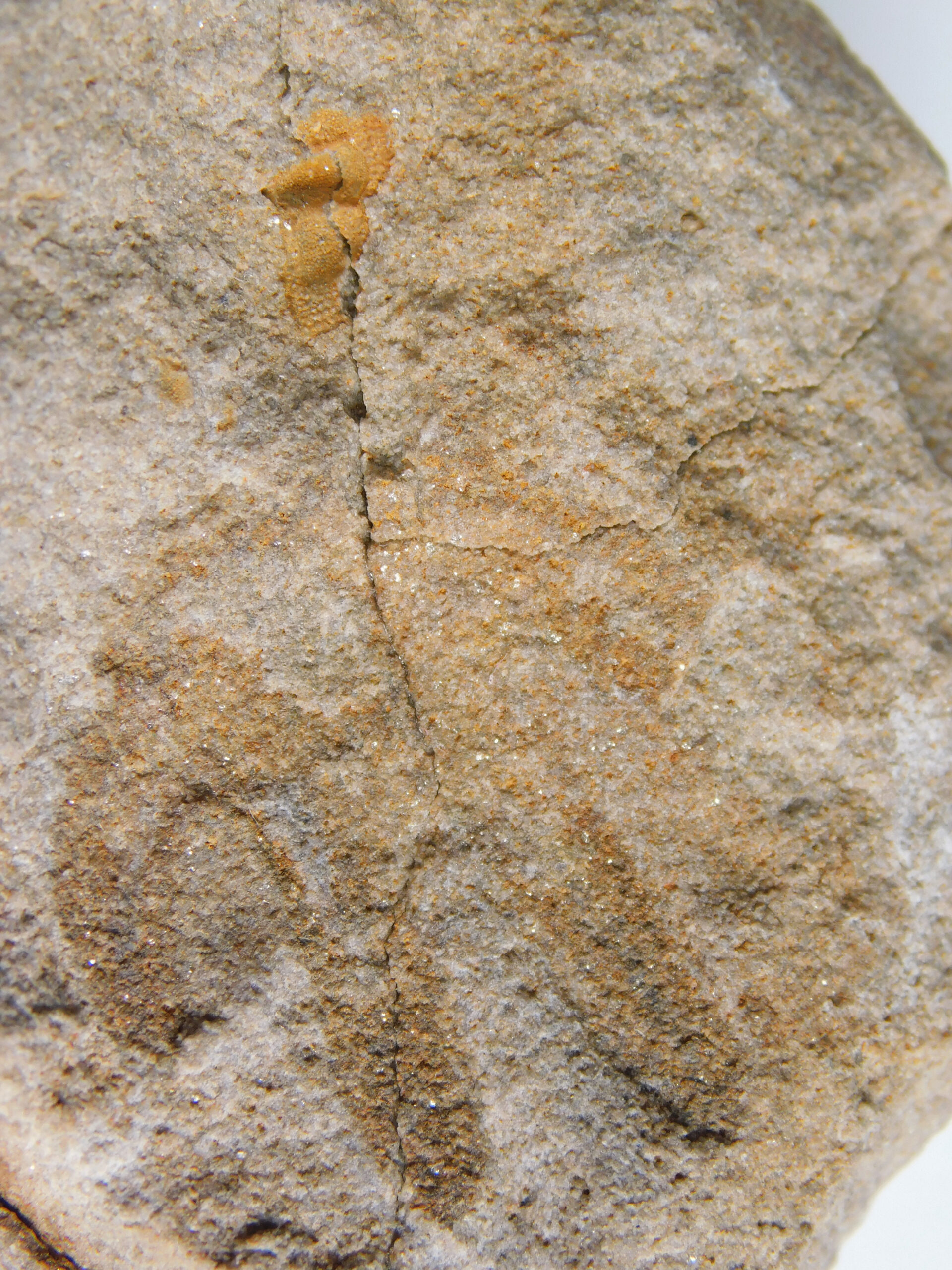
Extremely rare 22mm marrellamorph arthropod on 50mm matrix. This is the original species described years before the finds in Morocco. Only one we have ever had.
Furca bohemica was a bizarre marrellomorph arthropod that lived in the Late Ordovician, roughly 450 million years ago, in what is now the Czech Republic. It is one of the more unusual members of the marrellomorphs, the same broad group that includes the famous Cambrian Marrella.
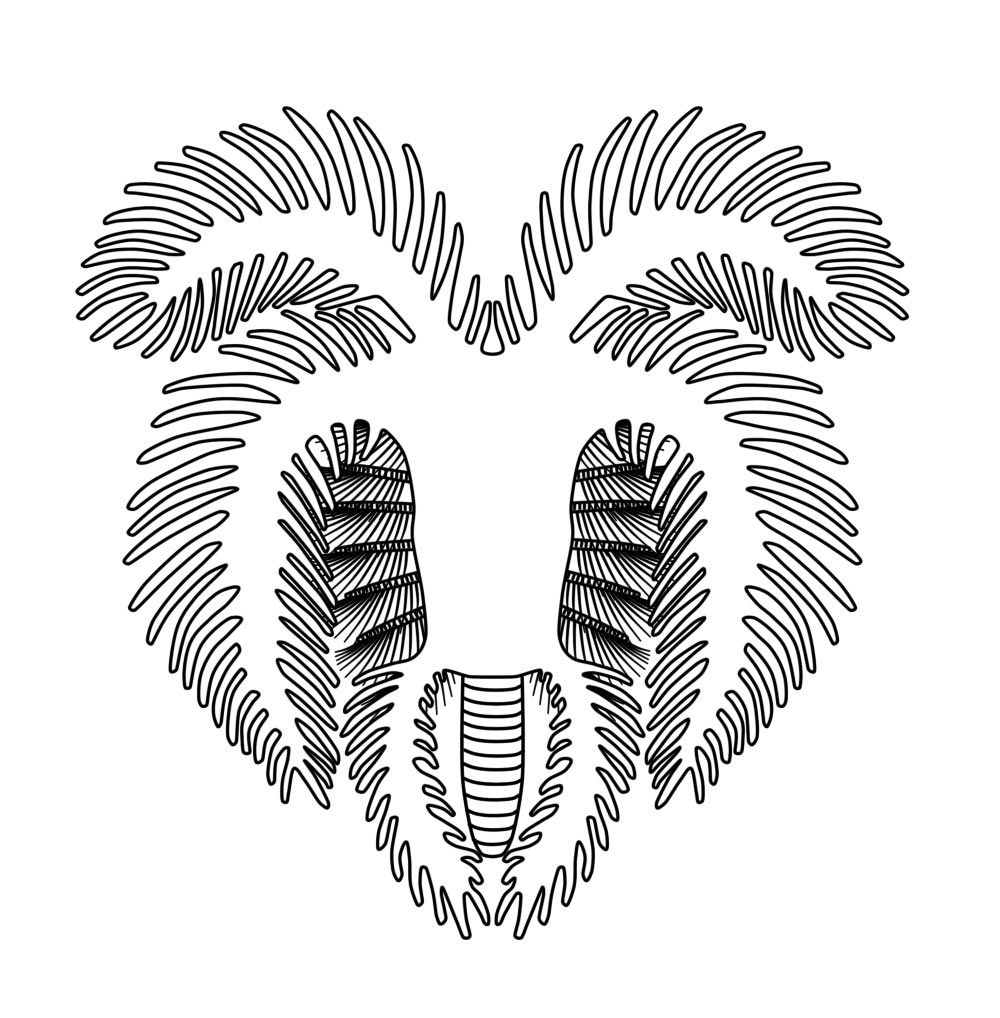
The most distinctive part of Furca was its enormous head shield. The shield was roughly trapezoidal and had three pairs of long spines:
Anterolateral spines — toward the front
Mediolateral spines — extending sideways and curving backward
Posterolateral spines — extending toward the rear
The edge of the shield also carried numerous smaller secondary spines
The head shield was only about 2–3 cm long, so despite its spectacular appearance, Furca was a relatively small animal.
The rest of the animal is unfortunately poorly known. Most fossils consist primarily of the head shield, and the walking legs and other appendages have not been preserved well enough to reconstruct confidently.
What was a marrellomorph?
Marrellomorphs were extinct arthropods with distinctive large, often elaborate head shields and spines. They are an extinct branch of the arthropod family tree rather than trilobites. Furca is particularly interesting because it belongs to Marrellida, and analyses place it close to the German Devonian marrellomorph Mimetaster hexagonalis, within Mimetasteridae. In other words, Furca was something like a spiny Ordovician cousin of Marrella, although its exact evolutionary relationship to Marrella is more complicated than simply being a direct descendant.
Furca bohemica has had a remarkably strange taxonomic history. Early researchers didn’t recognize it as an arthropod at all. It was variously interpreted as part of a trilobite, a juvenile echinoderm, and even a structure associated with a crinoid. It wasn’t recognized as a marrellomorph arthropod until Perner in 1919.
There was also once a separate species called Furca pilosa. A 2013 revision concluded that F. pilosa and other previously named Furca material actually represent F. bohemica, with differences partly resulting from how the fossils were preserved and decayed.
See: A revision of the Late Ordovician marrellomorph arthropod Furca bohemica from Czech Republic (PDF – Opens in new tab)