
Description
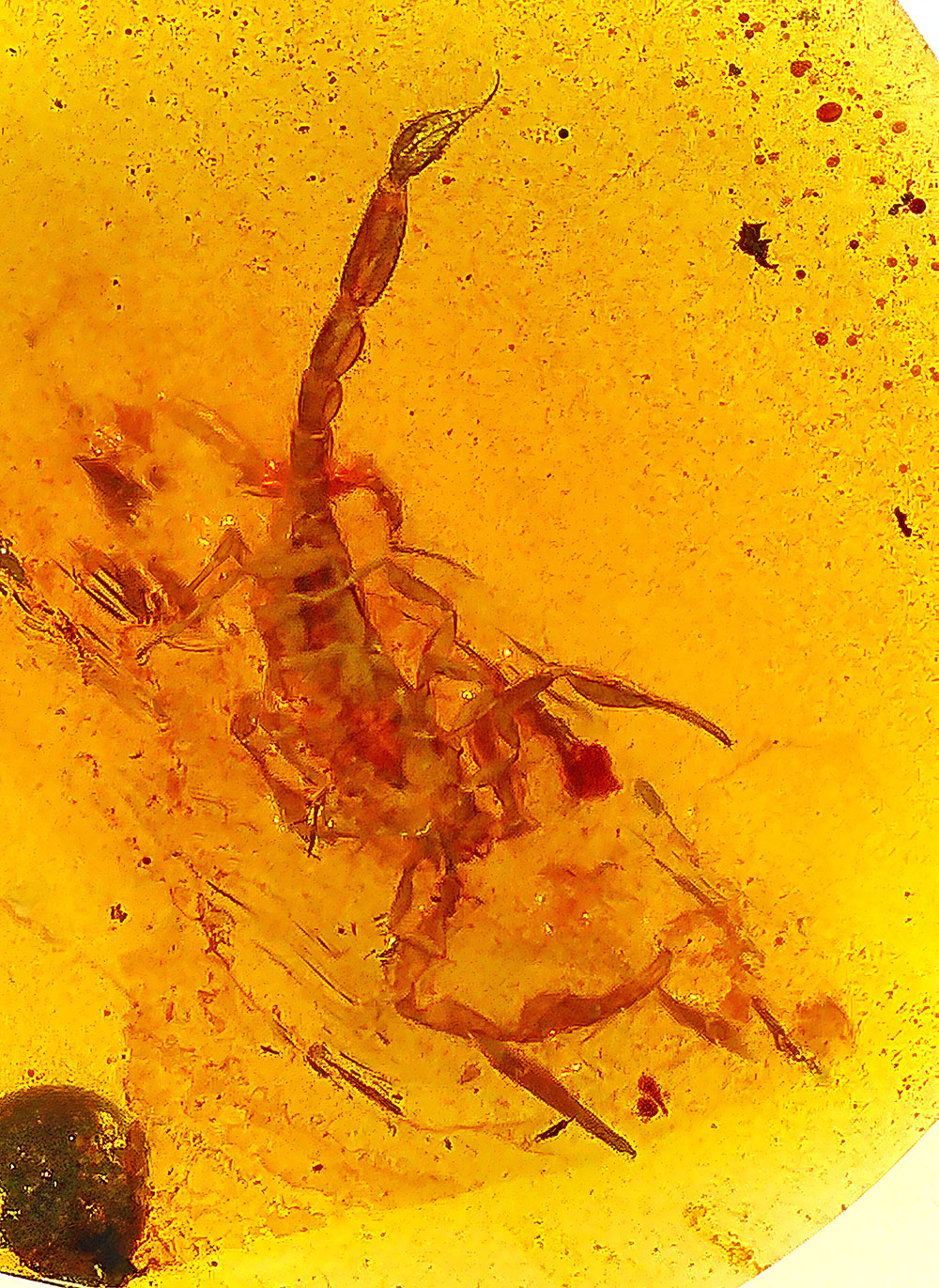
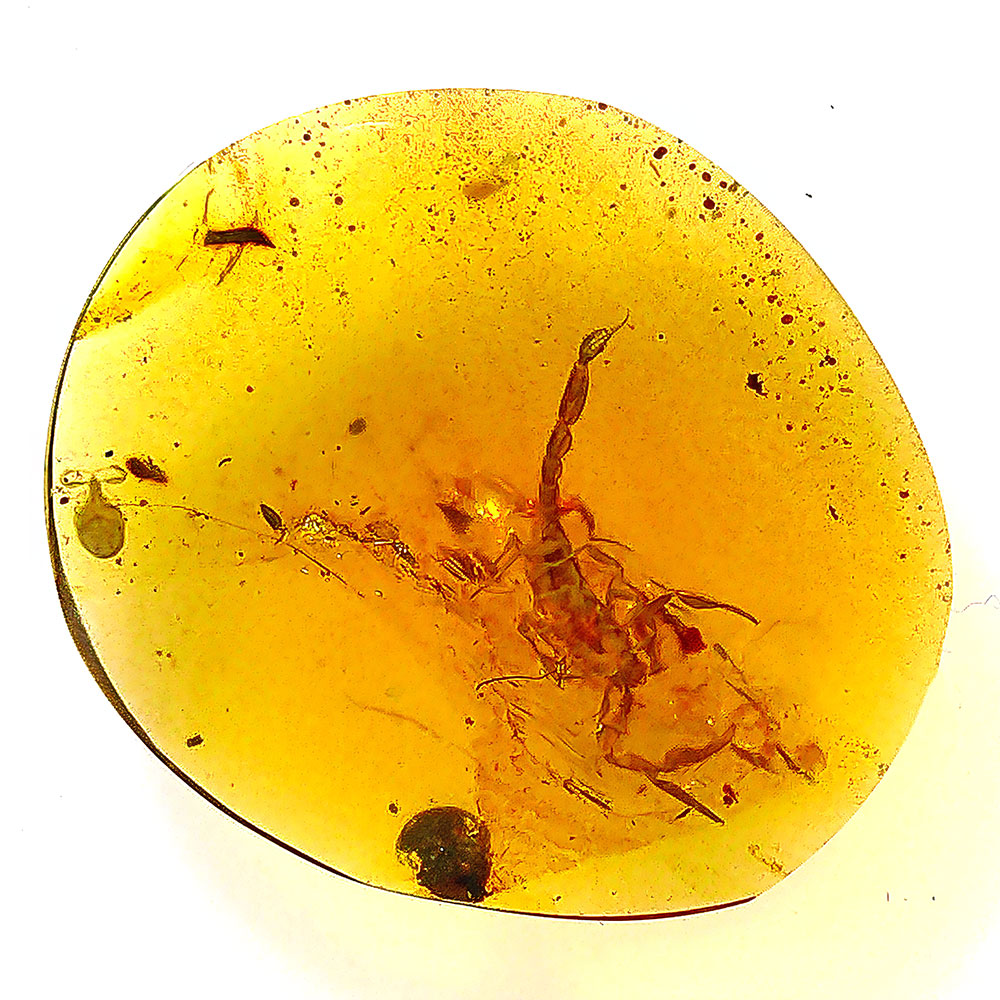
Scorpion
Cretaceous
Vicinity of Maingkwan, north of Mogaunga
Myanmar (Burma)
8mm scorpion in 16mm amber cab
Burmite is a type of amber from Myanmar (Burma), and it is one of the most important fossil-resin deposits in the world. It is especially famous because it contains spectacularly preserved Cretaceous insects, spiders, plants, and even small vertebrate remains.
So since burmite amber is Cretaceous, did it contain dinosaurs?
Yes — but this needs an important qualification. There are spectacular dinosaur-associated remains in Burmese amber, including feathers and fragments of dinosaur material. One famous example is a tiny theropod tail preserved in amber. It demonstrated that at least some feathered dinosaurs had feathers with a complex arrangement of branches.
There are also amber-preserved remains of small birds, including specimens belonging to the bizarre extinct bird group Enantiornithes. However, claims about “dinosaurs preserved in amber” sometimes get exaggerated. We don’t have a complete non-avian dinosaur trapped in a chunk of burmite.
Perhaps the most important aspect of burmite amber is the snapshot of entire ecosystems it gives us. Most fossils give us bones, shells, teeth, or impressions. Amber can preserve the entire organism in three dimensions. That means researchers can reconstruct details of a Cretaceous forest ecosystem at an almost microscopic scale. For example, a single piece of amber might preserve an insect, fungal spores, pollen grains, and pieces of plant material together like a tiny time capsule.