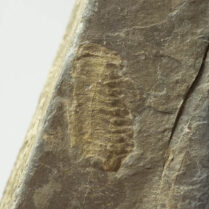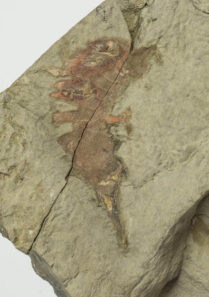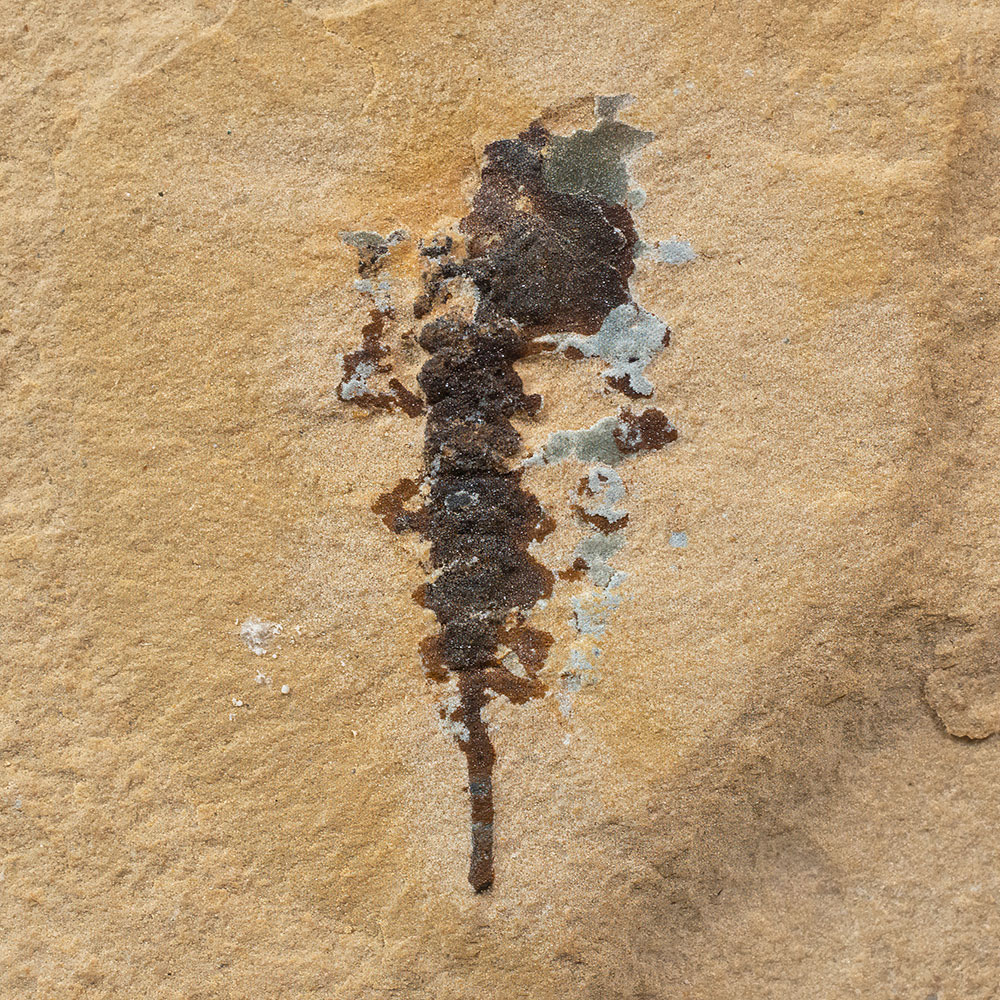
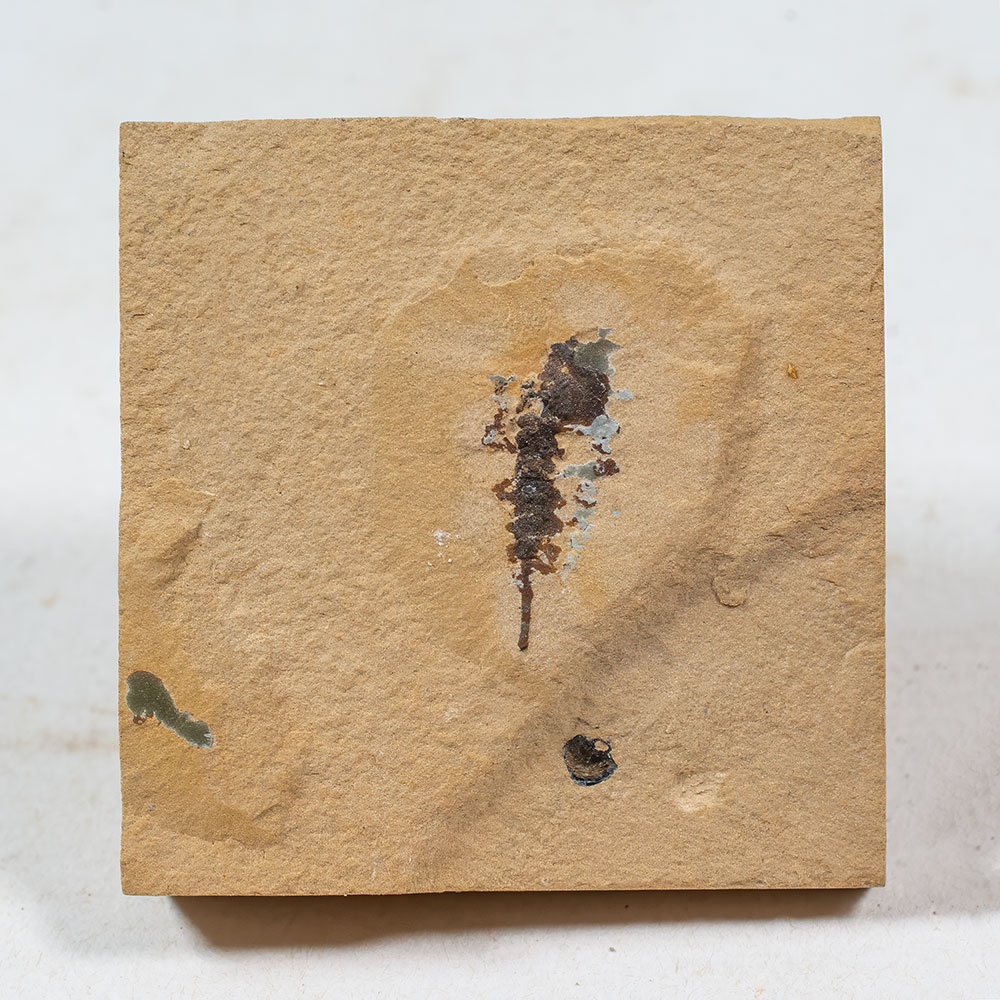


Description
?Chasmataspid
Late Cambrian
Weeks Shale Formation
House Range, Millard County
Utah, USA.
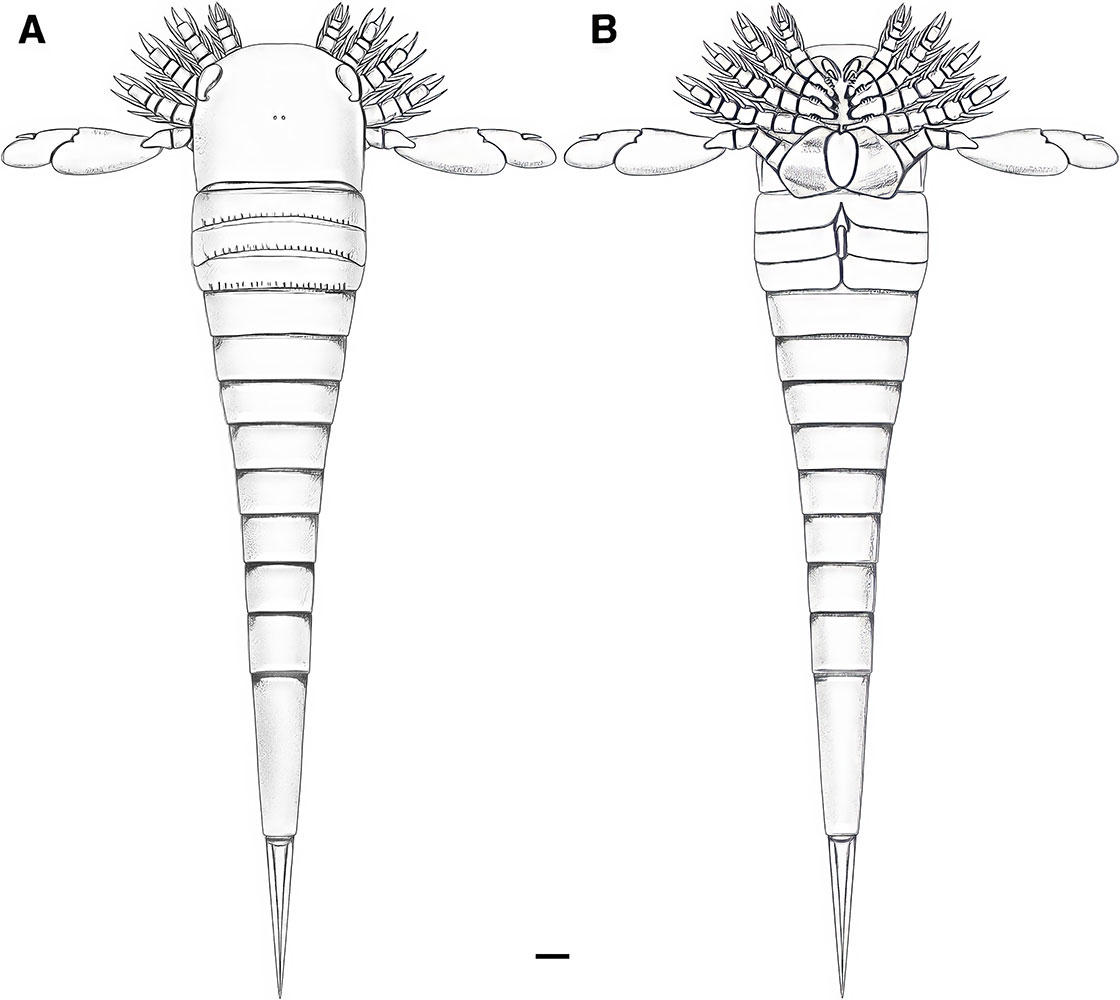
Chasmataspids are particularly distinctive for their strongly divided body, with a broad front region followed by a segmented abdomen. Their unusual anatomy makes them an important part of the early history of chelicerate arthropods and provides a glimpse into the remarkable experimentation taking place during the Cambrian.
16mm rare arthropod on 38mm slab.
Chasmataspids are an extinct group of marine chelicerate arthropods that lived mainly during the Paleozoic Era, from roughly the Ordovician to the Devonian, about 470–390 million years ago. They are particularly fascinating because they look like a strange intermediate between a horseshoe crab and an eurypterid (sea scorpion). They were generally small animals, usually only a few centimeters long, although some species were considerably larger.
The characteristic chasmataspid body is divided into two very different regions: A broad prosoma, a distinctive segmented abdomen where the sudden transition from broad to narrow segments gives them a distinctive “waisted” appearance. In some species, the posterior abdomen looks remarkably similar to that of certain eurypterids.
Chasmataspids are chelicerates, so their broader family tree includes:
Chelicerata
→ horseshoe crabs
→ eurypterids
→ spiders
→ scorpions
→ other arachnids
→ chasmataspids
The exact position of chasmataspids within Chelicerata has been debated. They have sometimes been regarded as particularly close to eurypterids, while other analyses have placed them closer to Xiphosura, the horseshoe-crab lineage. This uncertainty is partly because their anatomy combines features reminiscent of several different chelicerate groups.