

Description
Odontaspis aculeatus
Middle Cretaceous
Sannine Formation
Hjoula, Byblos, Lebanon.
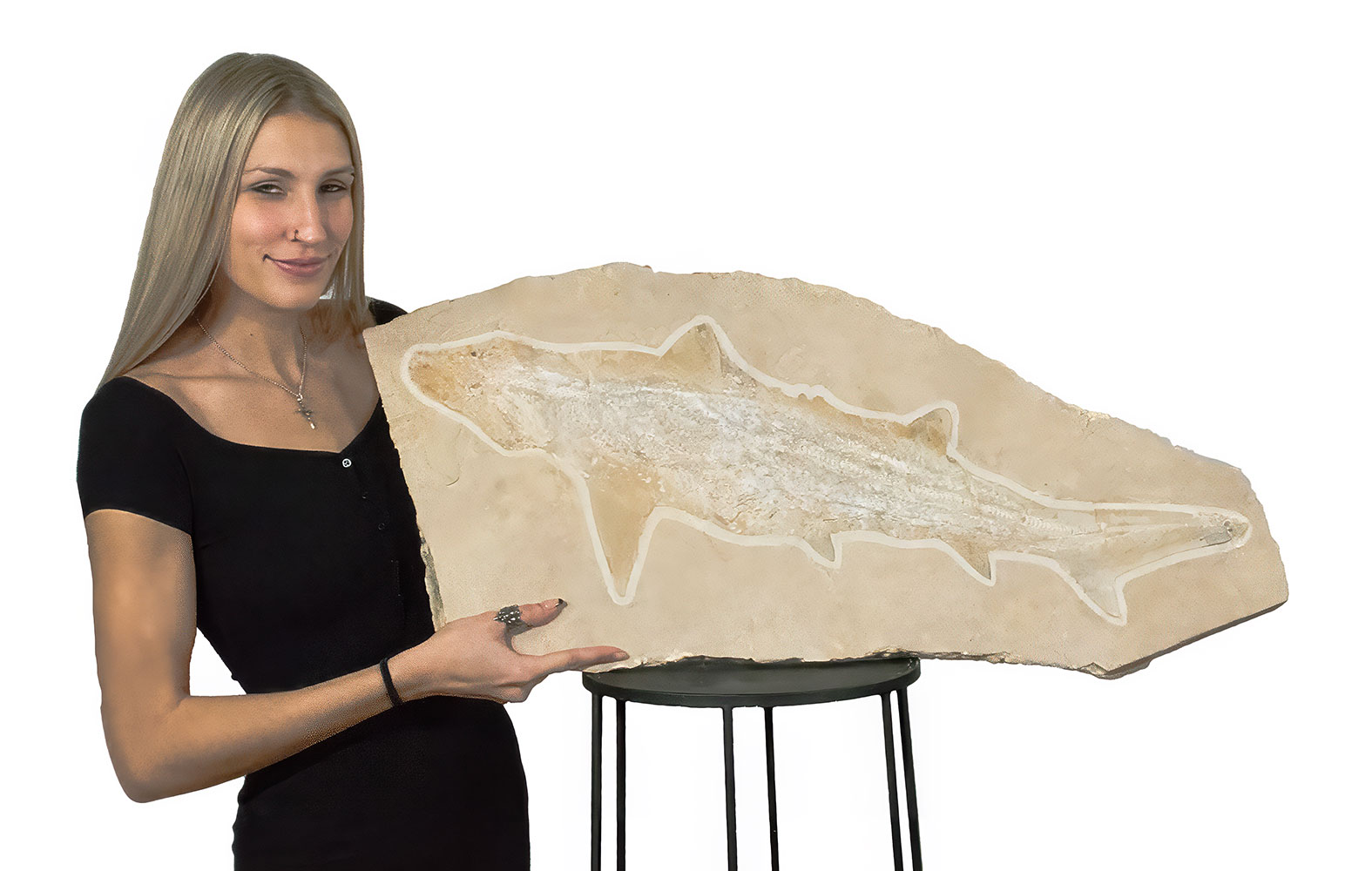
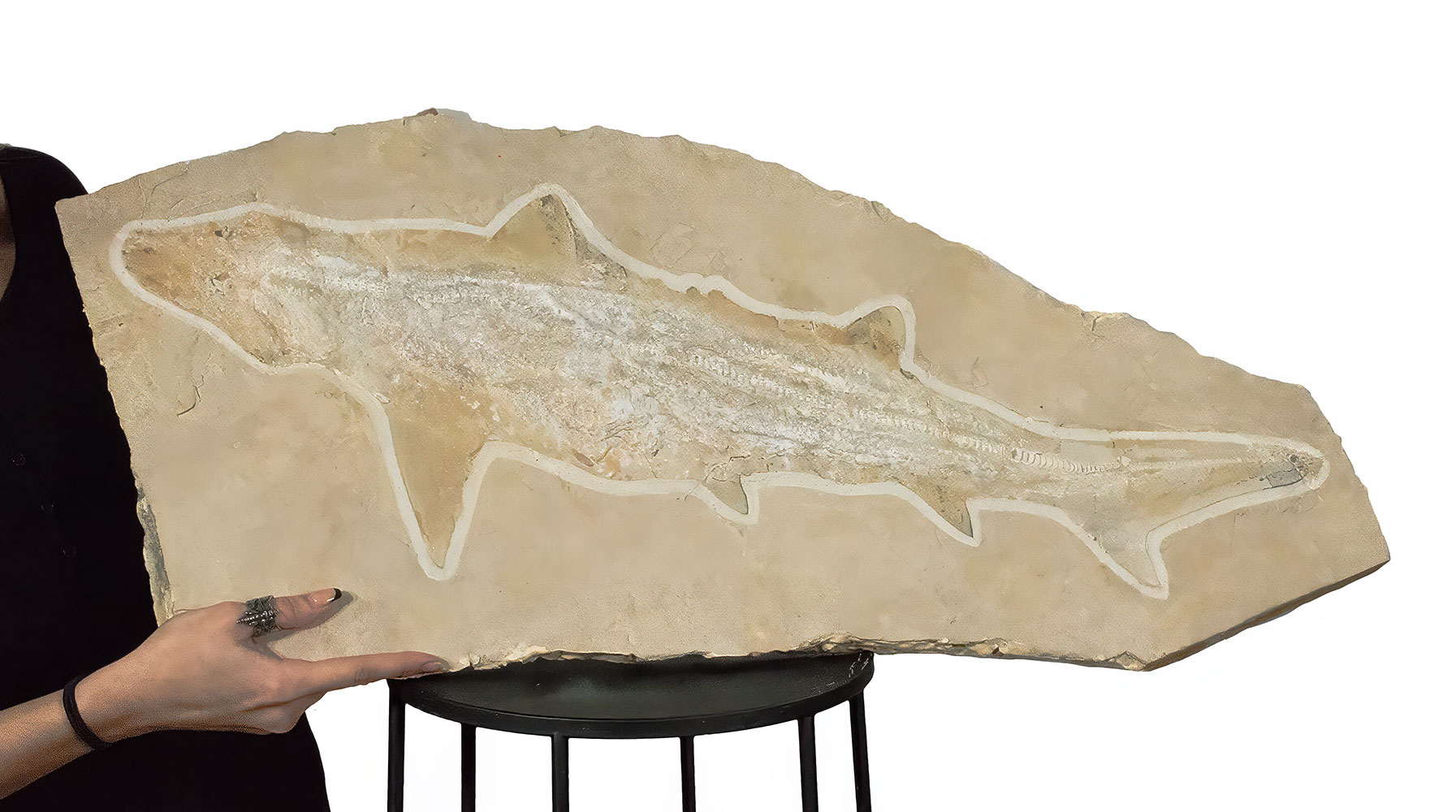
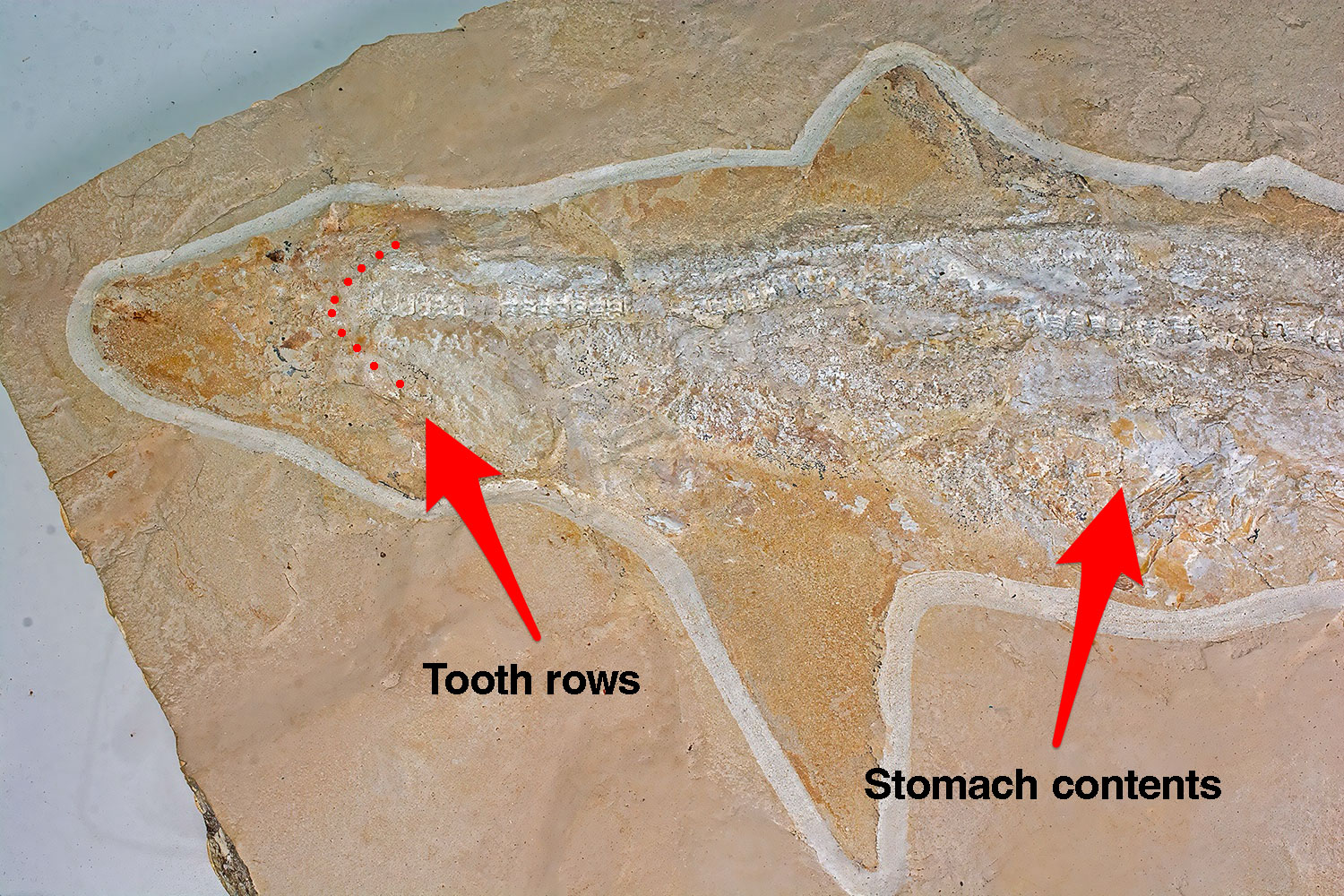
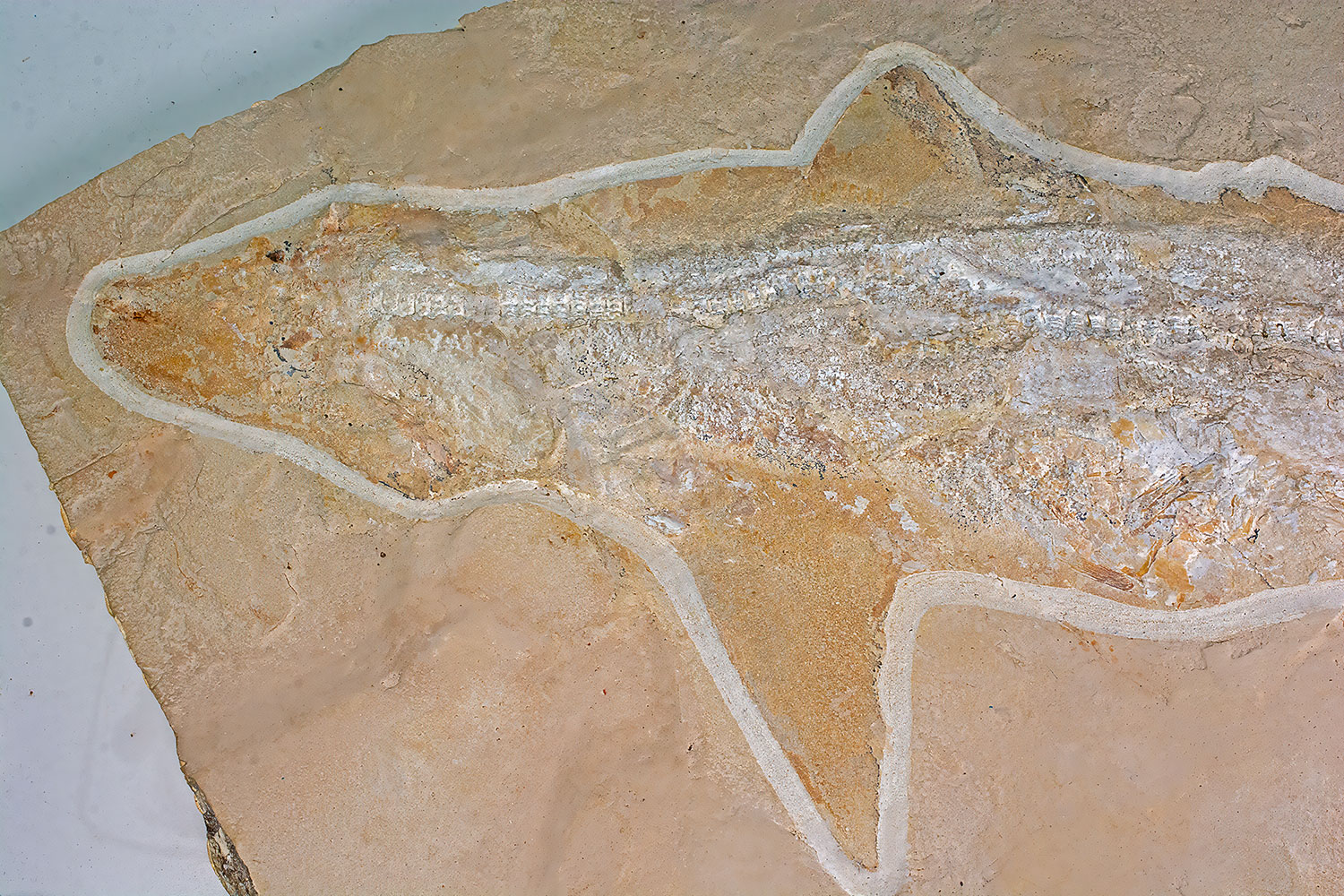
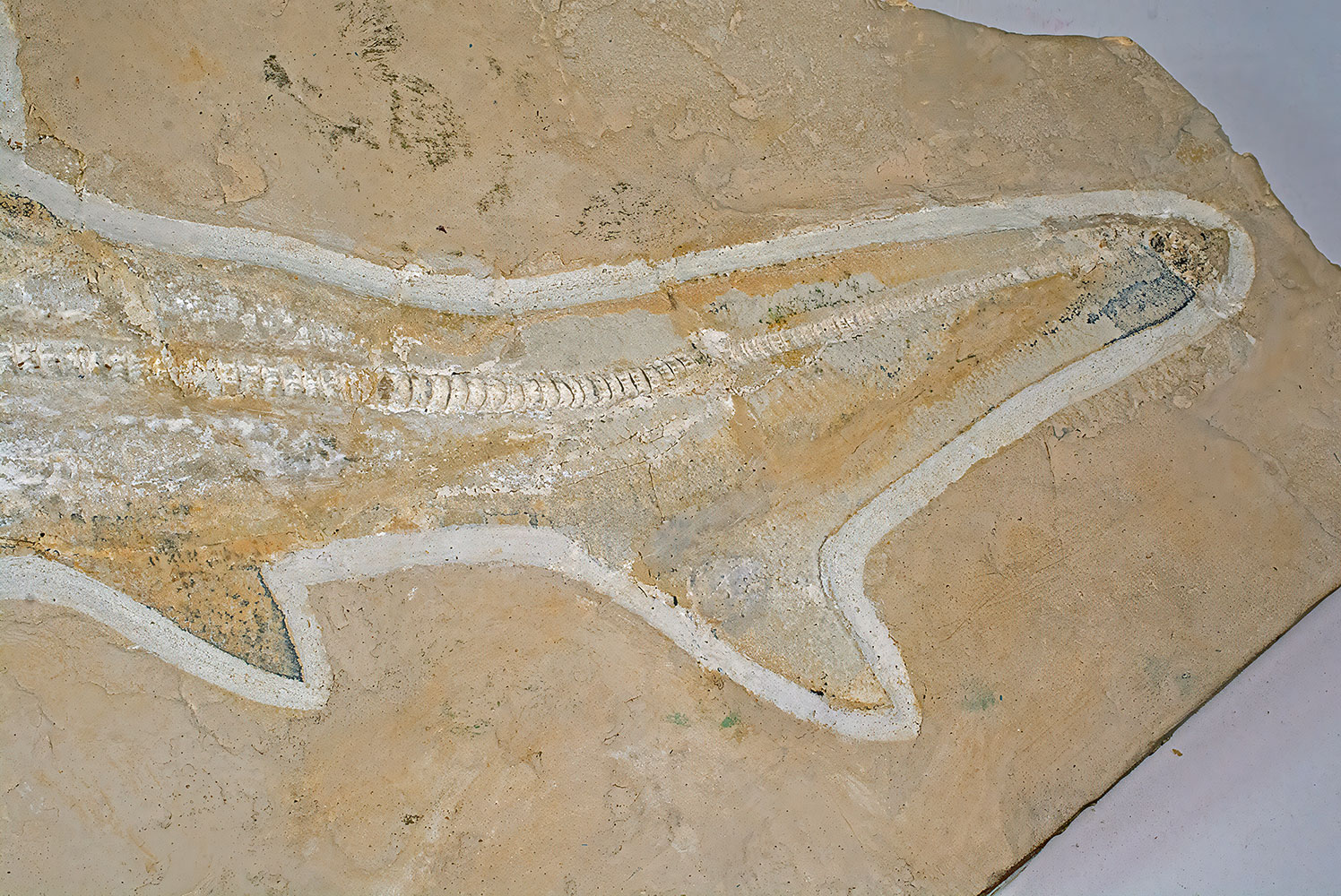
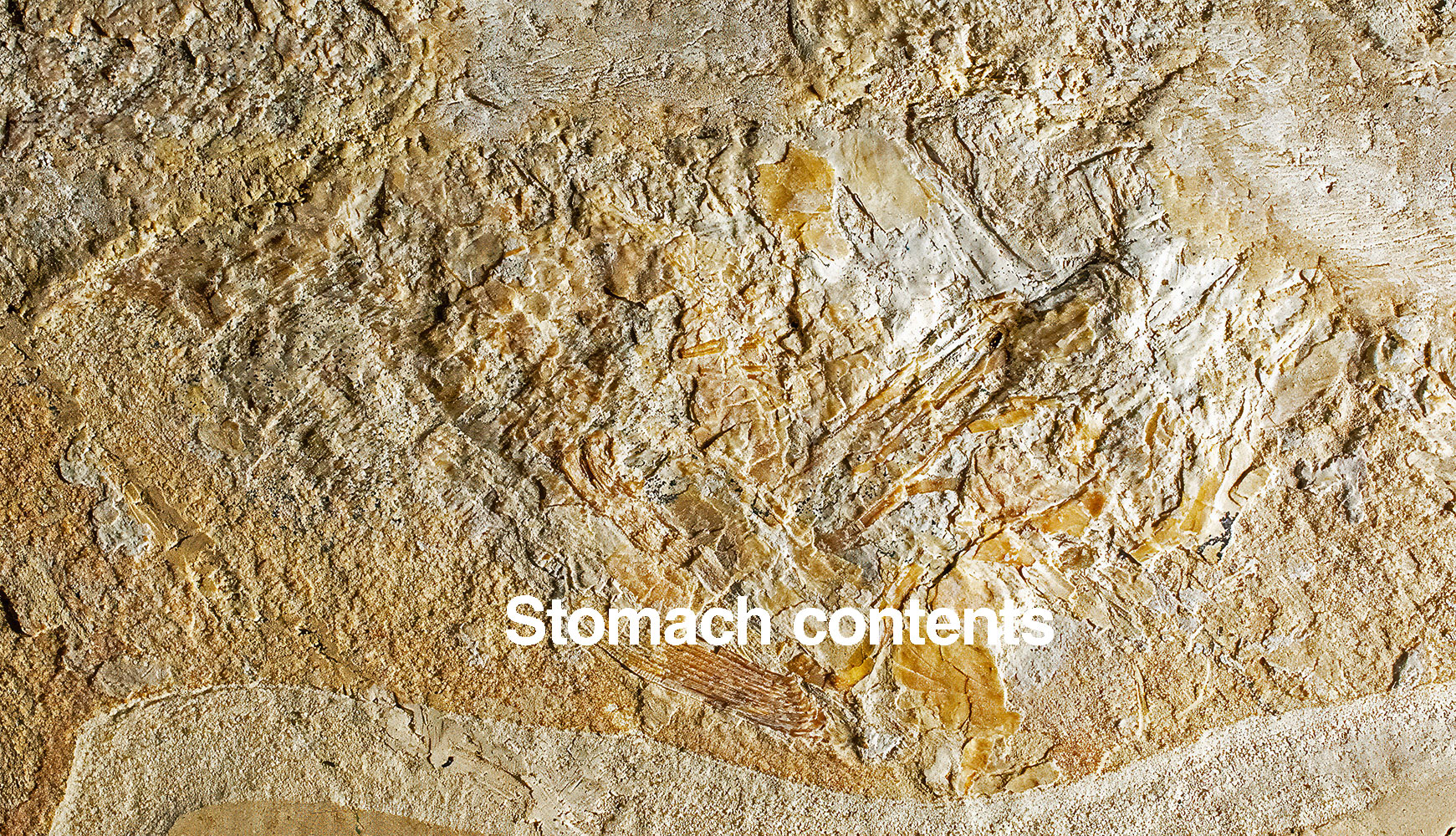
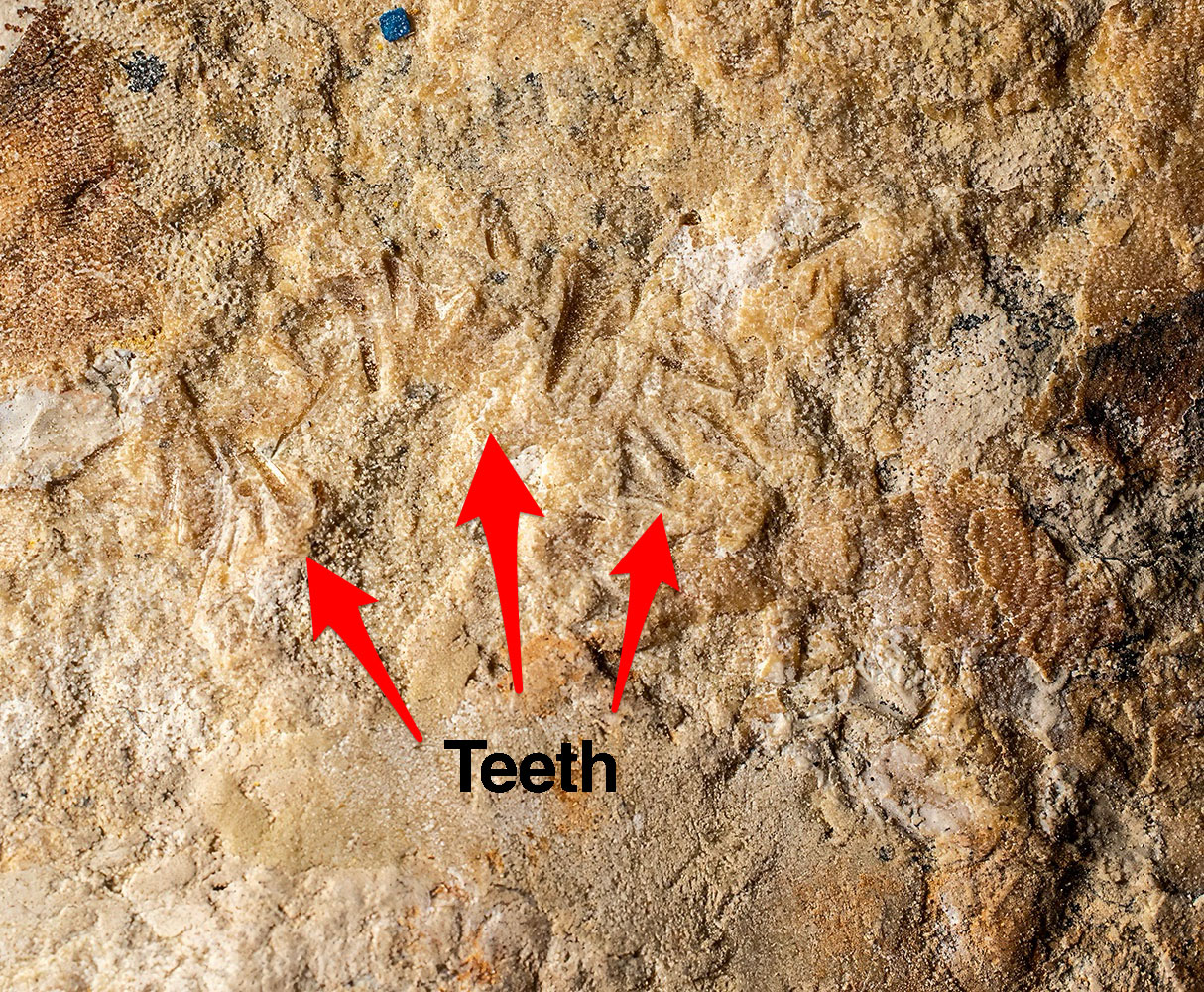
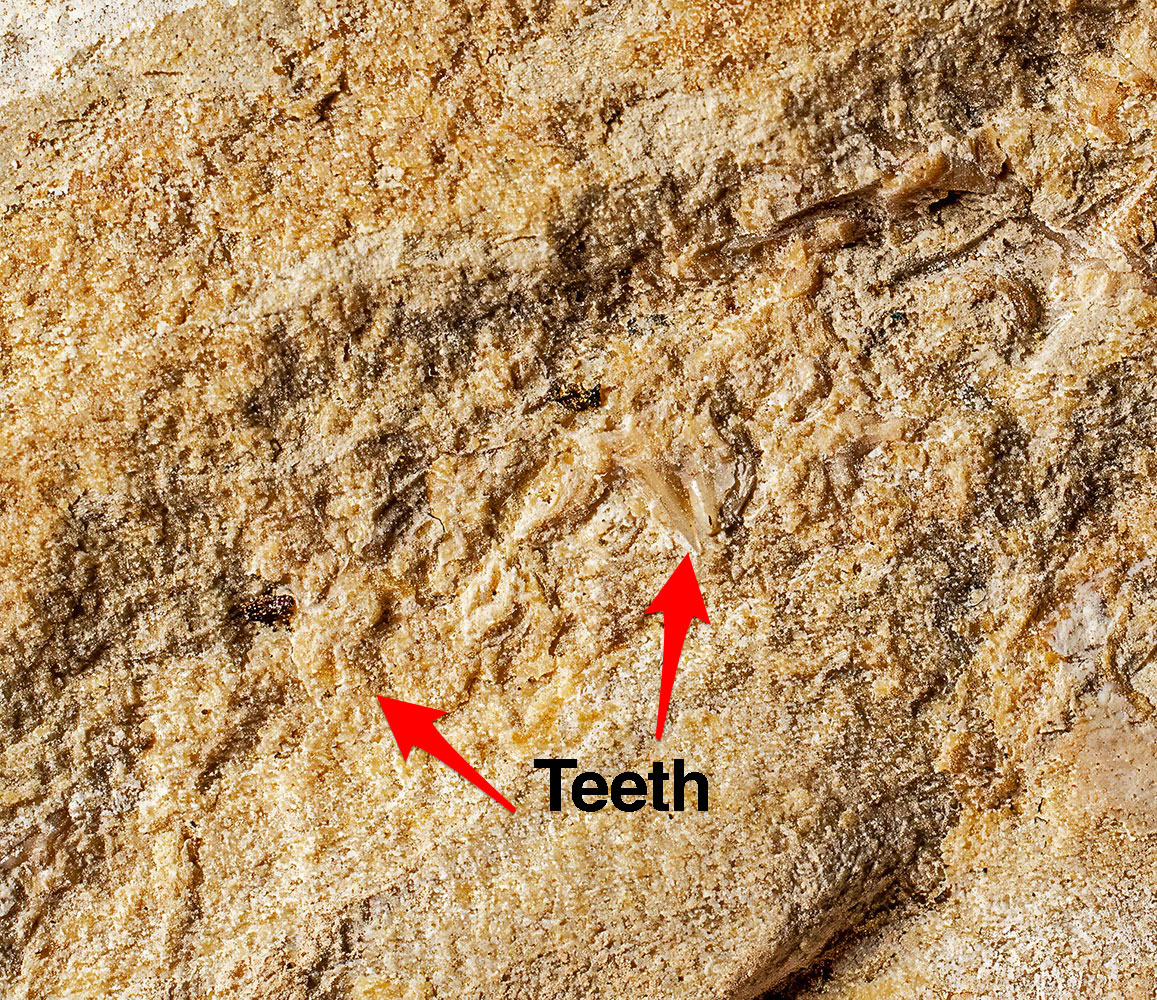
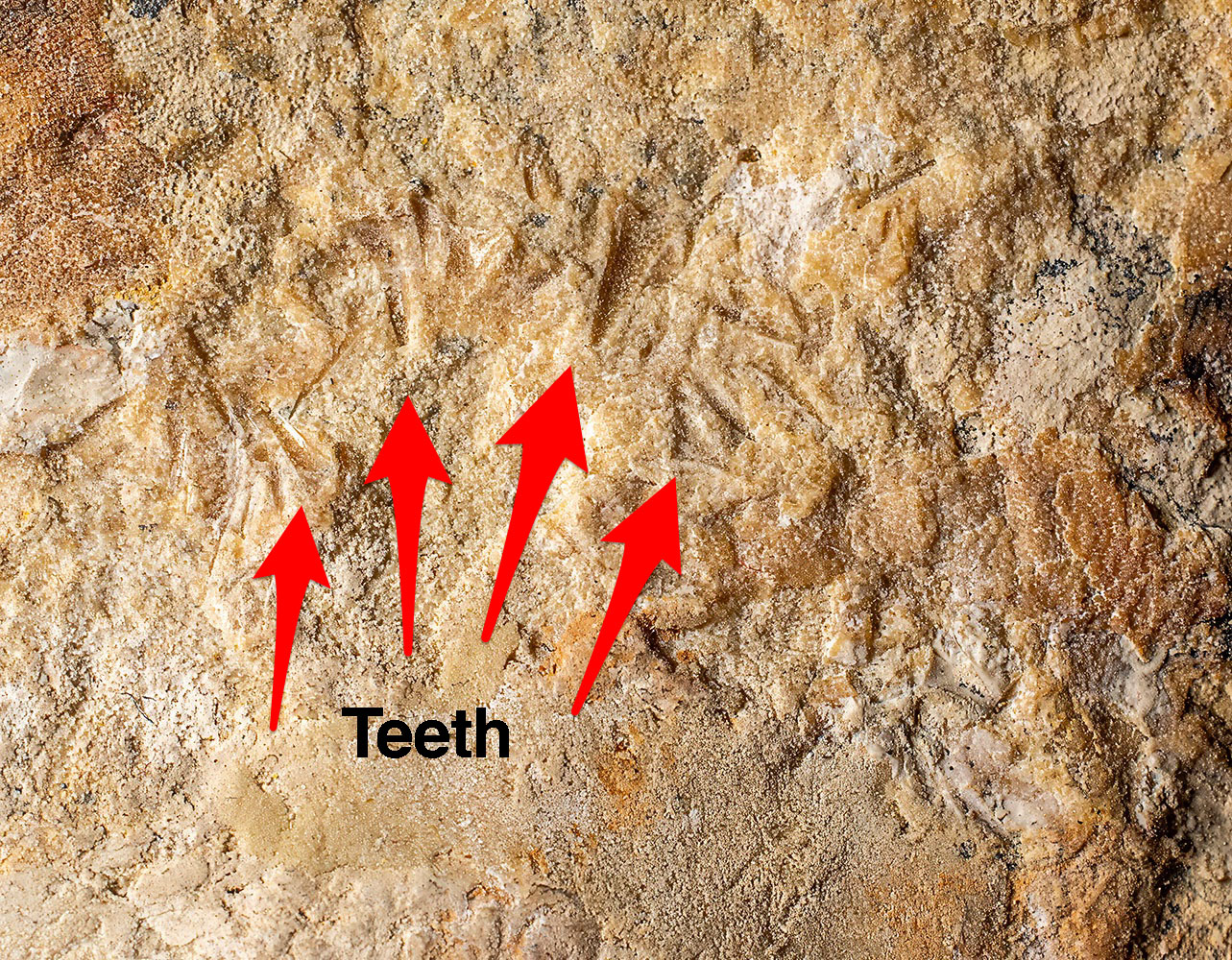
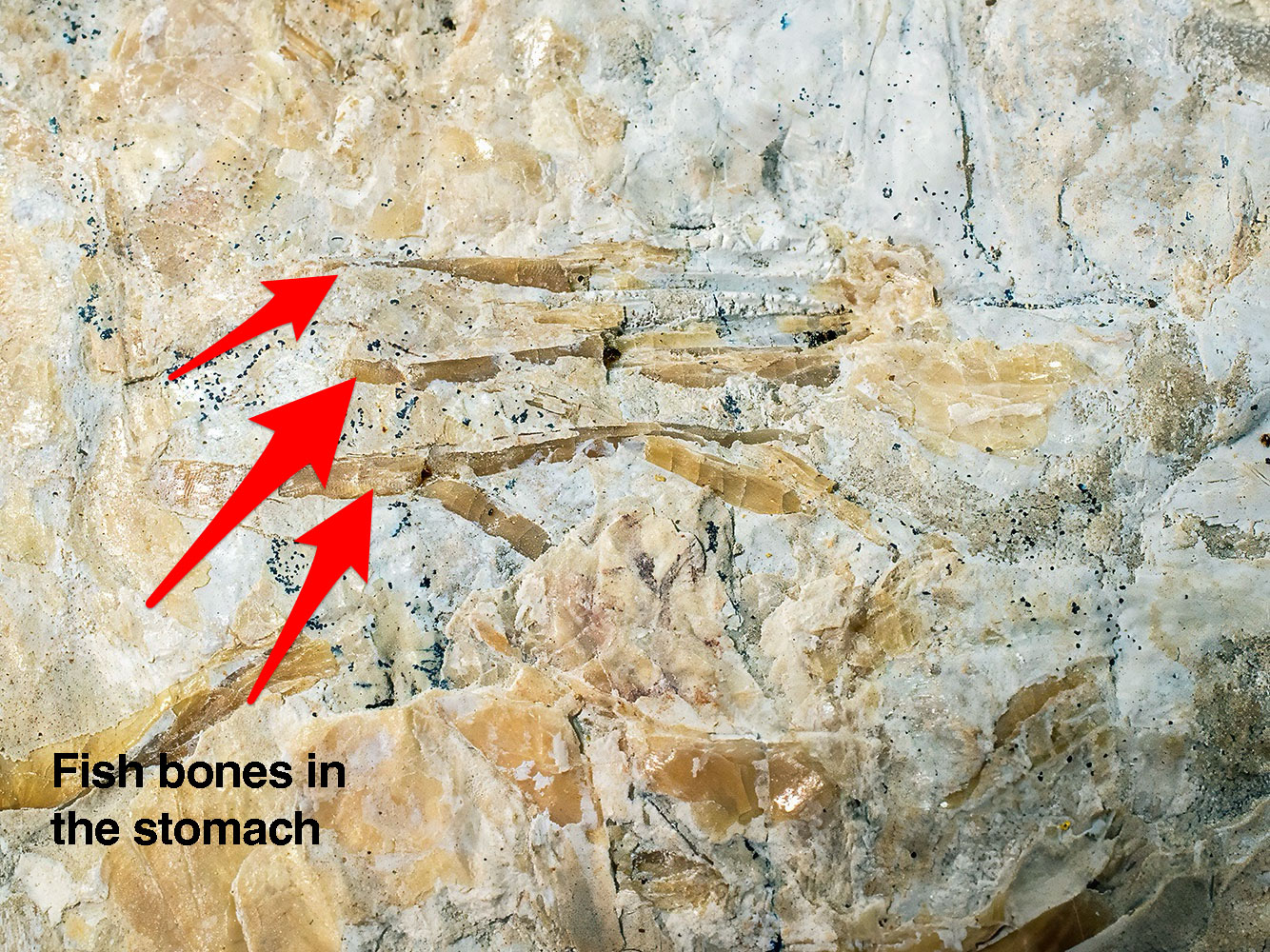
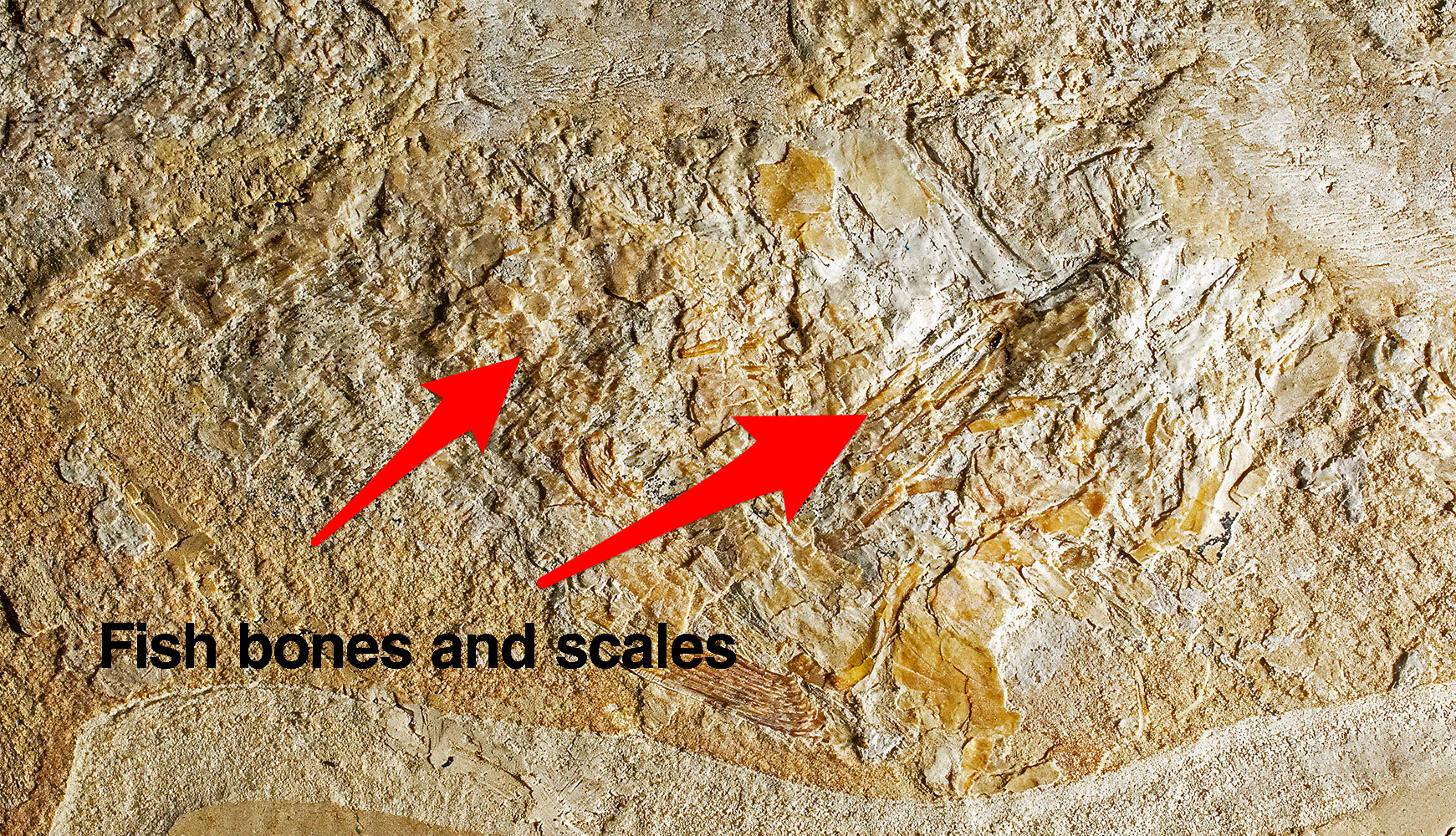
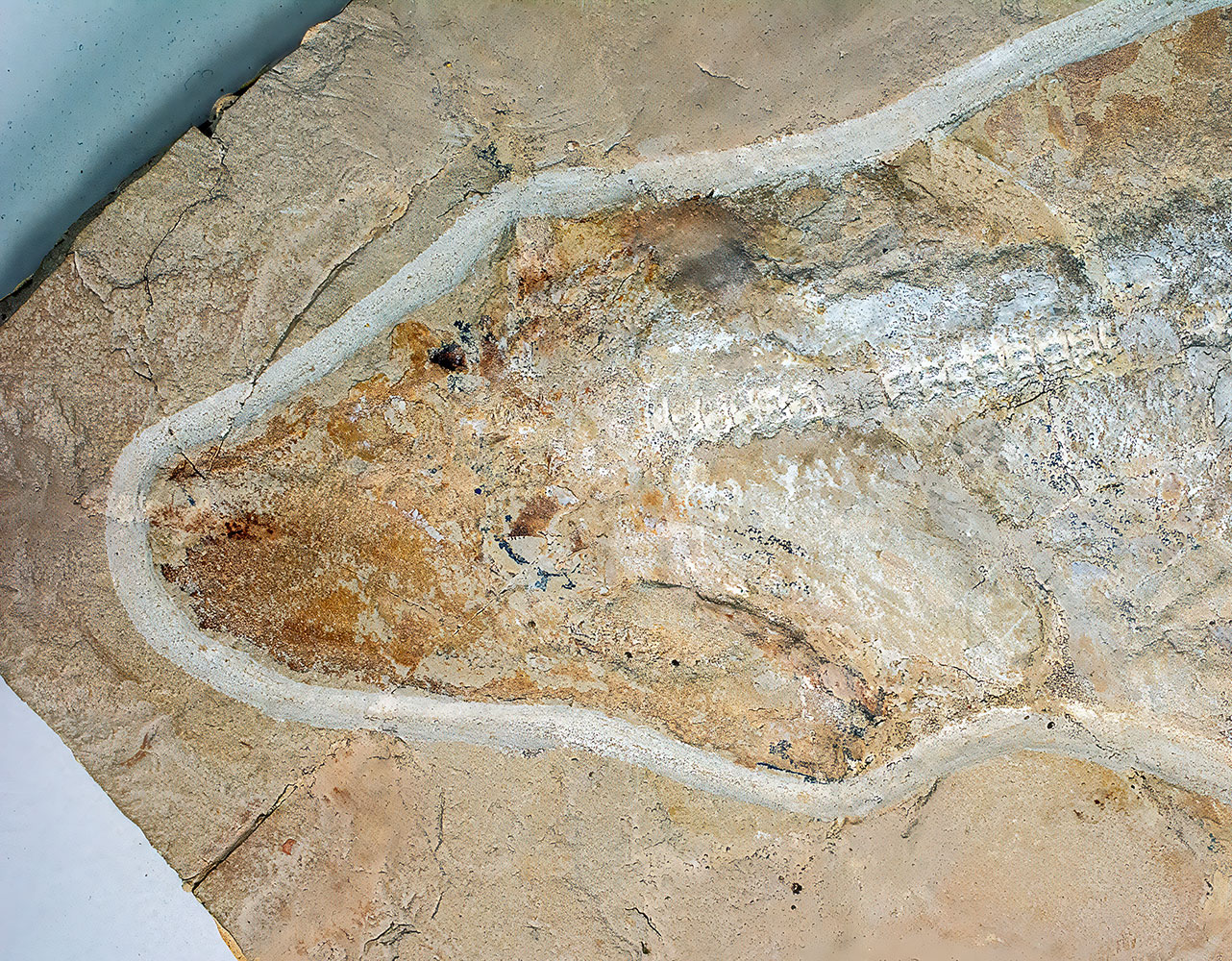
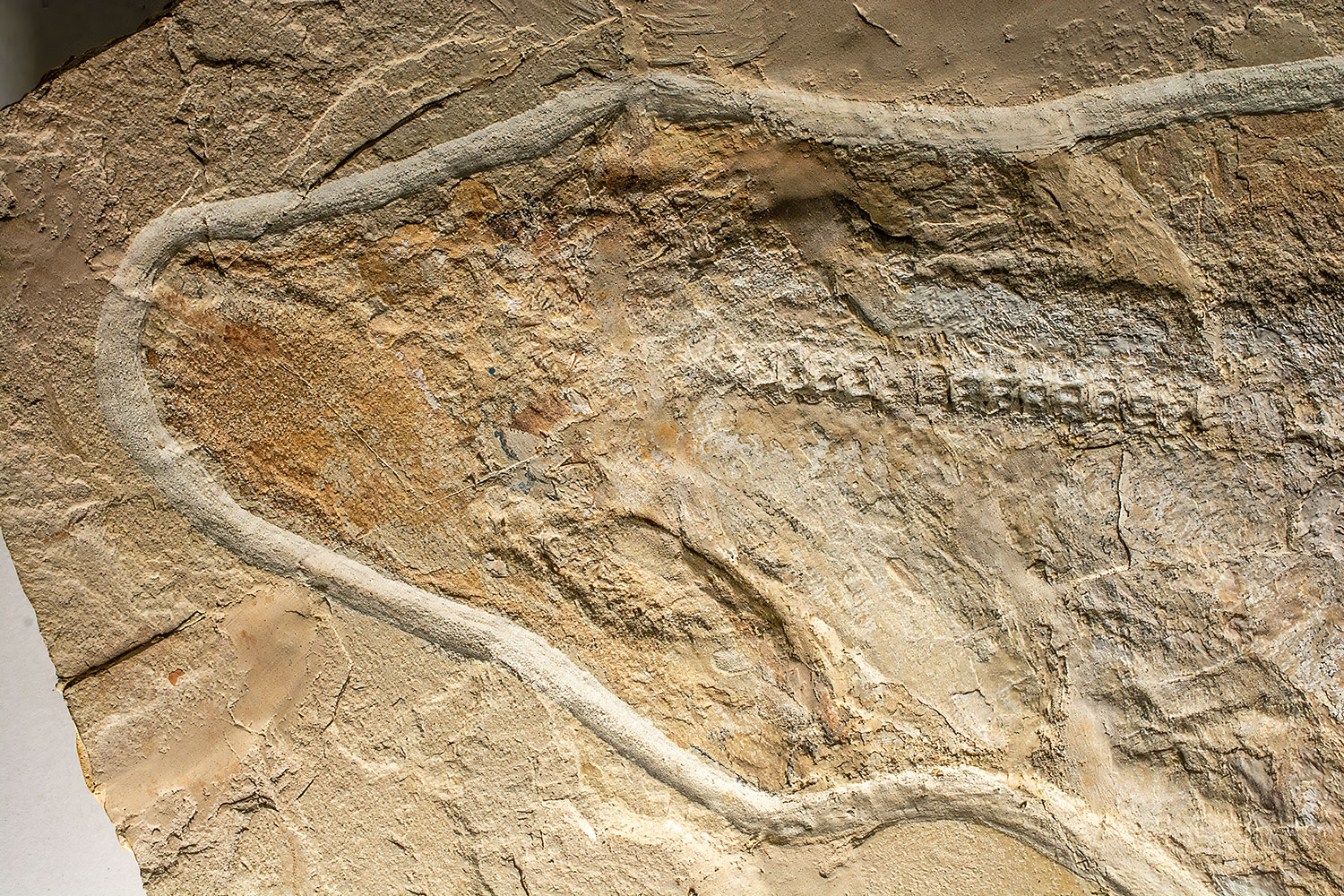
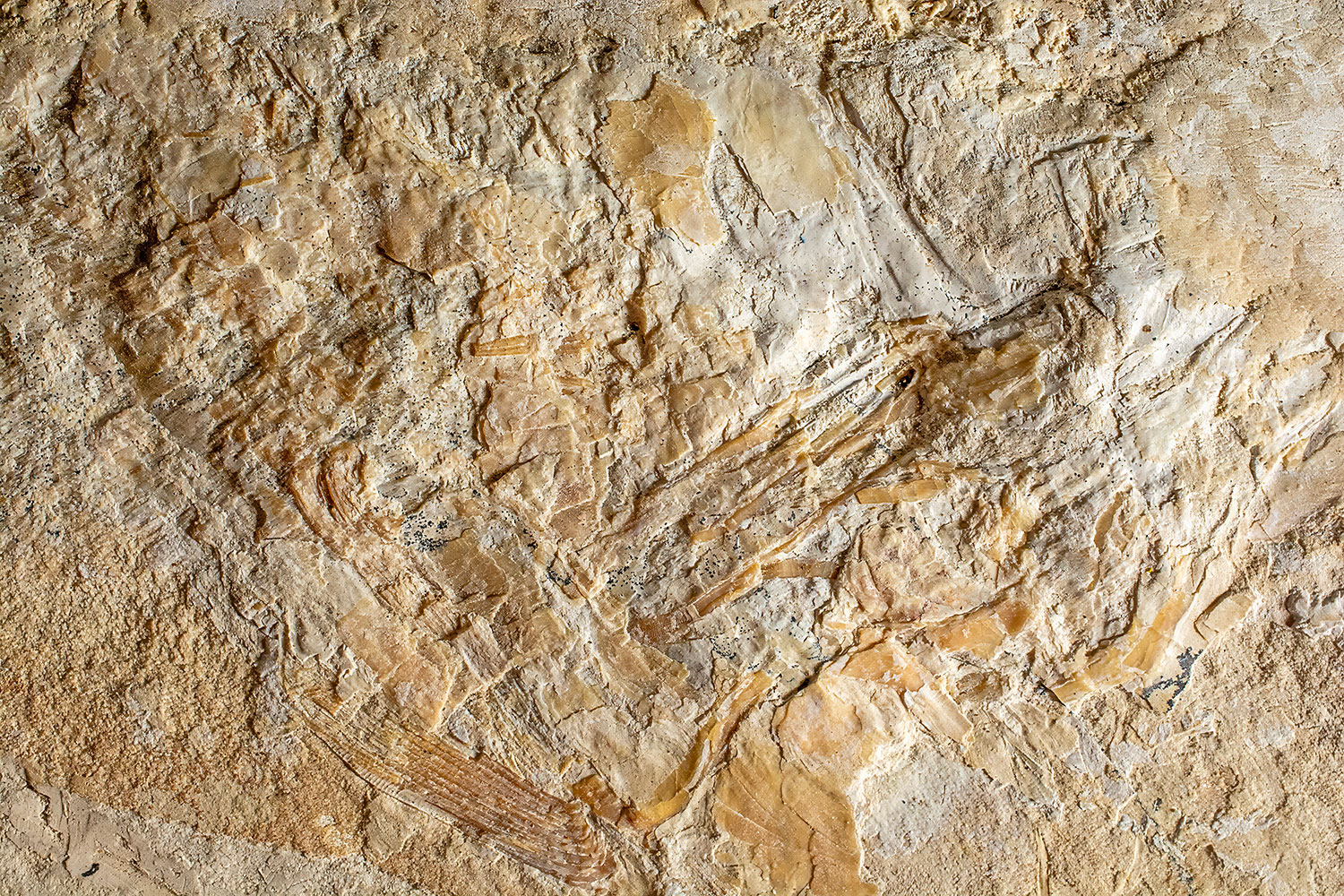
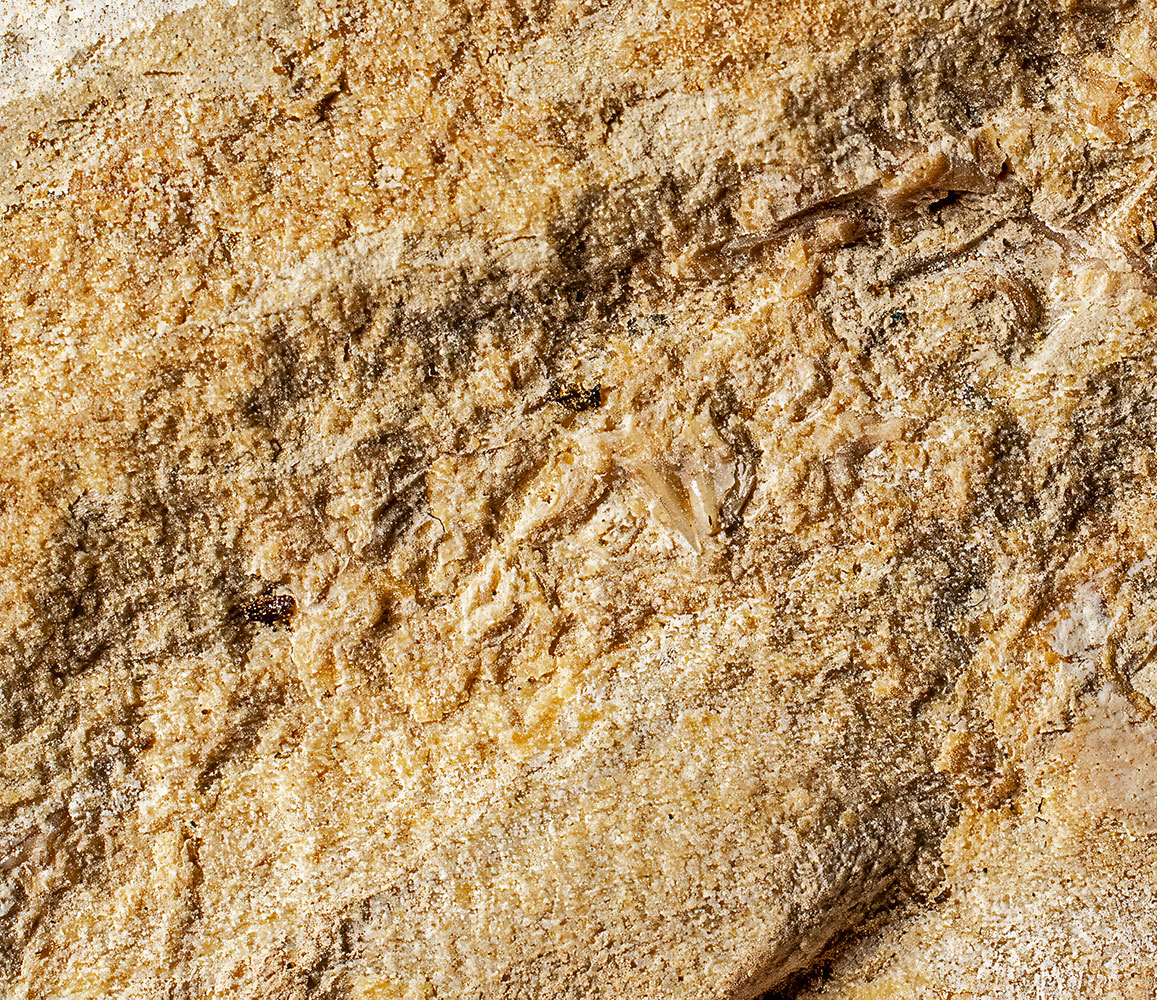
Huge 31 inch shark on 36 inch slab. Teeth and stomach contents are visible.
The visible stomach contents make this specimen particularly fascinating, providing a rare glimpse into the diet and feeding behavior of a Cretaceous shark. The preservation of the teeth in the body also gives an excellent view of the shark’s dentition and predatory adaptations. This item is heavy so email for shipping information.
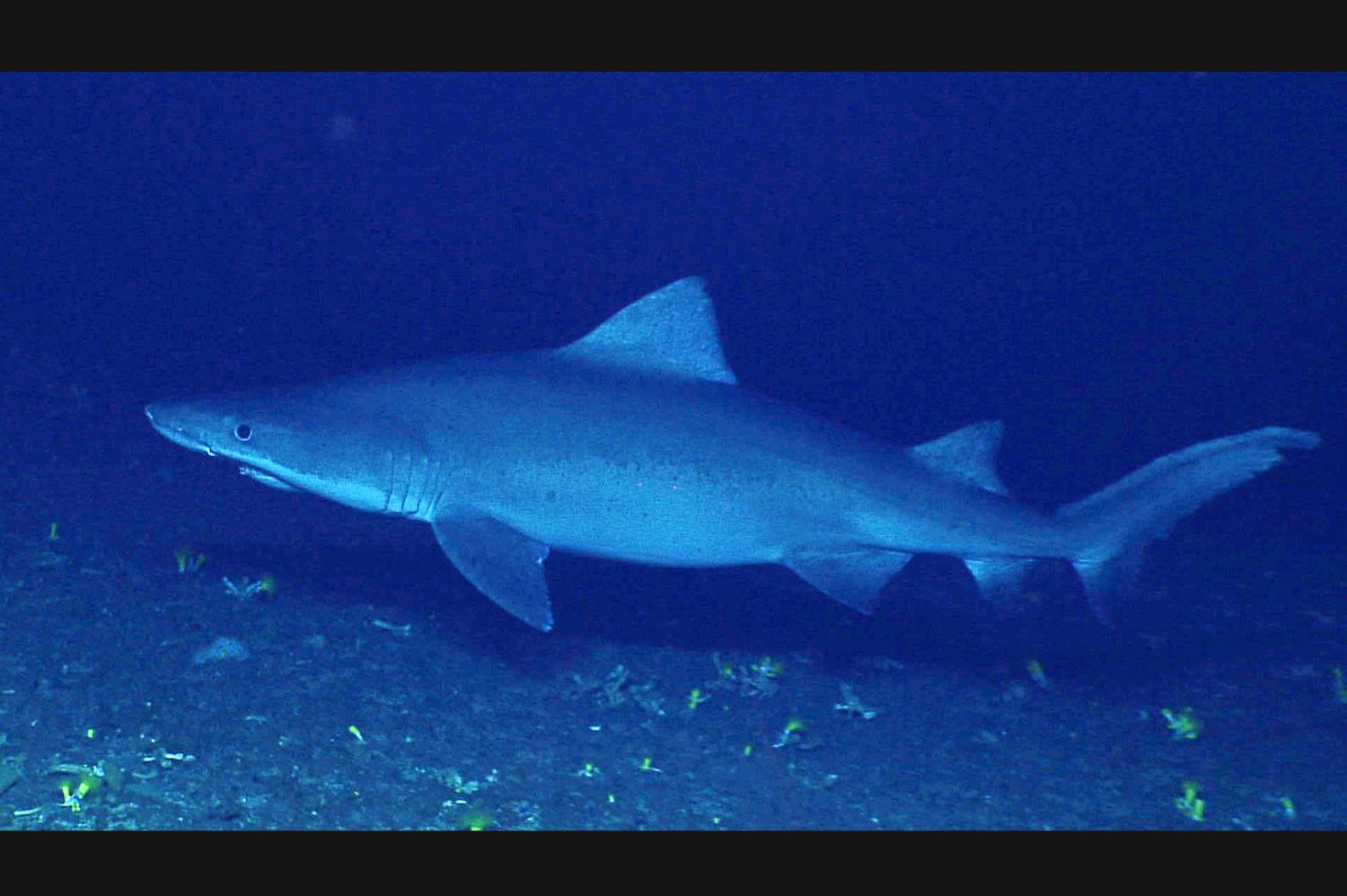
Odontaspis is a genus of sand-tiger sharks belonging to the lamniform sharks from the Late Cretaceous deposits of Lebanon. They are among the most spectacular shark fossils from the famous Lebanese Lagerstätten at Hjoula, Haqel, and nearby localities. Its living relatives include the modern smalltooth sand tiger (Odontaspis ferox) and bigeye sand tiger (O. noronhai).
The Lebanese Cretaceous species is Odontaspis aculeatus, which is specifically recorded from Hjoula. Other Lebanese material is identified simply as Odontaspis sp. or Odontaspididae indeterminate. Normally, fossil sharks are represented almost entirely by isolated teeth. That’s because a shark’s skeleton is made primarily of cartilage, which normally decays instead of becoming fossilized.
The Lebanese deposits are exceptional. Their fine-grained marine sediments occasionally preserved entire shark bodies, including the outline of the body, fins, vertebral column, and sometimes other soft tissues. This example you’re looking at isn’t just teeth – it is the complete shark, body and all. So when you see one of these fossils, you’re not looking at a giant collection of teeth arranged into a shark—you are looking at the actual body of the animal preserved in the rock.
The teeth are especially characteristic. They have large central cusps and smaller lateral cusplets, producing the needle-like dentition typical of odontaspidids. Unlike sharks such as Squalicorax or lamnid sharks with strongly cutting teeth, Odontaspis had long, narrow teeth suitable for puncturing and holding slippery prey.
Why are complete shark fossils so rare?
This is probably the most important thing about the Lebanese specimens. A shark normally dies and its body is rapidly attacked by scavengers, bacteria and currents. The cartilage skeleton then collapses and disappears, but the Lebanese Lagerstätten had unusually favorable conditions for rapid burial and exceptional preservation. A carcass could be covered by fine sediment before it was completely destroyed.
That is why the Lebanese fossils can preserve the outline of the entire animal, something that is extraordinarily uncommon in the fossil record of sharks.
In addition, there’s an interesting complication here. Older literature sometimes used Odontaspis rather broadly for Cretaceous sand-tiger-like sharks. Modern shark taxonomy has become considerably more cautious because odontaspidid and carchariid teeth can look remarkably similar. Consequently, not every Cretaceous shark historically called Odontaspis necessarily belongs to the modern genus.
The Lebanese record, however, does contain a formally recognized Odontaspis aculeatus, along with additional specimens assigned to Odontaspis sp. or Odontaspididae indeterminate.
The short version here is that the Lebanese sharks are unusually valuable because they don’t just tell us what Cretaceous sharks’ teeth looked like—they can show us what the entire sharks actually looked like.