

Description
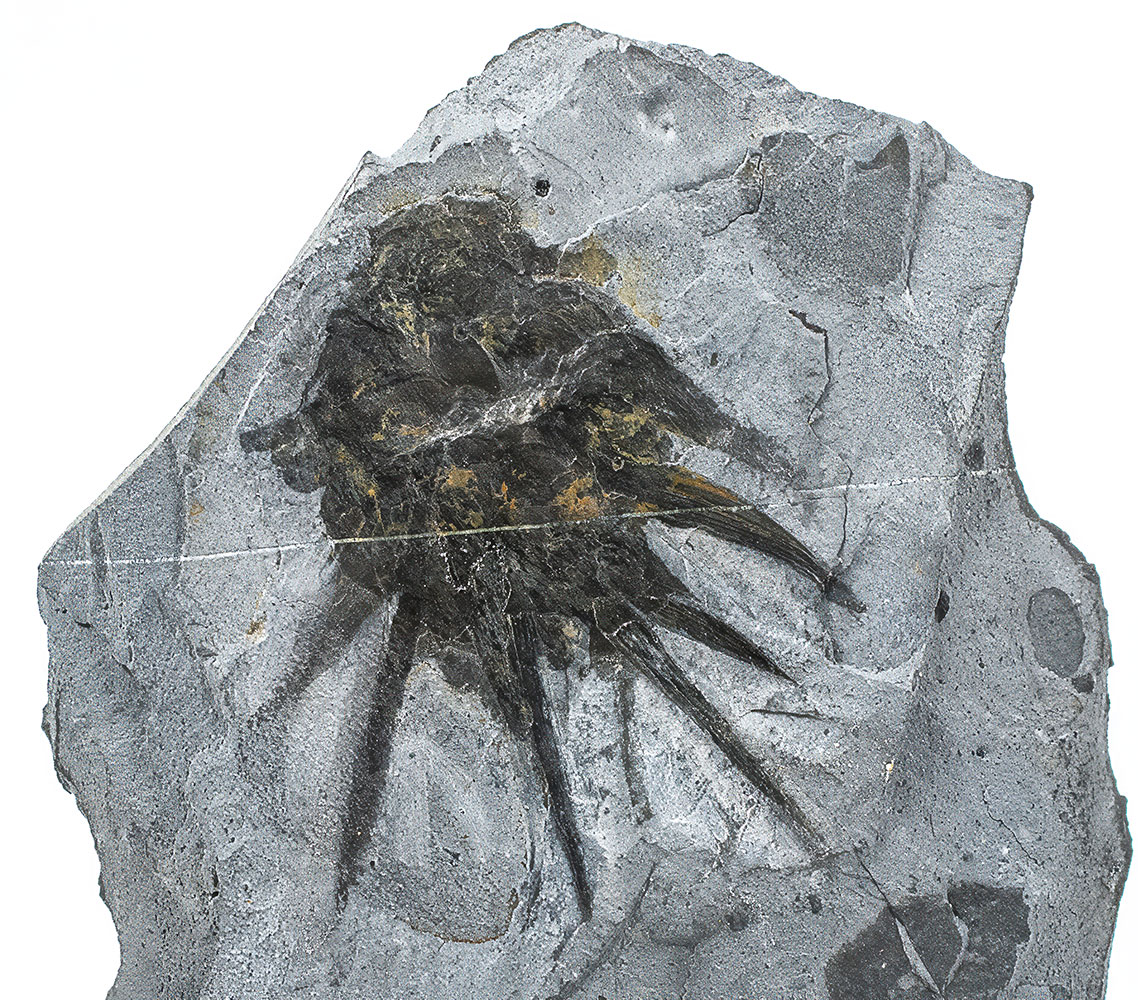
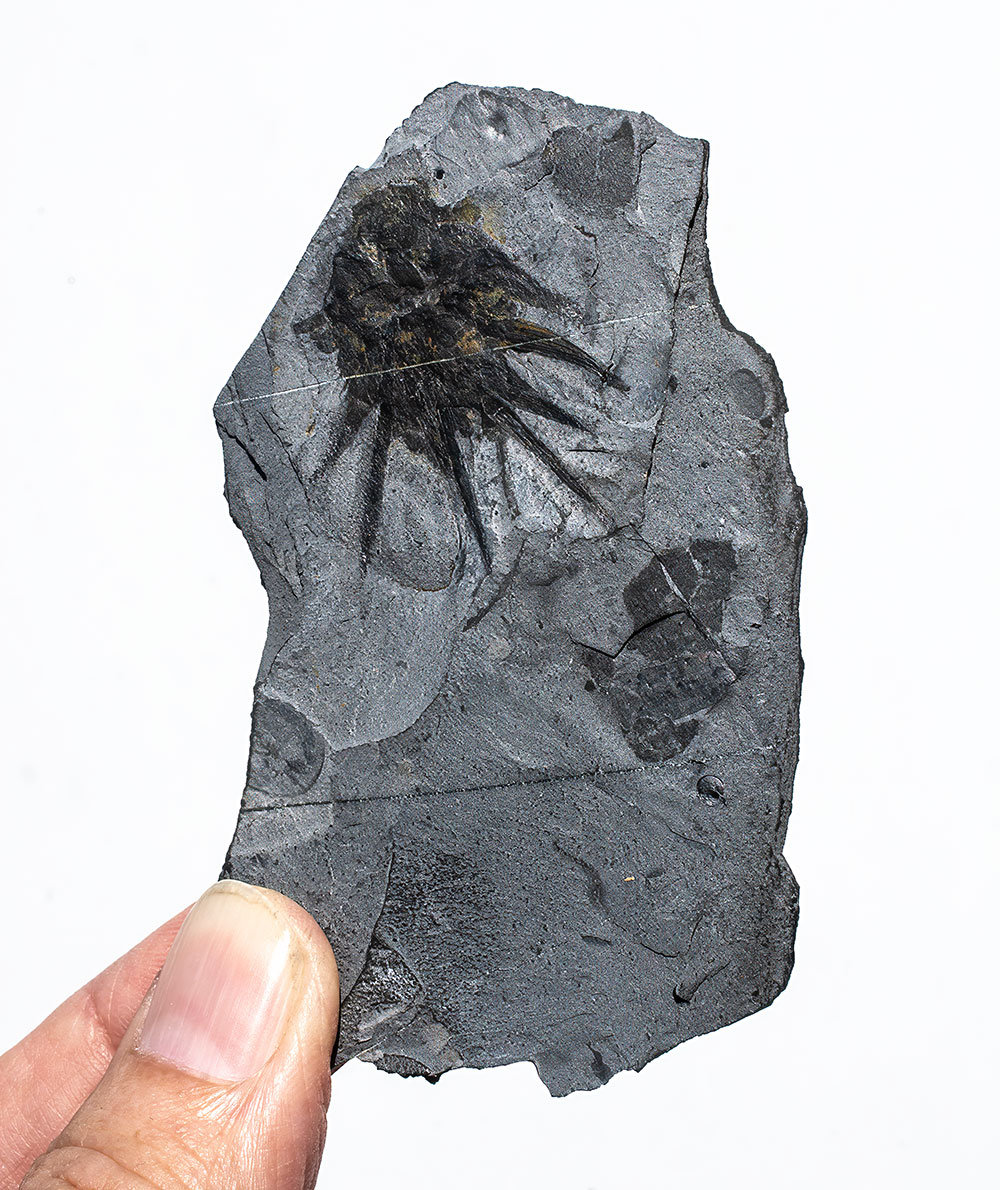
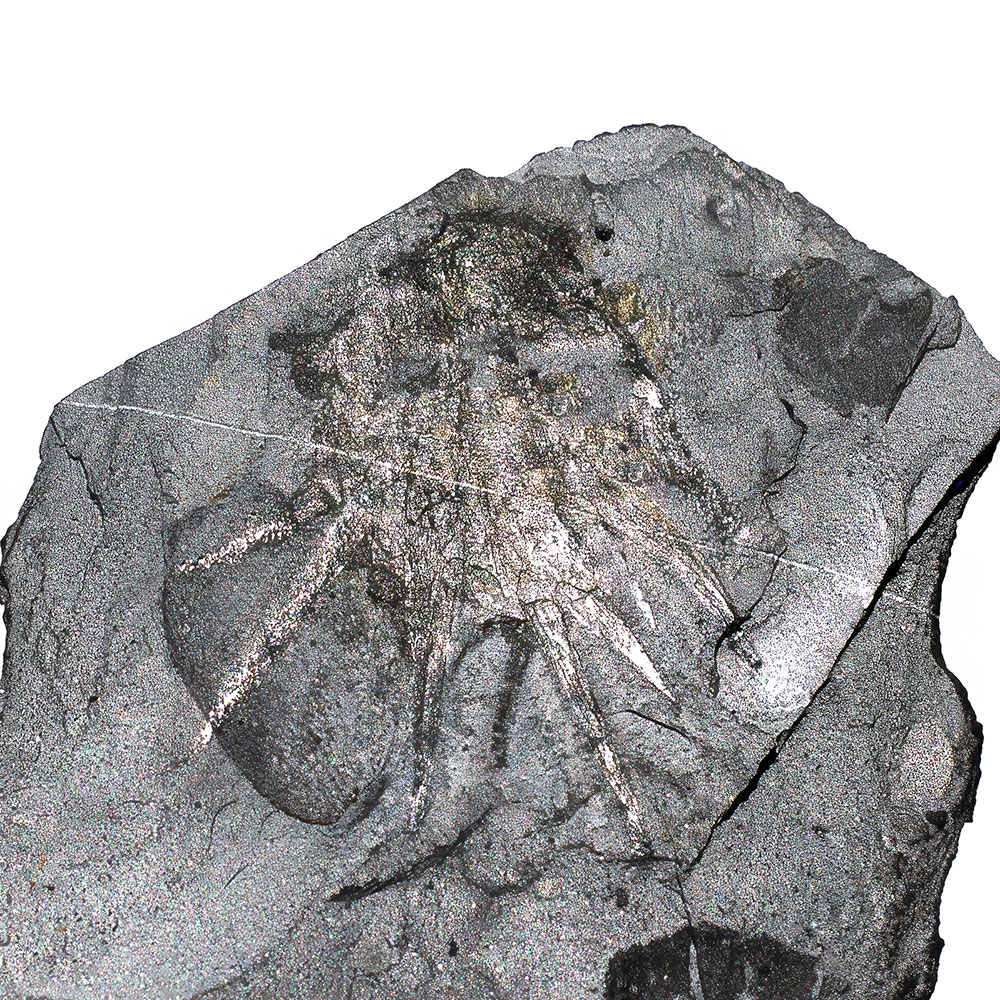
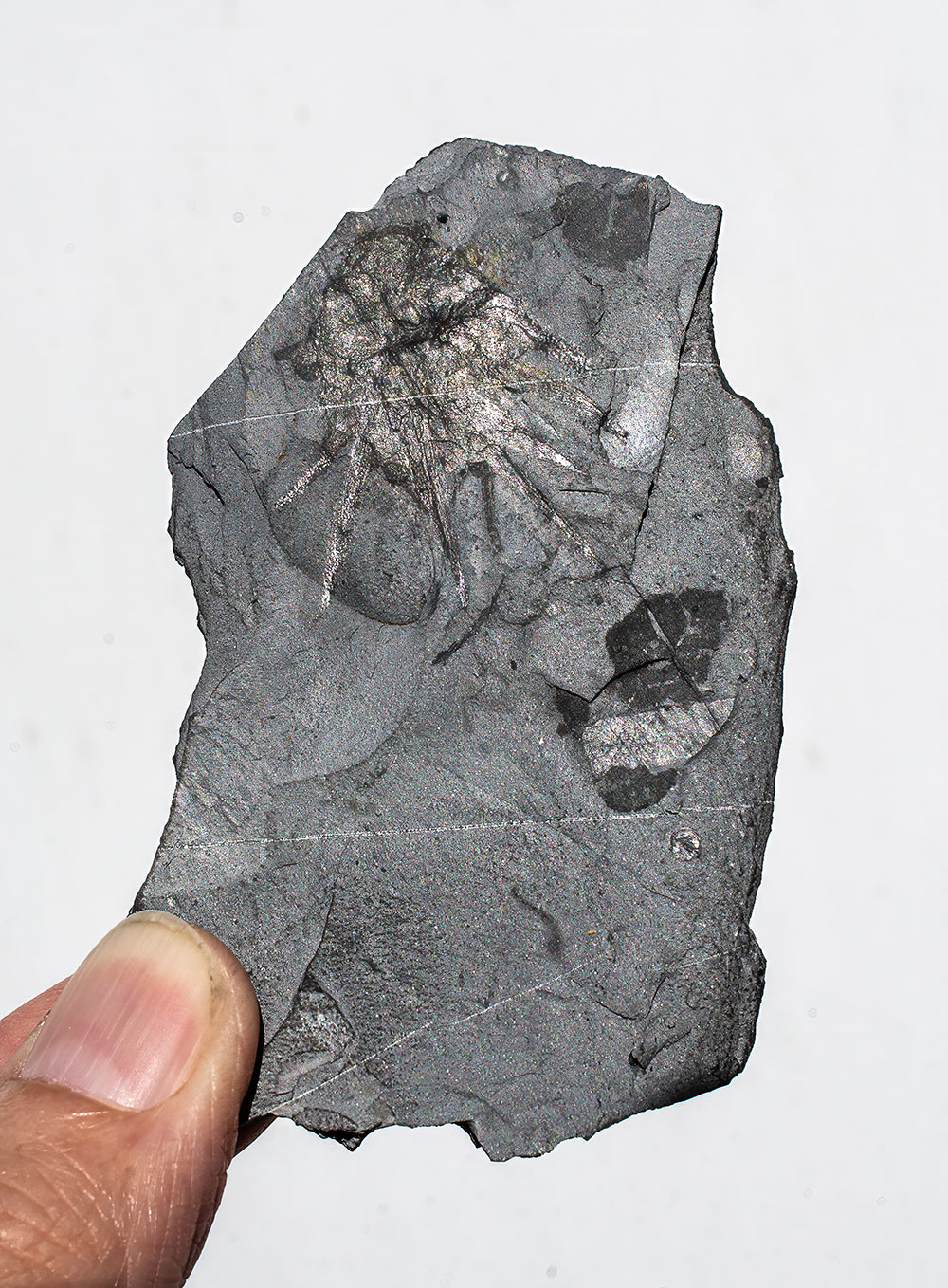
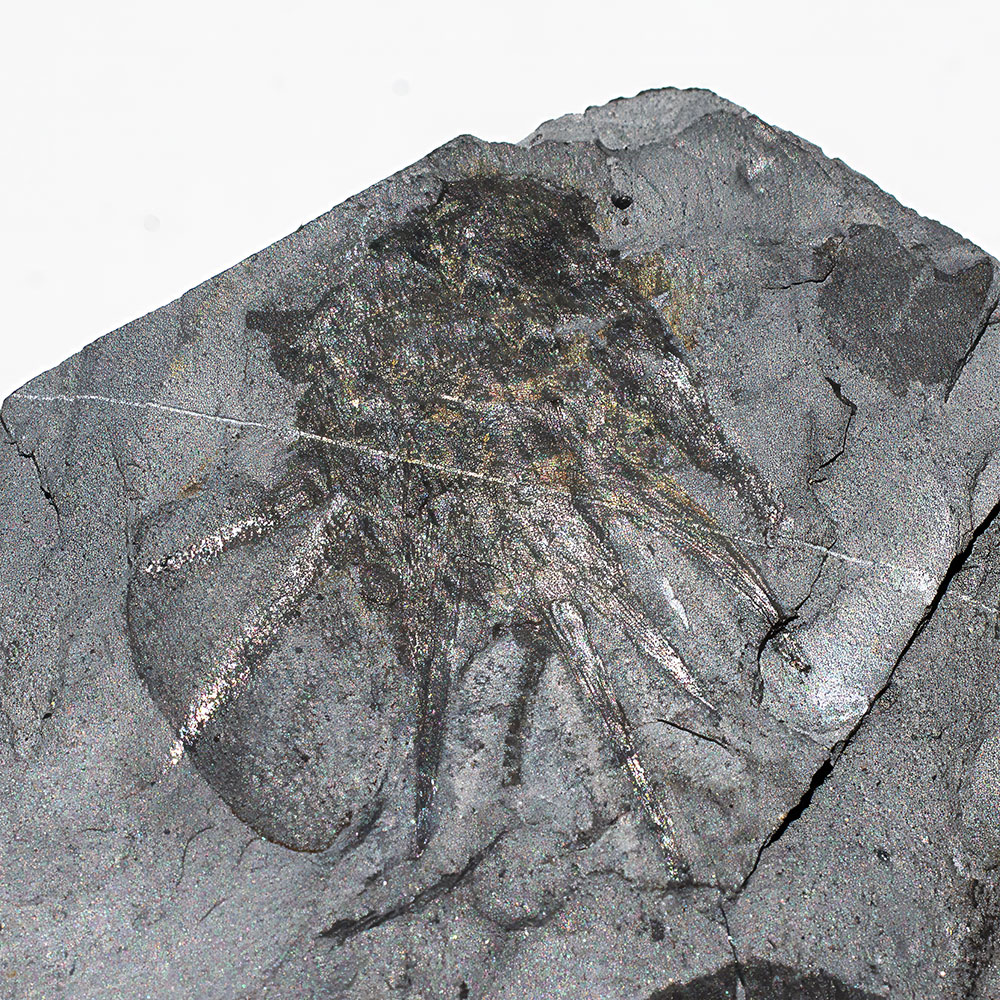
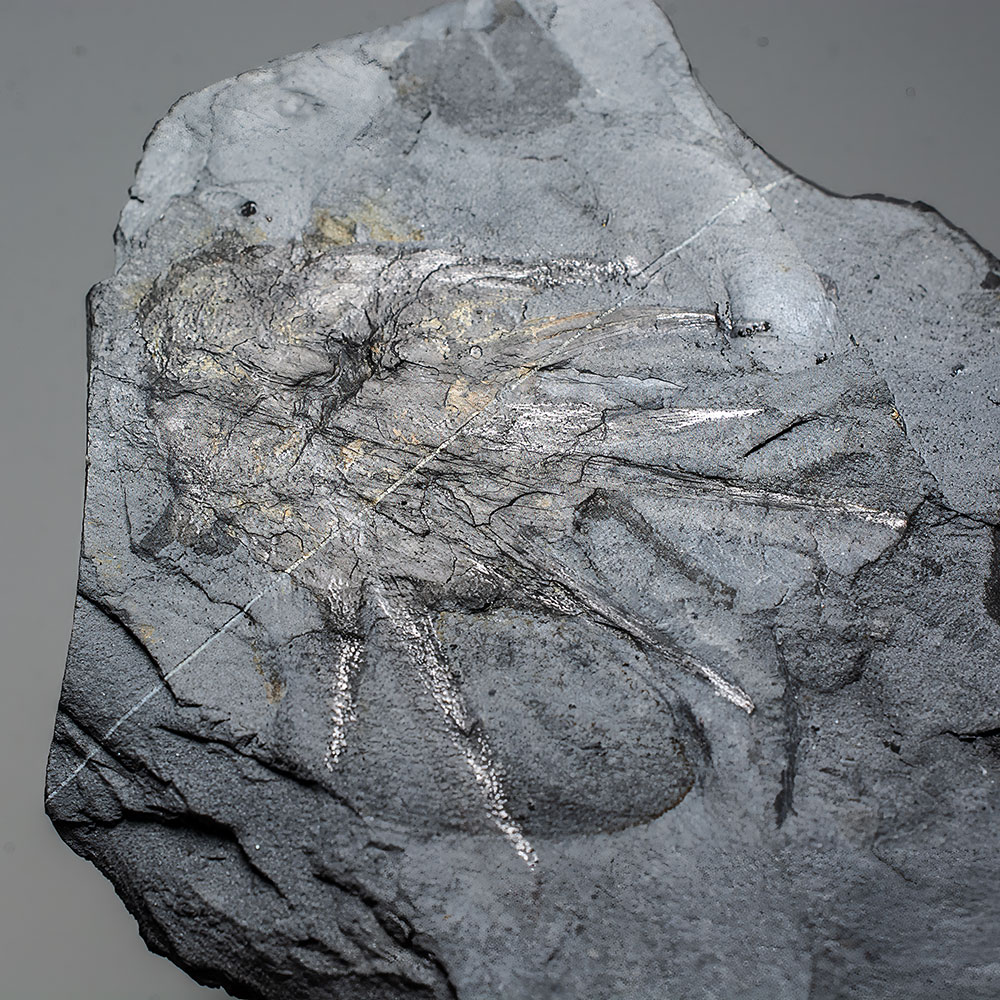
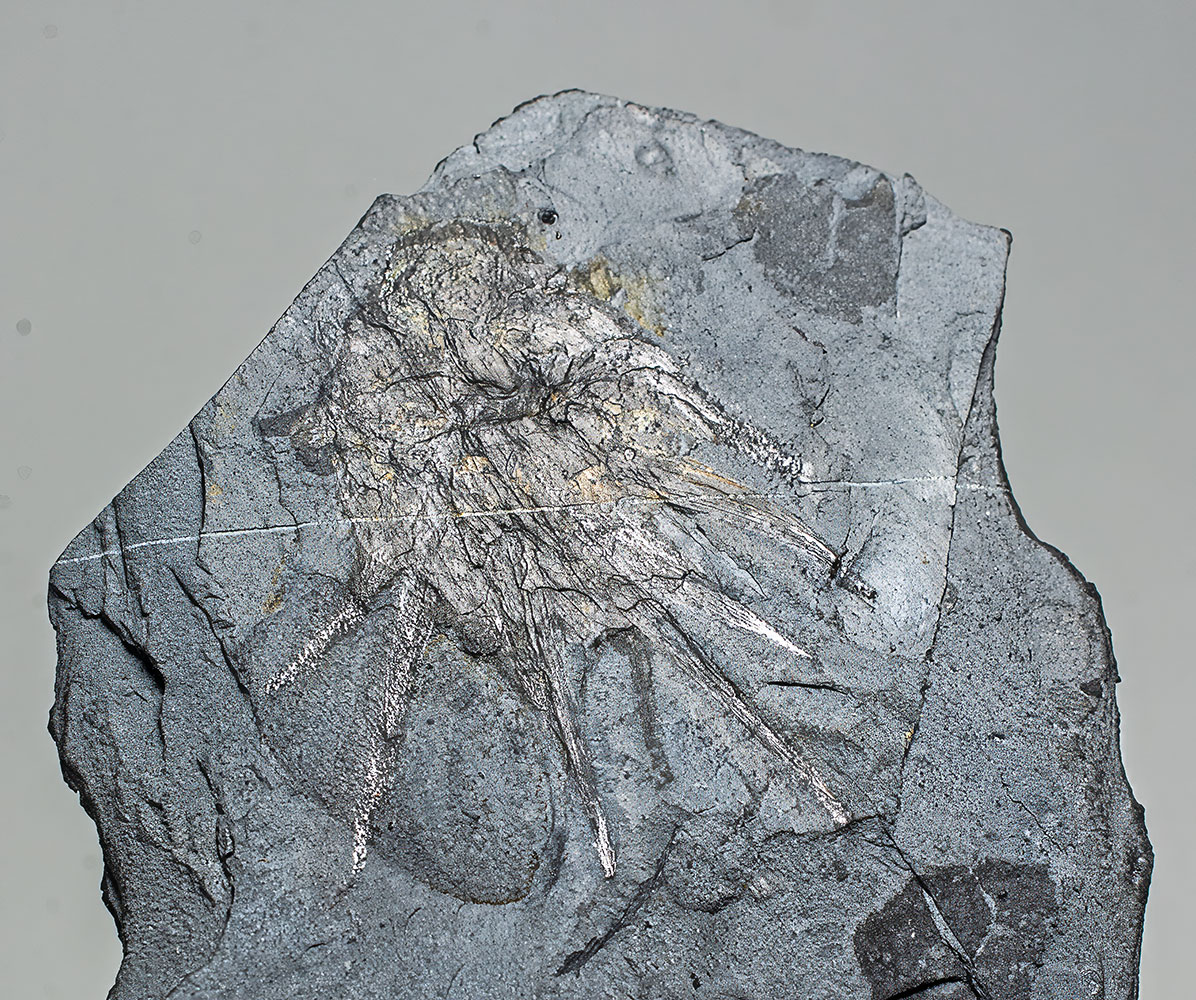
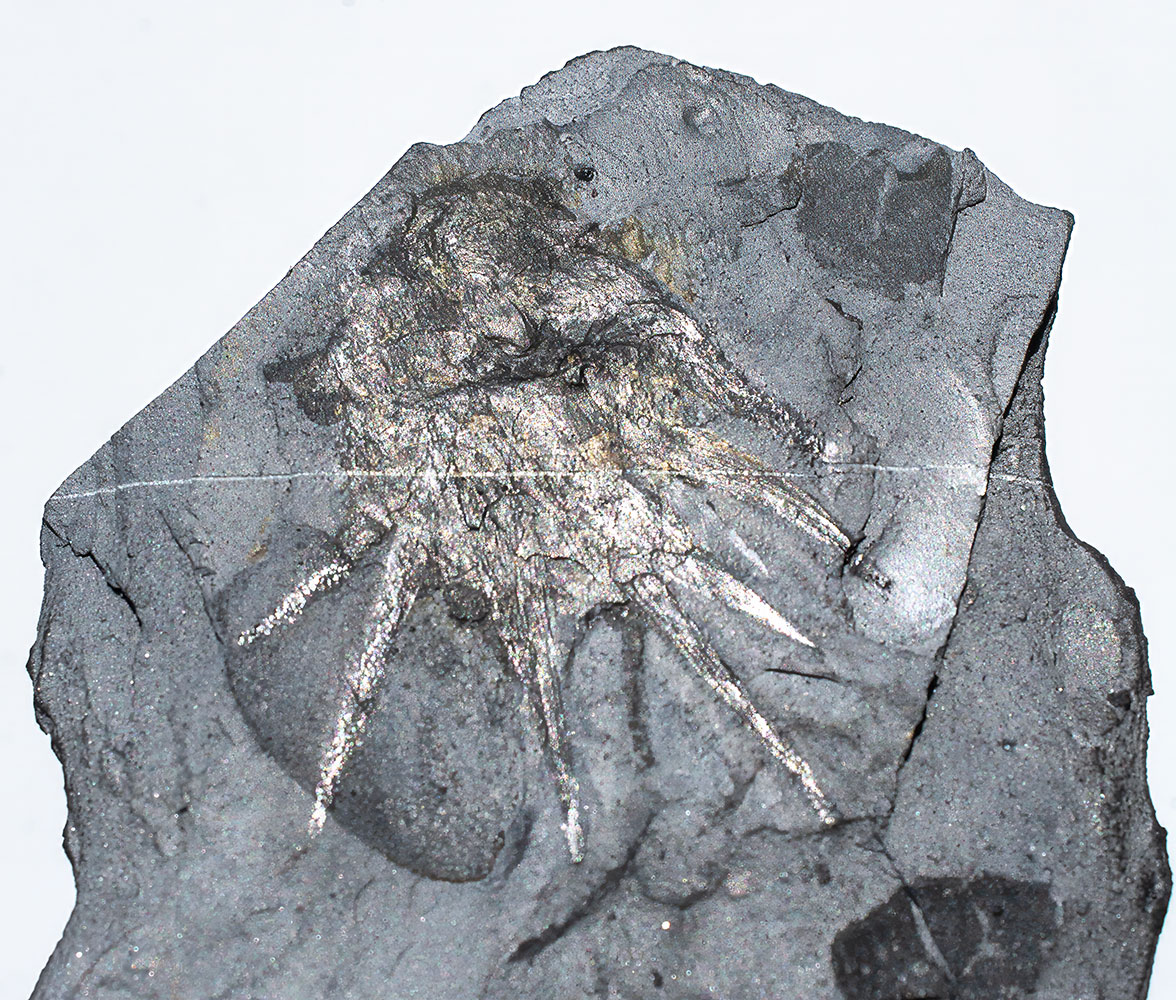
Wiwaxia corrugata (Matthew 1899)
Middle Cambrian
Burgess Shale, Stephens Formation
Field, British Columbia
British Columbia, Canada.
Ultra-rare 1.5” animal. Onl;y the second one we have had in 40 years. Acquired from an old collection of a collector who passed away last year.
Wiwaxia was a strange, armored marine animal that lived during the Cambrian Period, roughly 505–495 million years ago. It is especially famous from the Burgess Shale of British Columbia. It was a small, bottom-dwelling animal covered in hard scales and long defensive spines. The best-known species, Wiwaxia corrugata, was generally only a few centimeters long, although larger individuals could reach around 5 cm. It has long been among the most iconic animals of the Burgess Shale and almost never offered for sale.
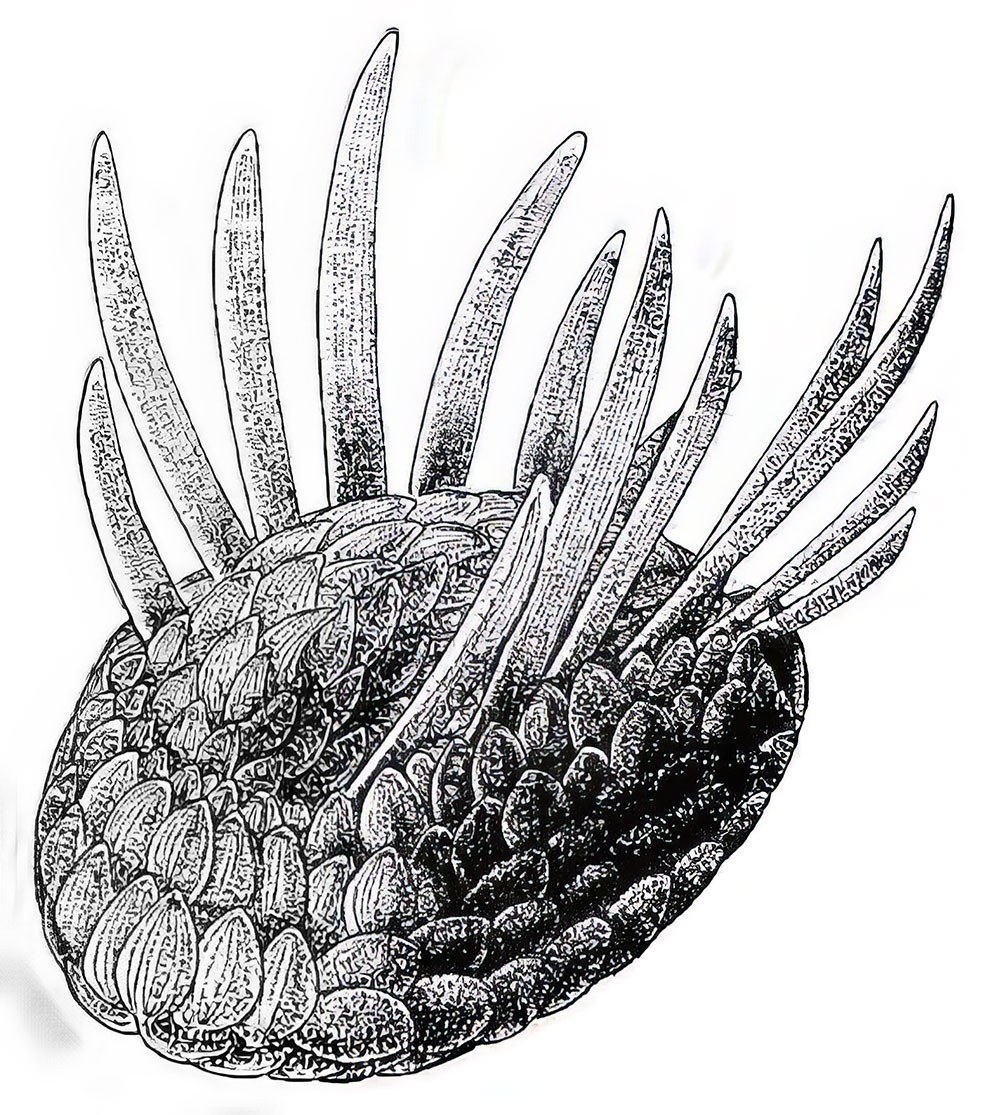
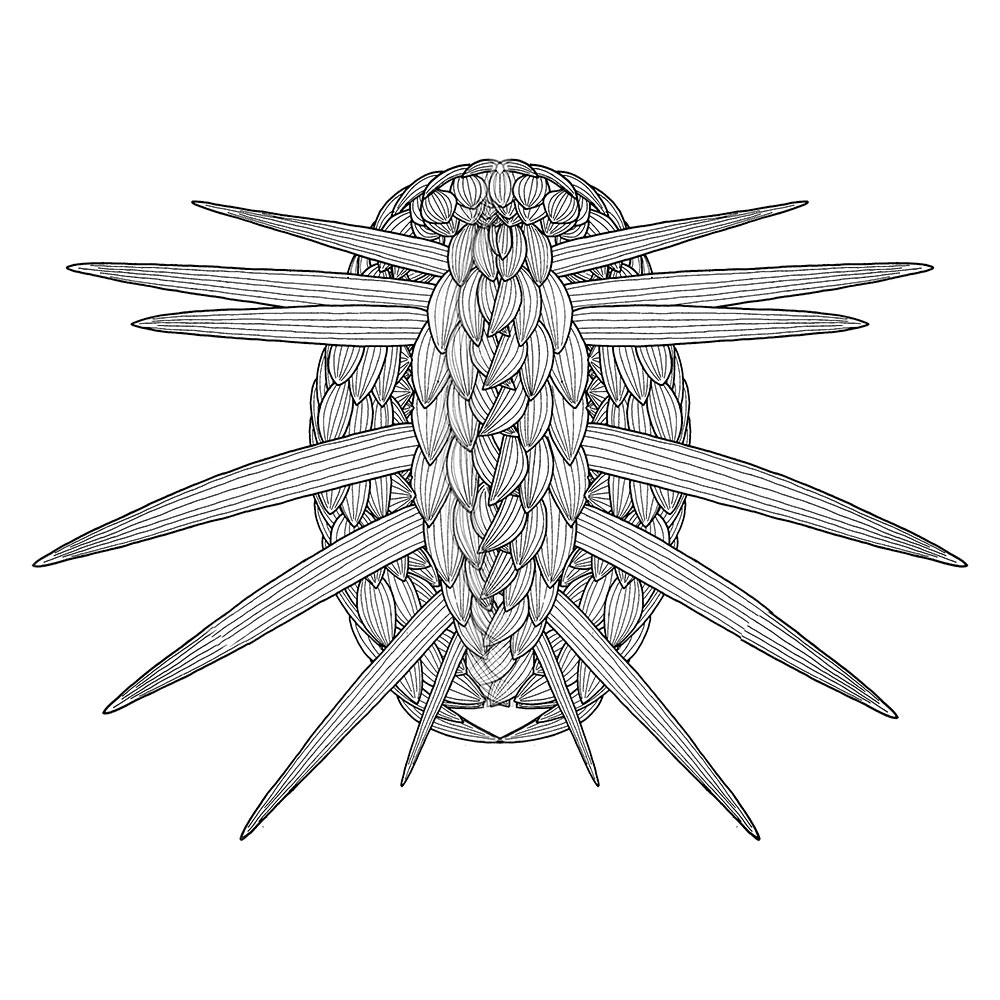
Its body was roughly oval and flattened, with rows of overlapping armor plates covering its back and it looked bizarre. Imagine a slug covered in hundreds of overlapping scales, with enormous spikes sticking upward from its back. This armor was it’s most distinctive feature. Its back was covered with small, overlapping sclerites — hard, scale-like structures arranged in several rows. Along its sides and especially toward the upper surface were much larger spines. These probably provided protection against Cambrian predators like Anomalocaris.
The spines are particularly interesting because they weren’t simply stuck randomly onto the animal. Their arrangement was remarkably organized, with different types of sclerites occupying particular regions of the body.
How did it eat? Wiwaxia appears to have possessed a radula-like feeding apparatus. A radula is a rasping structure used by modern mollusks, particularly snails and chitons, to scrape food from surfaces. This suggests Wiwaxia probably crawled along the seafloor and scraped or grazed organic material from the substrate.
This is one of the reasons its evolutionary relationships have been so controversial.
So Is Wiwaxia a mollusk? This is the really interesting part. For decades, paleontologists debated where Wiwaxia belongs. Its armor and body organization have led researchers to compare it with several groups, but evidence increasingly points toward mollusks or a very close relative of mollusks. The strongest evidence comes from its feeding apparatus and sclerites.
Modern mollusks include:
🐌 snails
🦪 clams
🐙 octopuses
🦑 squid
🪨 chitons
Wiwaxia doesn’t look much like any of these animals, but the Cambrian was a time when the early branches of these groups could look radically different from their modern descendants.
One particularly interesting comparison is with chitons.
Modern chitons have:
a flattened body
a muscular foot
a radula
multiple rows of shell plates
Wiwaxia had a similarly flattened, creeping lifestyle and a radula-like feeding apparatus, although its armor was very different. This has led to the idea that Wiwaxia may have been close to the evolutionary branch that eventually produced modern mollusks—or perhaps represents an early offshoot near the mollusk stem.
Wiwaxia is important because it demonstrates just how different early mollusk relatives could be from modern mollusks.
It also helps paleontologists investigate a major evolutionary question:
How did the familiar mollusk body plan evolve?
The Cambrian fossil record contains several animals with combinations of characteristics that don’t fit neatly into modern groups. Wiwaxia is one of the best examples.
In short: Wiwaxia was a small, armored Cambrian seafloor animal with overlapping scales, prominent defensive spines, and a rasping feeding apparatus. It probably grazed on the seafloor and is now generally considered to be closely related to the early evolution of mollusks, although its exact position on the molluscan family tree remains an active area of research.
See: The Burgess Shale – Wiwaxia
See also: Wikipedia – Wiwaxia