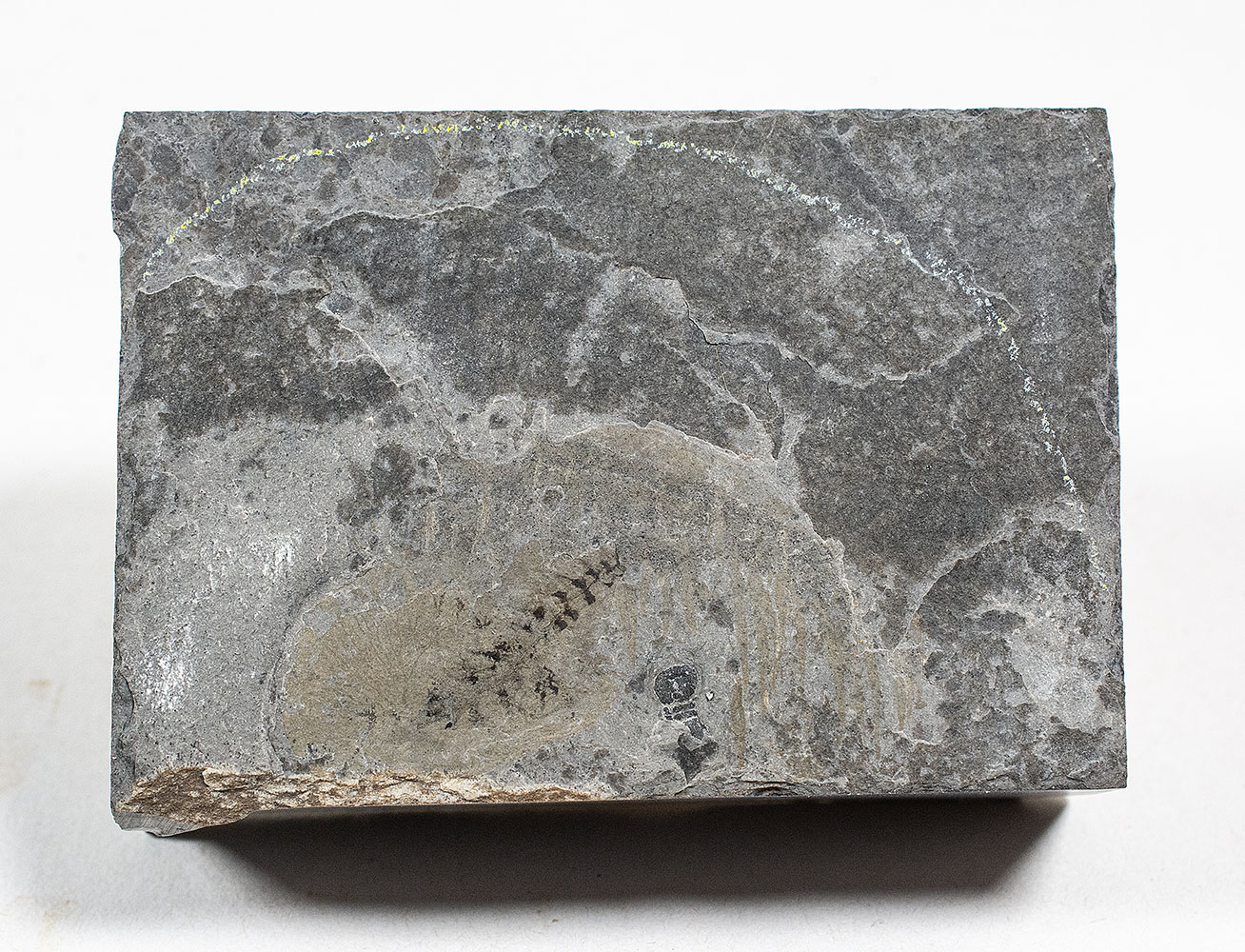


Description
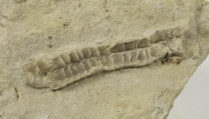
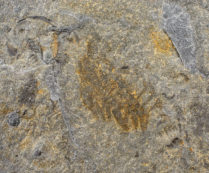
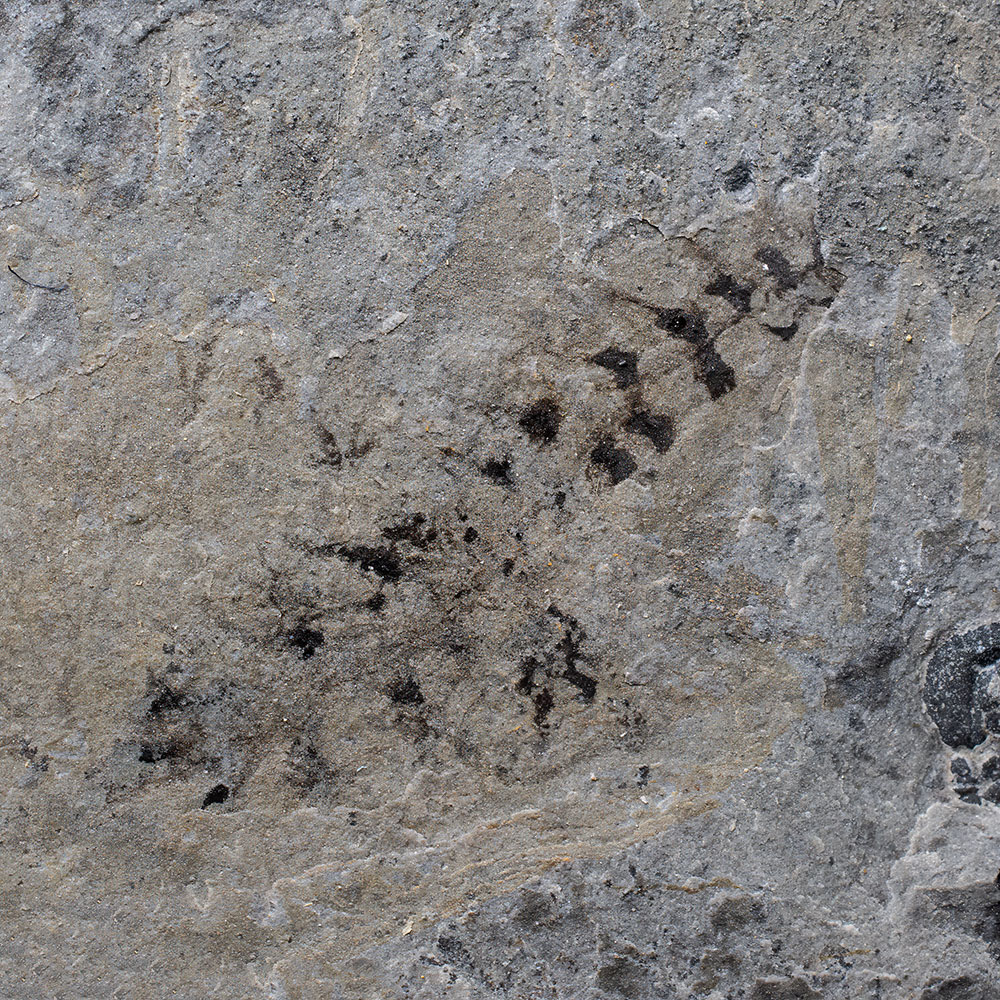
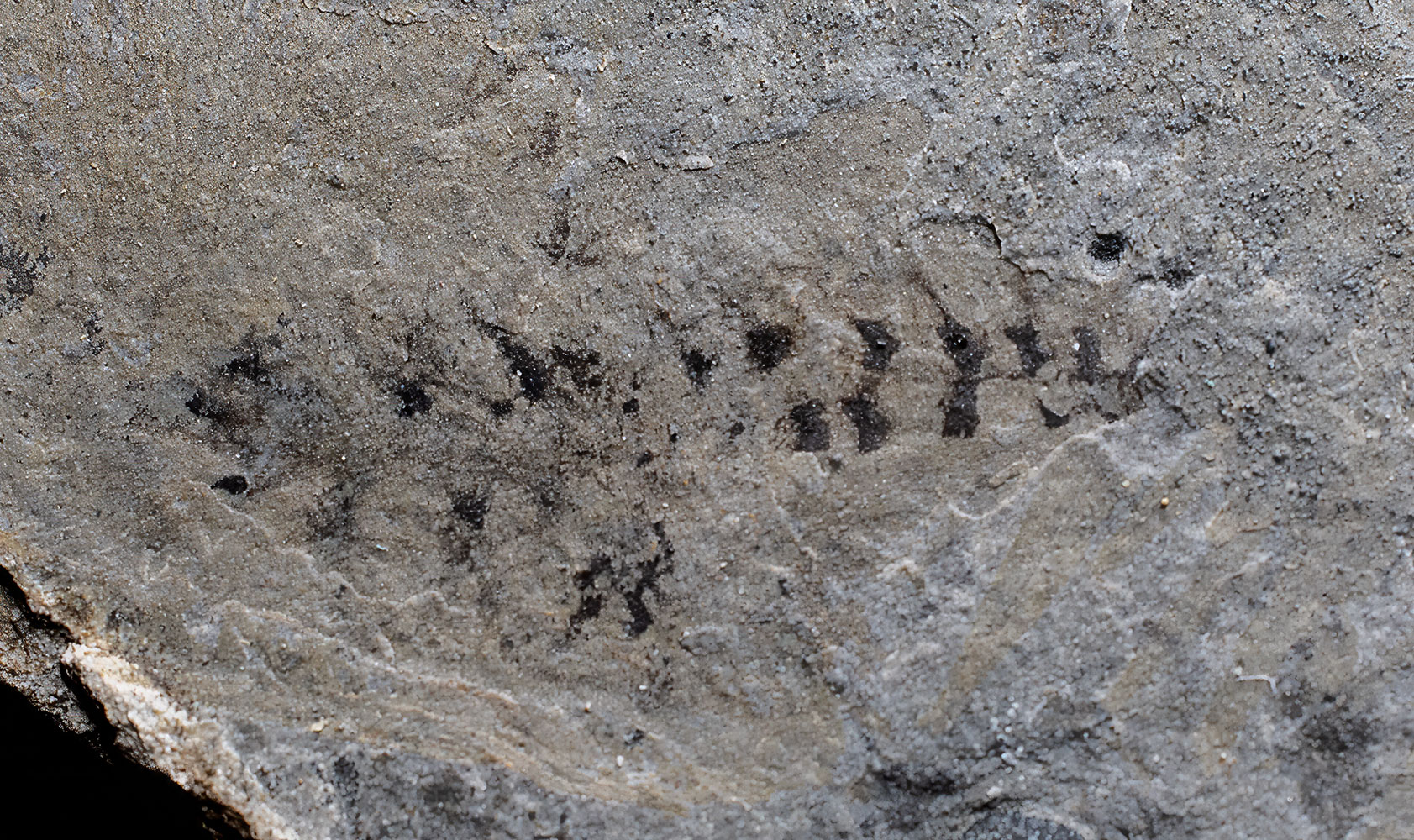
Unidentified lobopodian
Middle Cambrian
Wheeler Shale
Delta, Millard County
Utah, USA.
16mm on 57mm slab
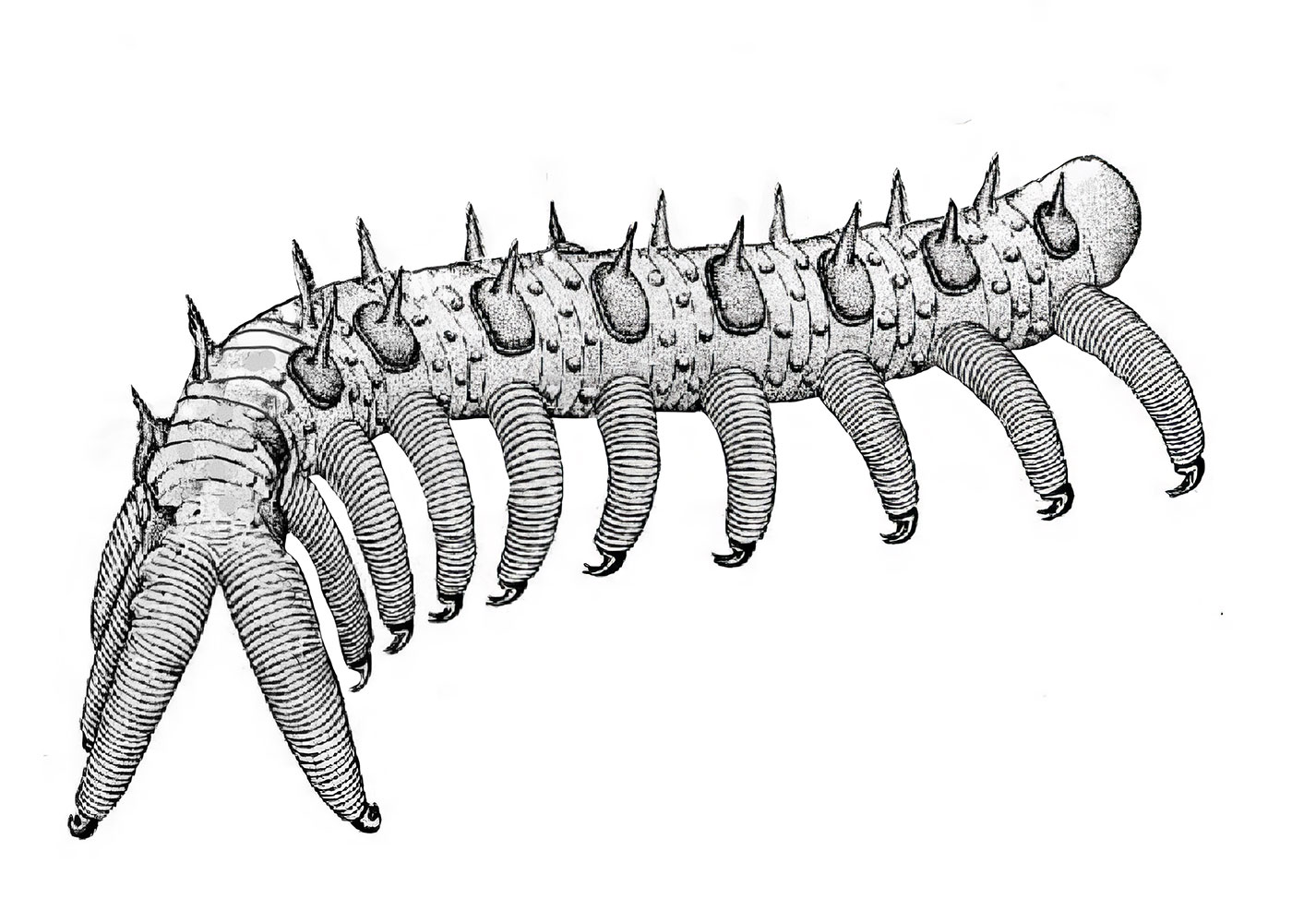
Lobopodians are an extinct group of worm-like animals with multiple pairs of soft, fleshy, unjointed legs called lobopods. They lived primarily during the Cambrian Period, although some appeared earlier and some lineages survived later.
Here’s what they were like:
- Soft-bodied: Most had no hard skeleton, so they are usually preserved only in exceptional fossil deposits.
- Many lobopods: Their legs were soft and muscular rather than jointed, often ending in small claws.
- Marine: Most known lobopodians lived on the seafloor, where they crawled in search of food.
- Varied diets: Some likely fed on detritus or microorganisms, while others may have been predators or suspension feeders.
Some well-known lobopodians include:
- Hallucigenia – famous for its bizarre appearance, with long defensive spines along its back.
- Aysheaia – resembled modern velvet worms and likely crawled over sponges.
- Microdictyon – had distinctive net-like plates covering parts of its body.
- Luolishania – had especially long front appendages that may have been adapted for filter feeding.
Evolutionary significance
Lobopodians occupy an important position in animal evolution because they are closely related to the group known as Panarthropoda. This larger group includes:
- Arthropoda (insects, spiders, crustaceans, and their relatives)
- Onychophora (velvet worms)
- Tardigrada (tardigrades)
Many scientists view lobopodians as stem-group panarthropods—early relatives that preserve intermediate features between simple worm-like ancestors and the jointed-legged arthropods that dominate many ecosystems today.
How they differed from arthropods
| Lobopodians | Arthropods |
|---|---|
| Soft, unjointed legs | Jointed legs |
| Mostly soft-bodied | Hard exoskeleton |
| Flexible limbs moved by internal fluid pressure | Rigid limbs moved by muscles acting across joints |
In essence, lobopodians represent an evolutionary stage before the fully jointed limbs and hardened exoskeletons that characterize modern arthropods, making them some of the most informative fossils for understanding how arthropods evolved.
See also: Utah’s Cambrian Life – Lobopods
A primer on loobopodians: Quick Guide – Lobopodians (PDF opens in new window)