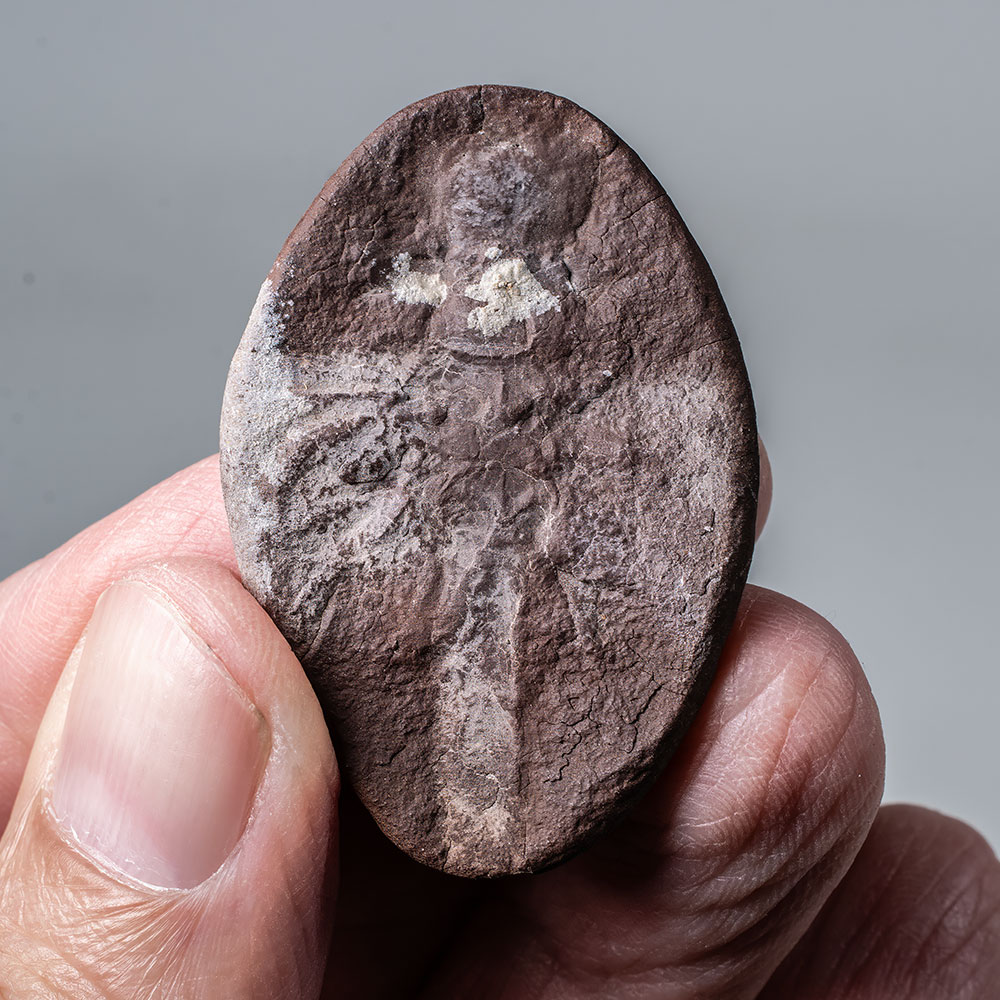


Description
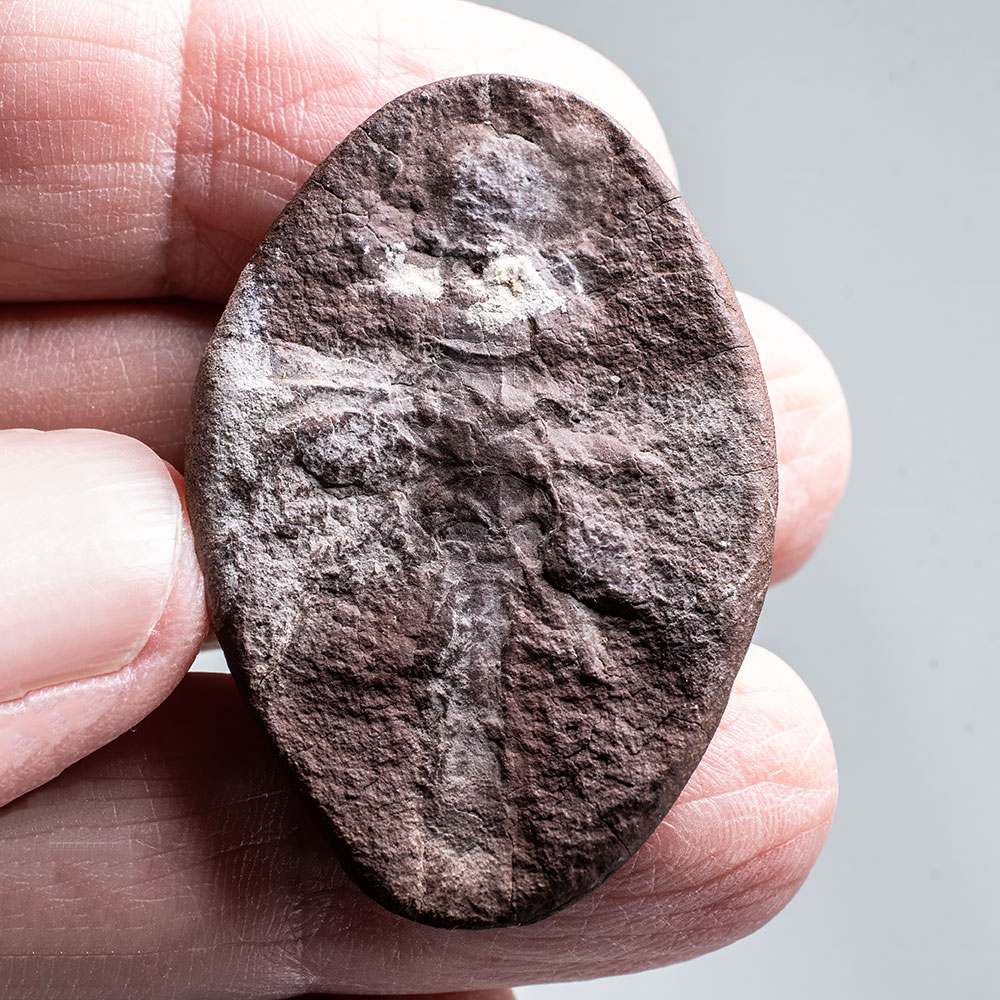
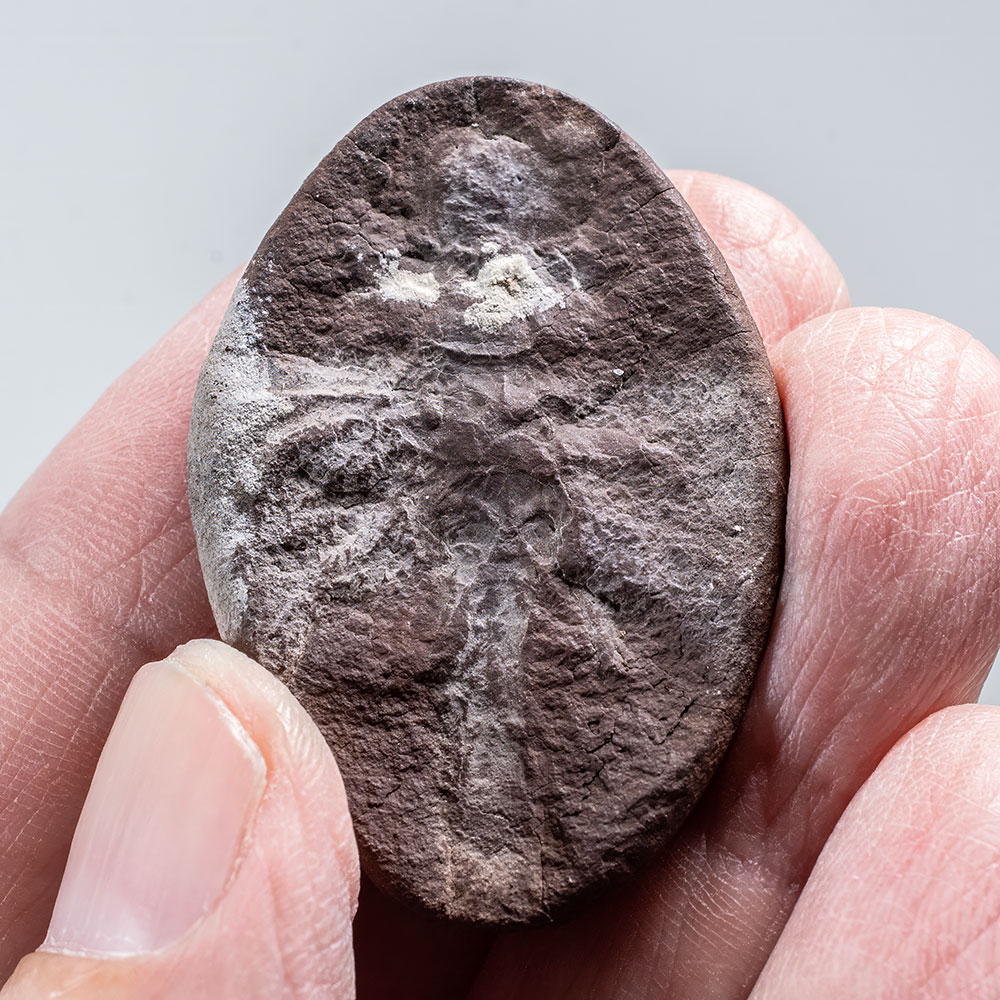
Mischoptera douglasi
Pennsylvanian
Francis Creek Shale
Will Co.
Illinois, USA.
38mm in 44mm half-concretion
Mischoptera was a member of the Megasecoptera, an extinct group of winged insects that lived during the Carboniferous and Permian. Mischoptera itself is known from Late Carboniferous deposits, including the famous Mazon Creek biota in Illinois and the Commentry Basin of France.
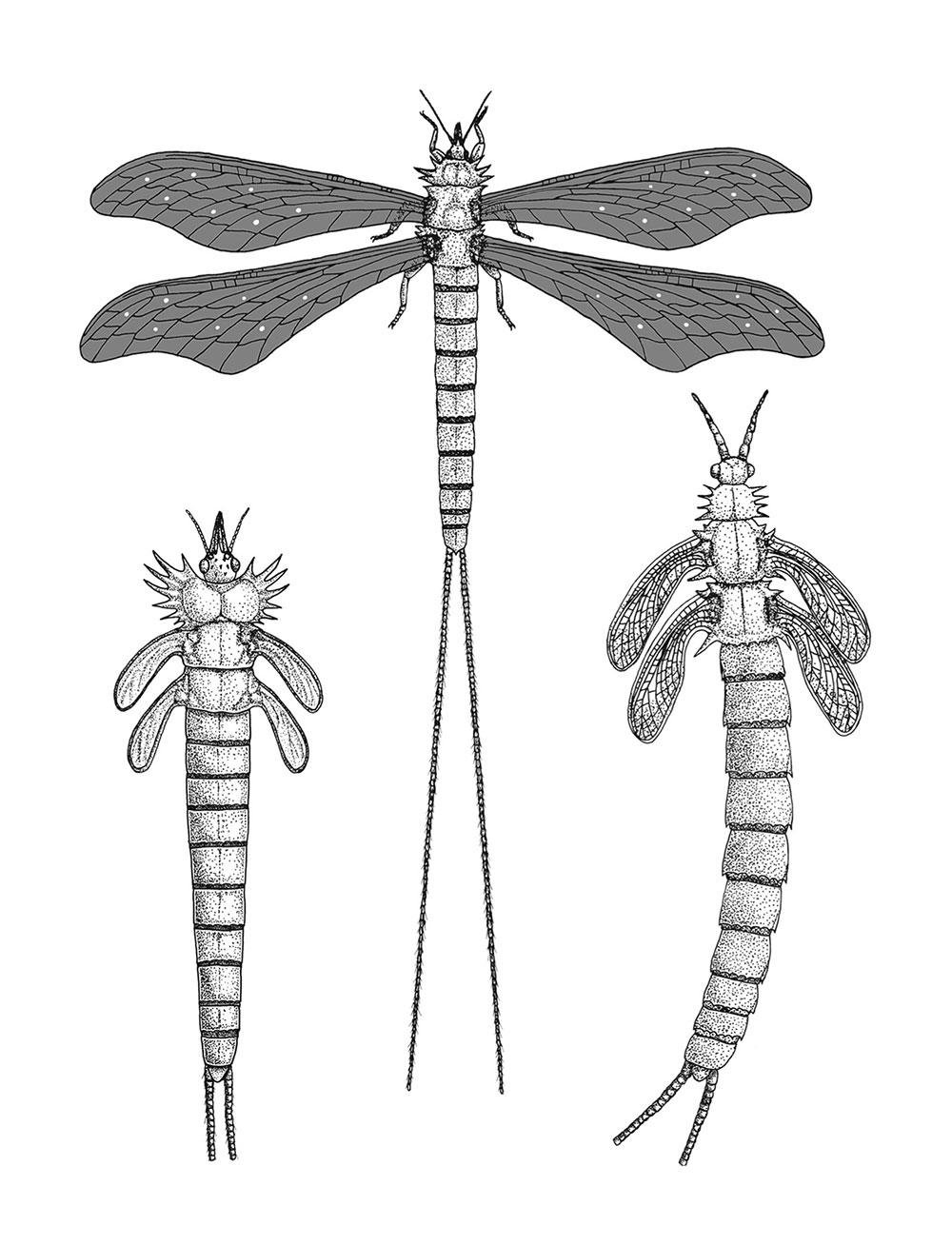
The wings are one of the easiest ways to recognize a megasecopteran. They had extremely elaborate vein networks, but the bases of the wings were unusually narrow. This produced a somewhat dragonfly-like silhouette, although megasecopterans were not dragonflies. They were also part of the broader extinct Palaeodictyopterida, a group of Paleozoic insects with unusual mouthparts and wing arrangements.
Megasecopterans possessed haustellate (piercing-and-sucking) mouthparts, including elongated stylets. They are generally interpreted as plant-feeding insects, probably piercing plant tissues and sucking nutritious fluids or other plant material.
The nymphs of this species are especially unusual in that they did not go through a stage of metamorphosis before adulthood. It had developing wing pads and the characteristic spiny prothorax, but the nymph’s wings were initially angled backward and became progressively more developed through successive molts.
This means Mischoptera didn’t have a modern-style metamorphosis with a radically different larva and adult. Its young progressively developed toward the adult form.