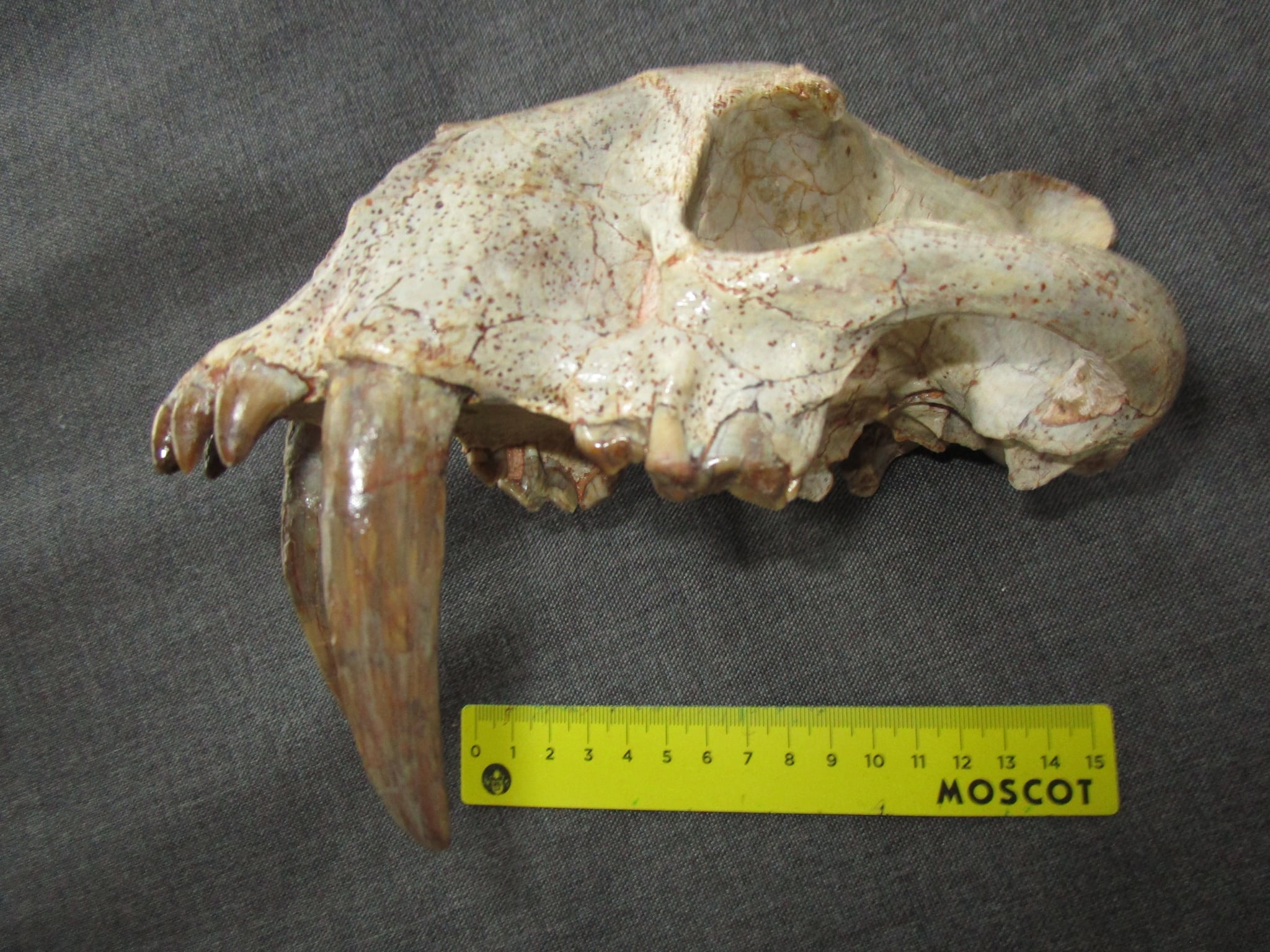
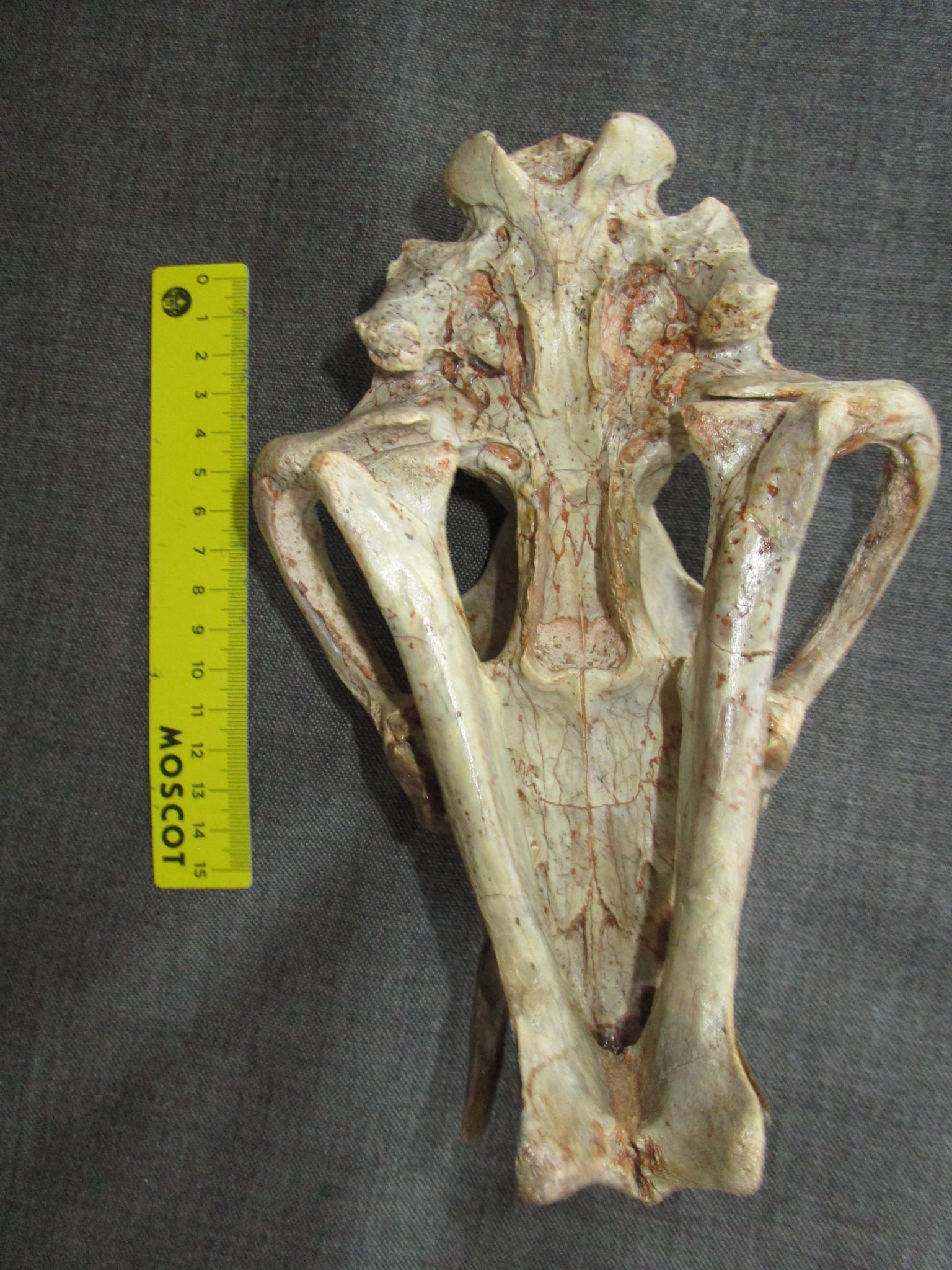
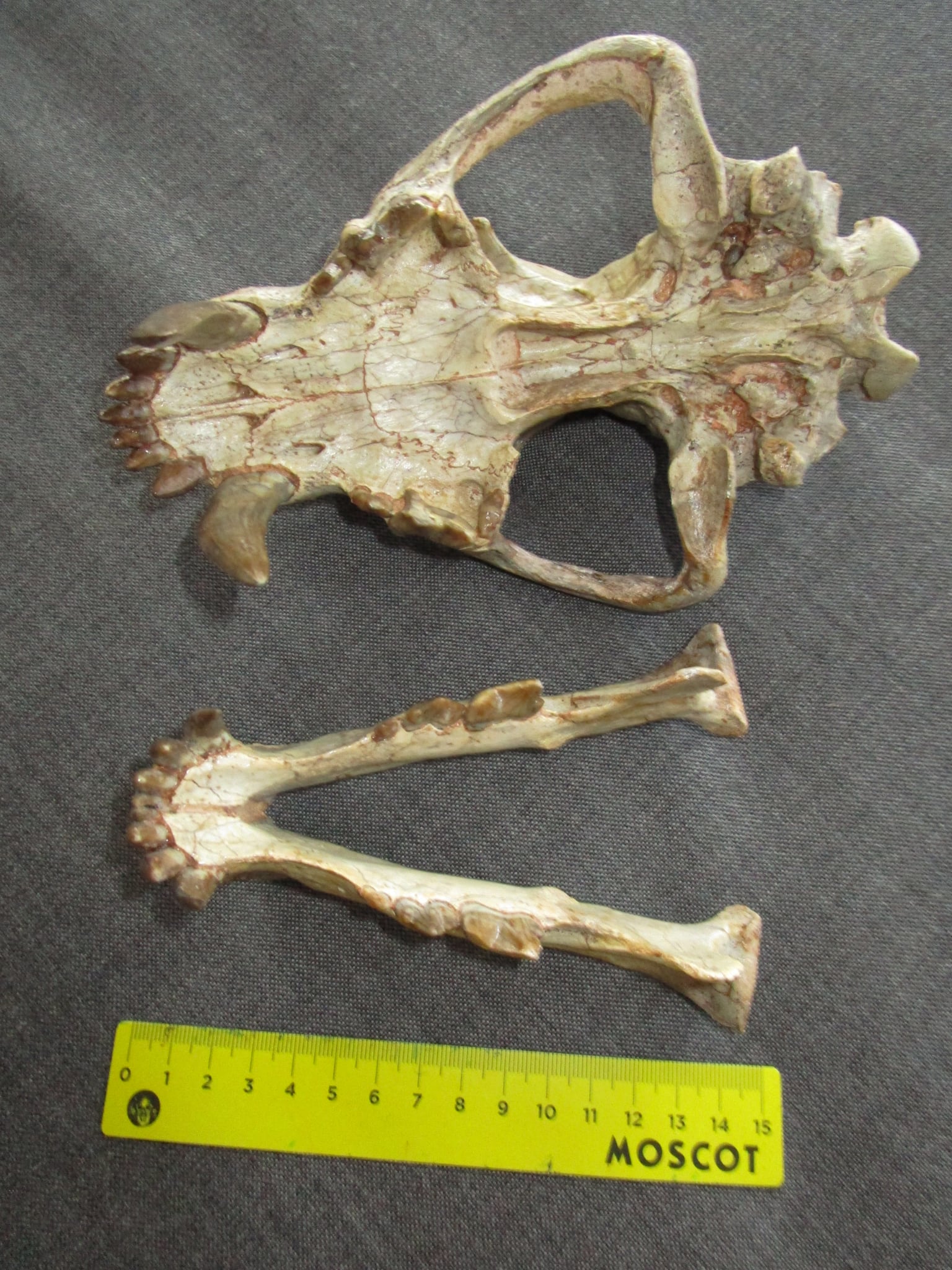
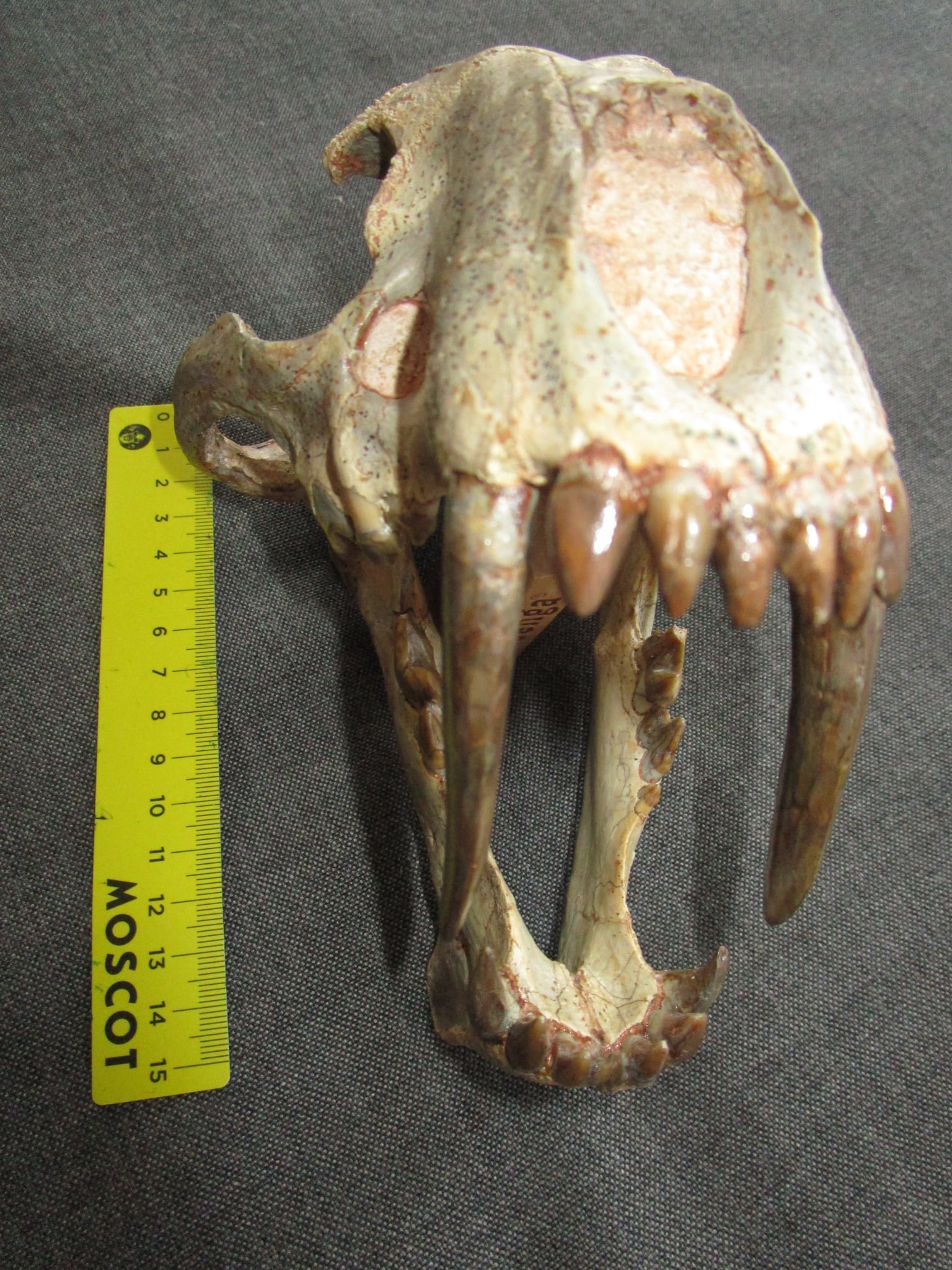


Description
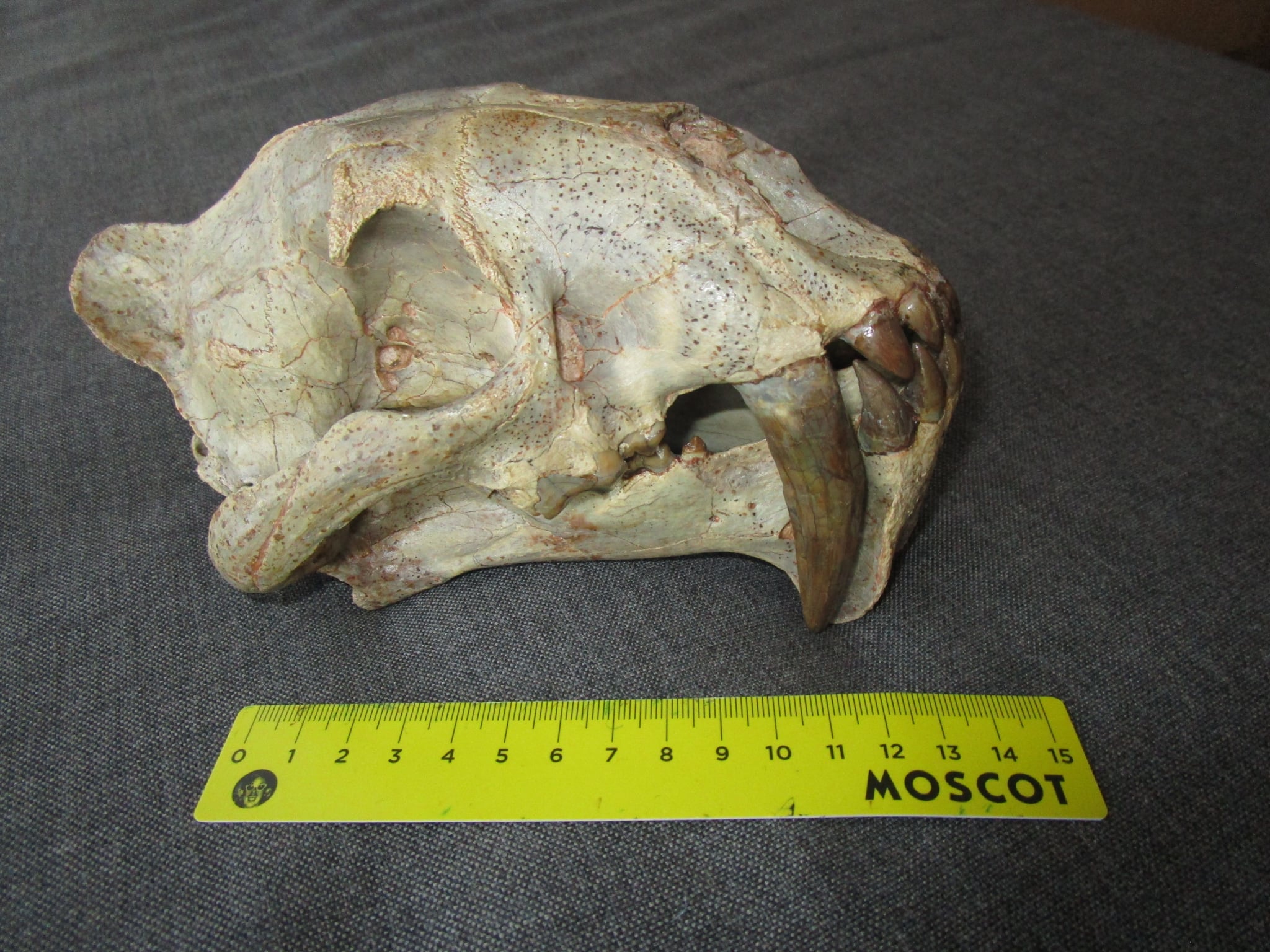
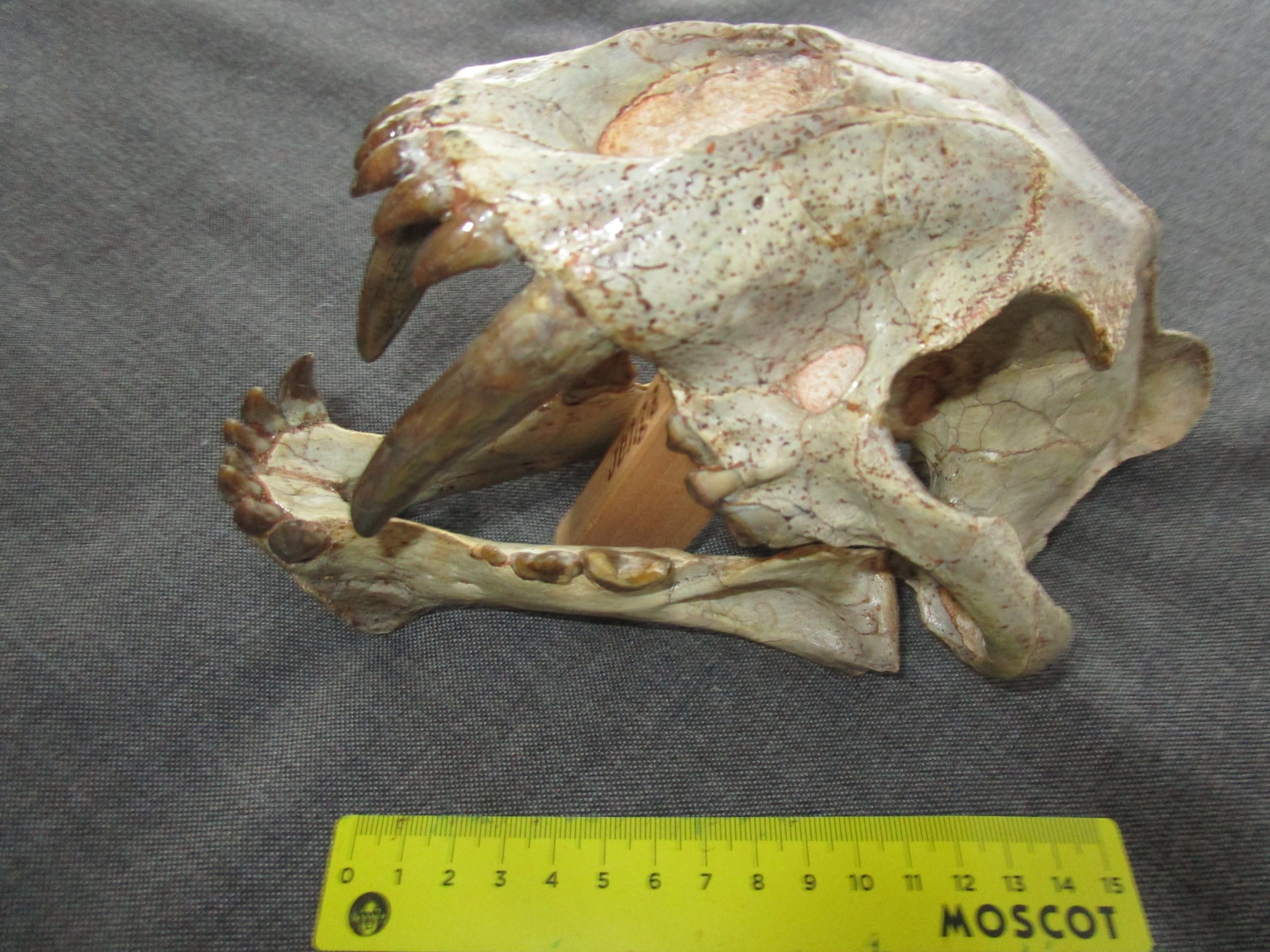
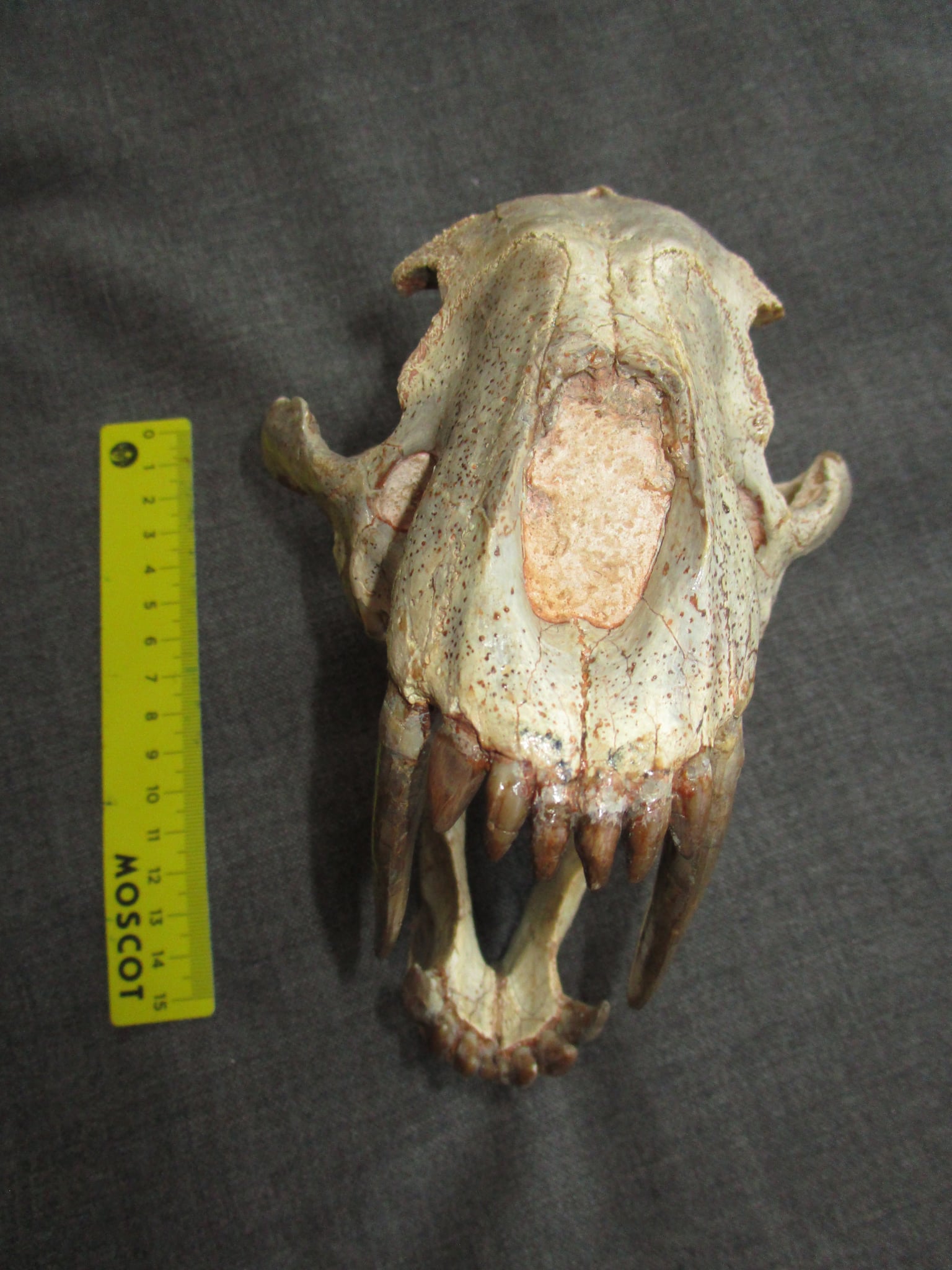
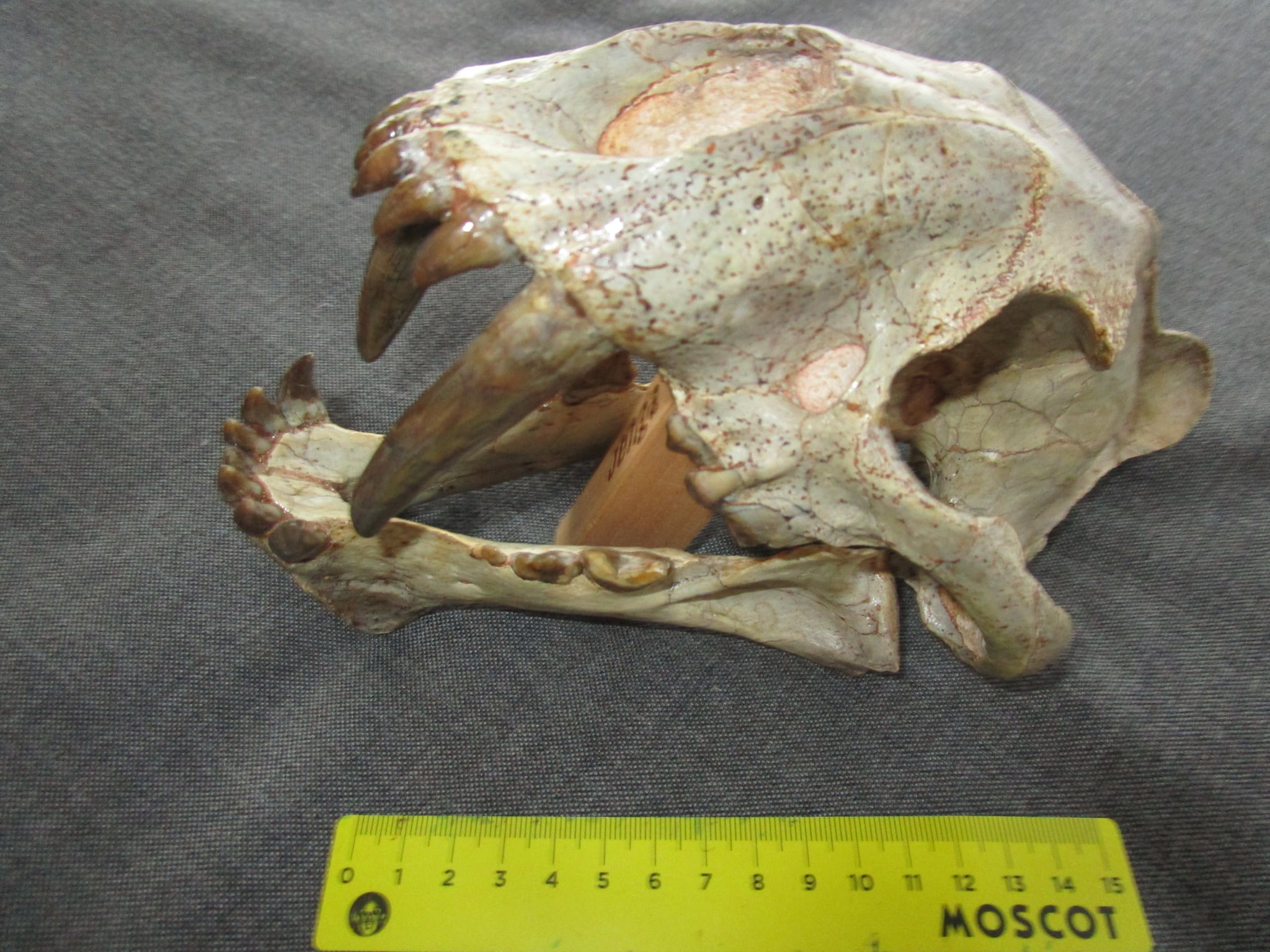
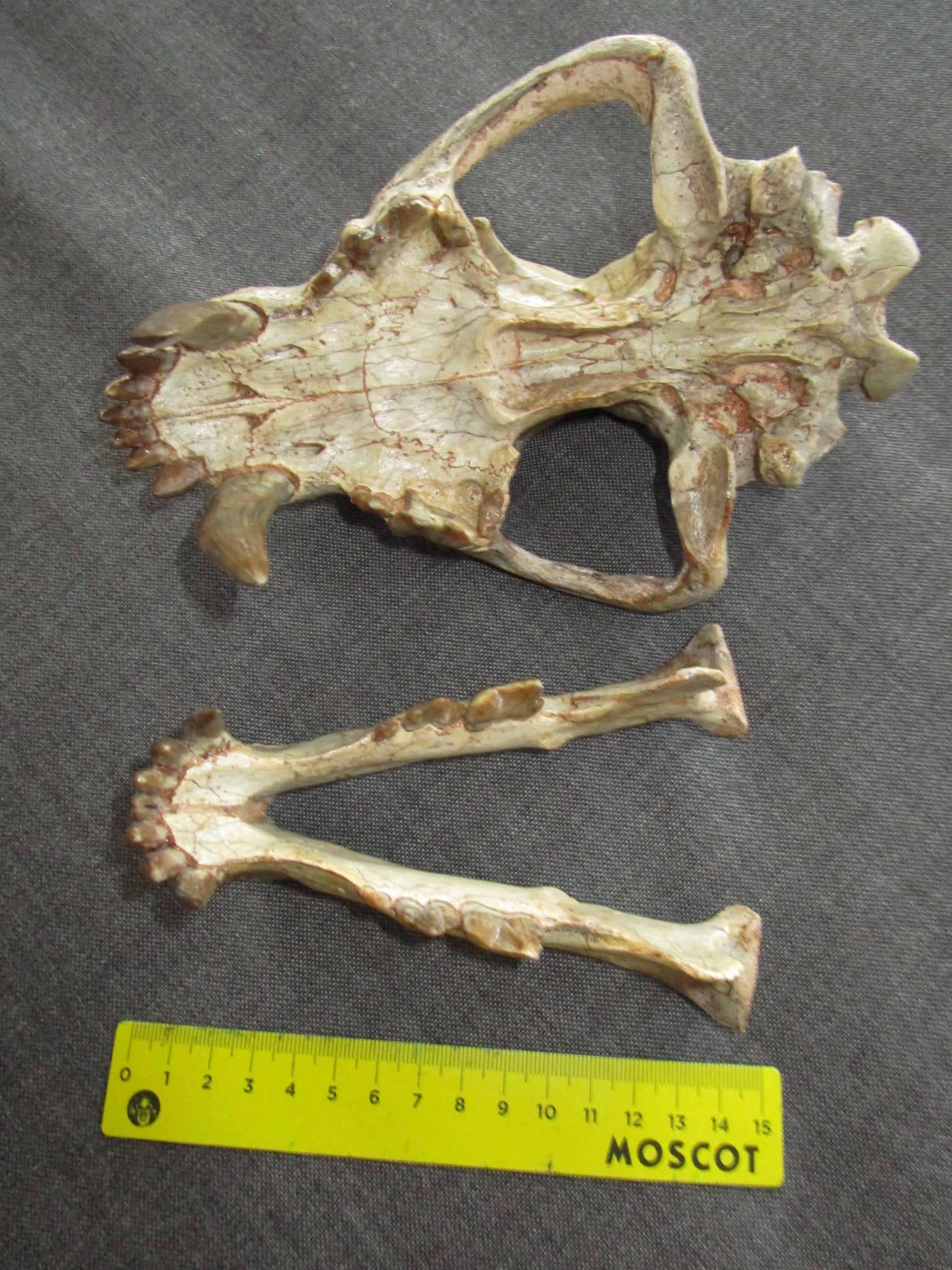
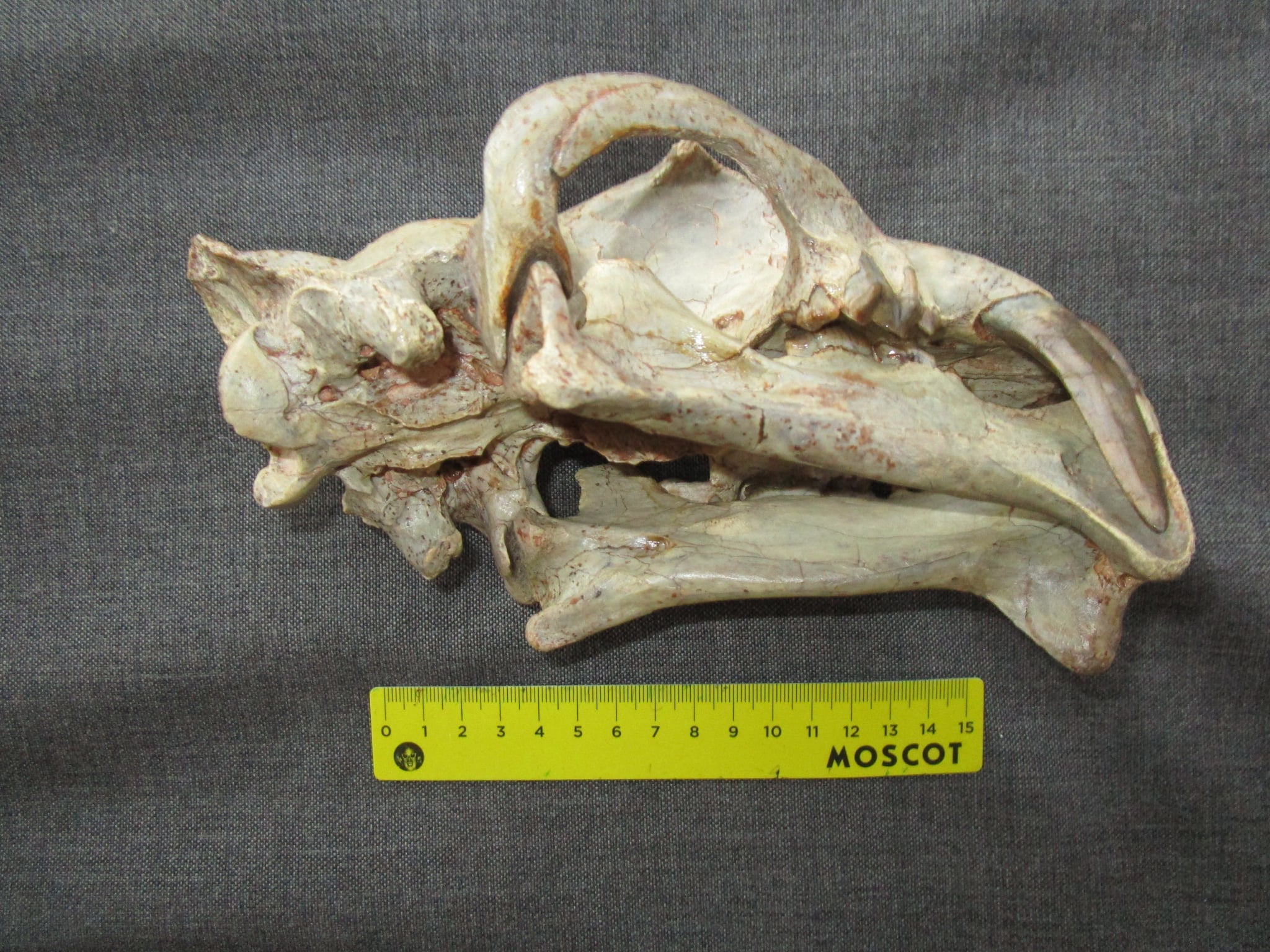
Hoplophoneus primaevus
Early Oligocene
White River Formation
South Dakota, USA
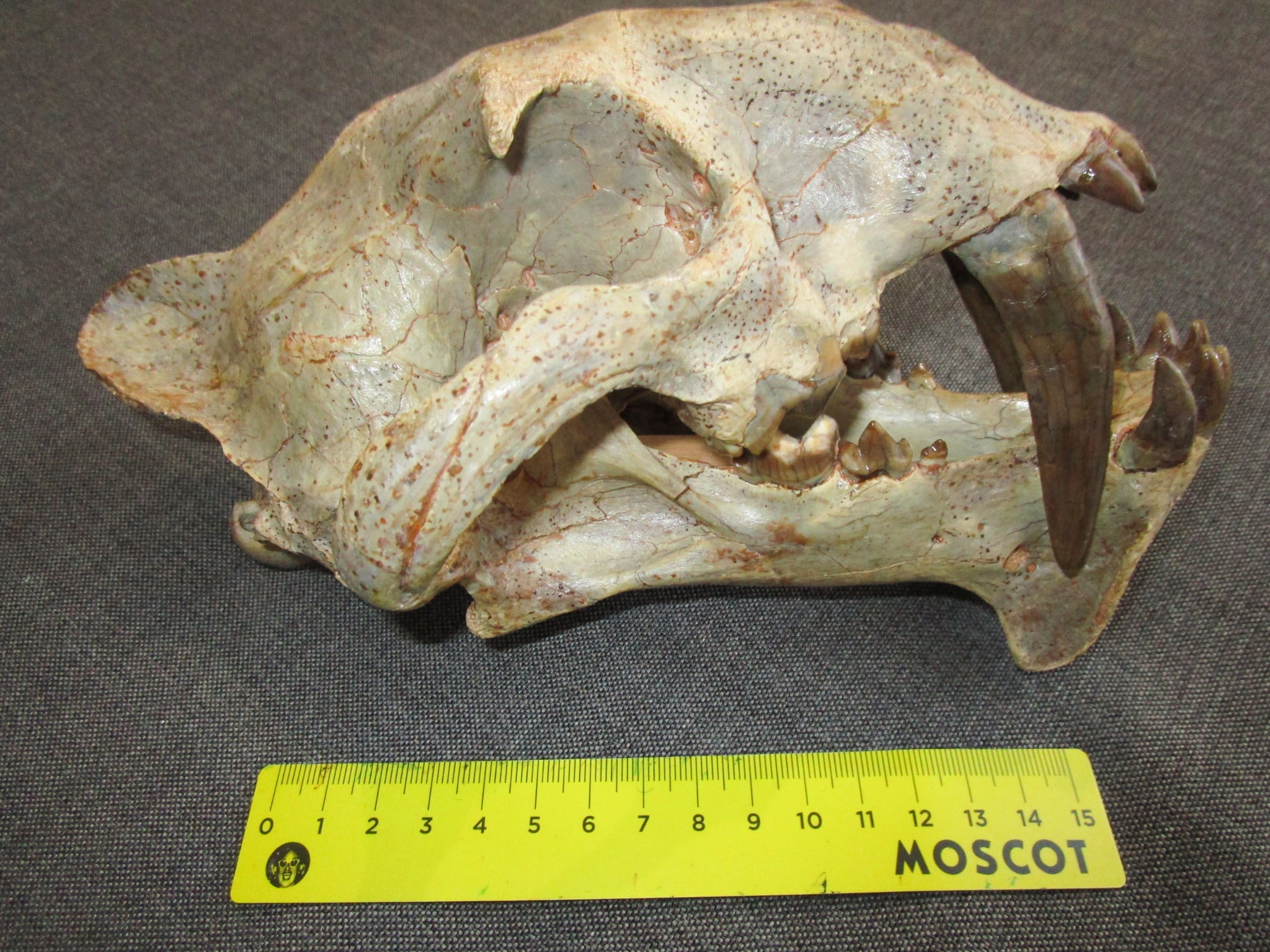
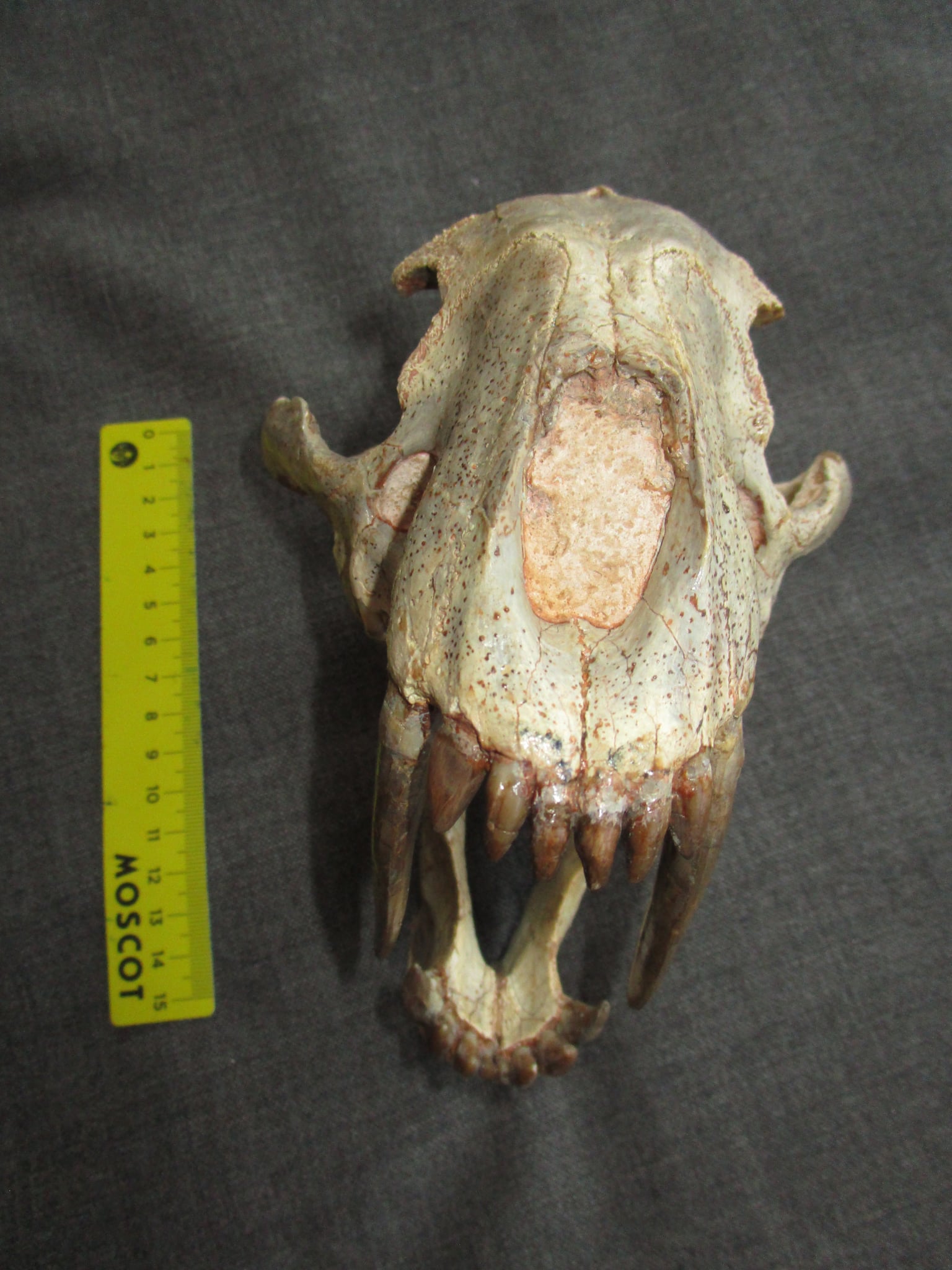
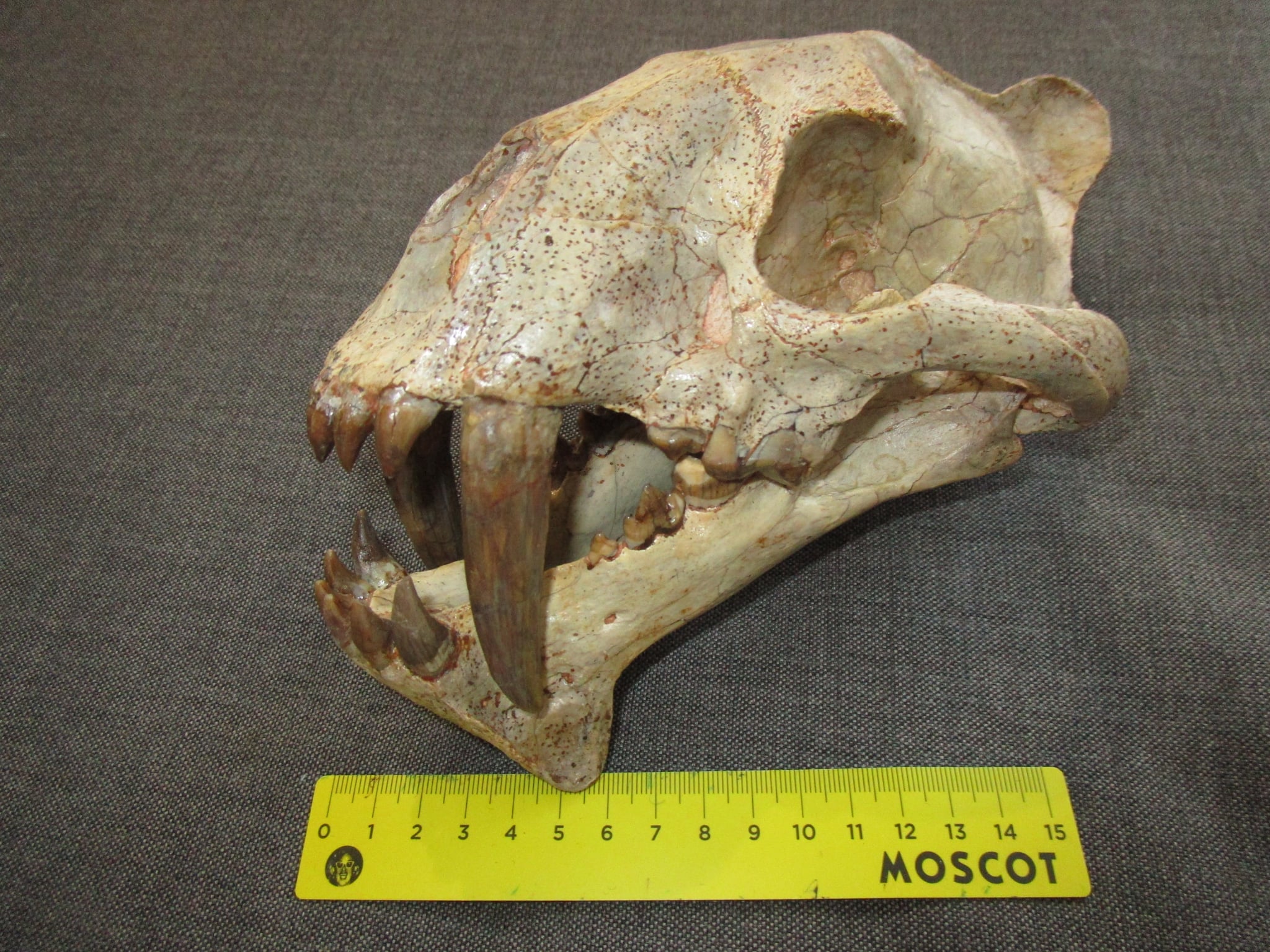
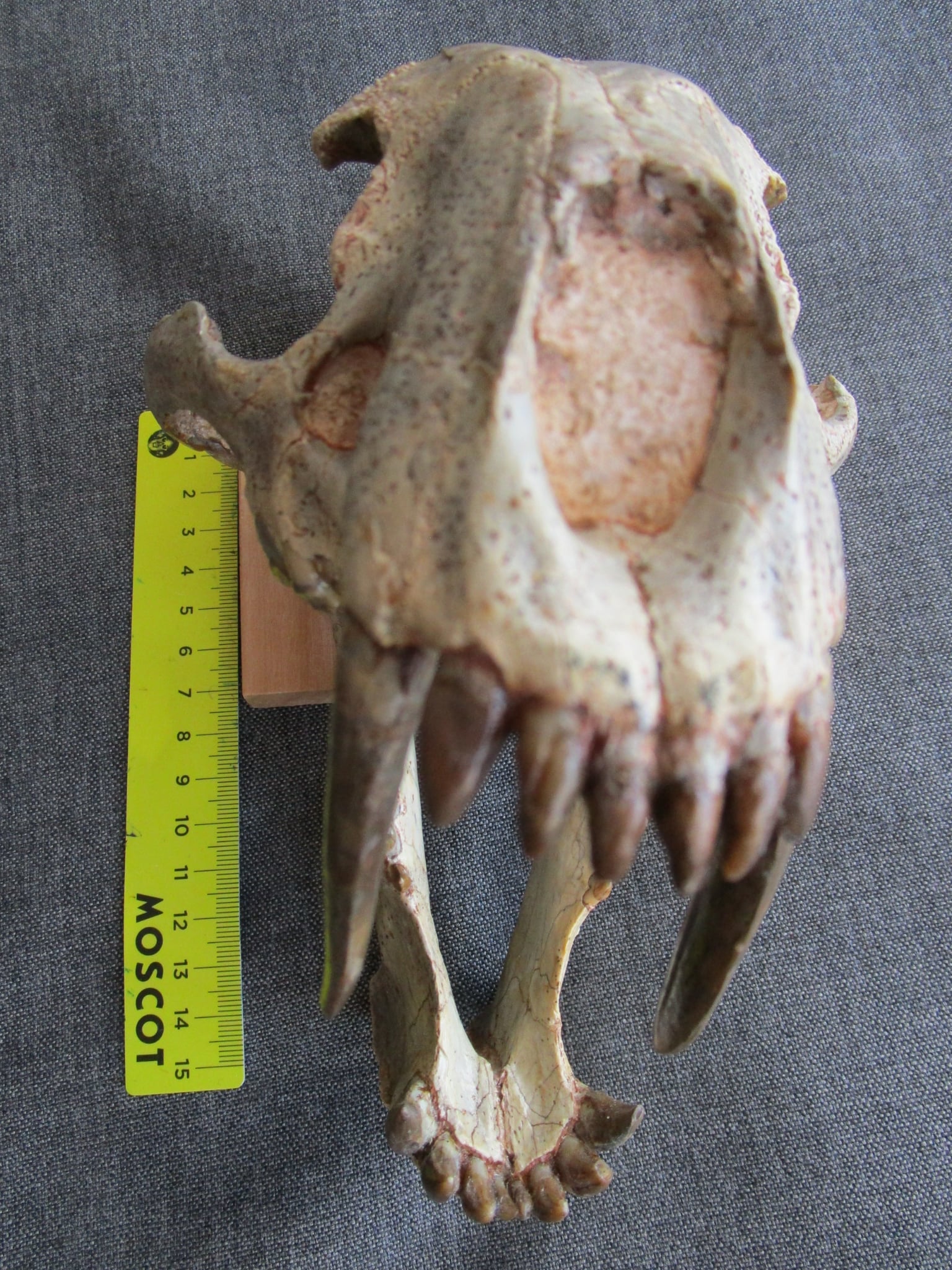
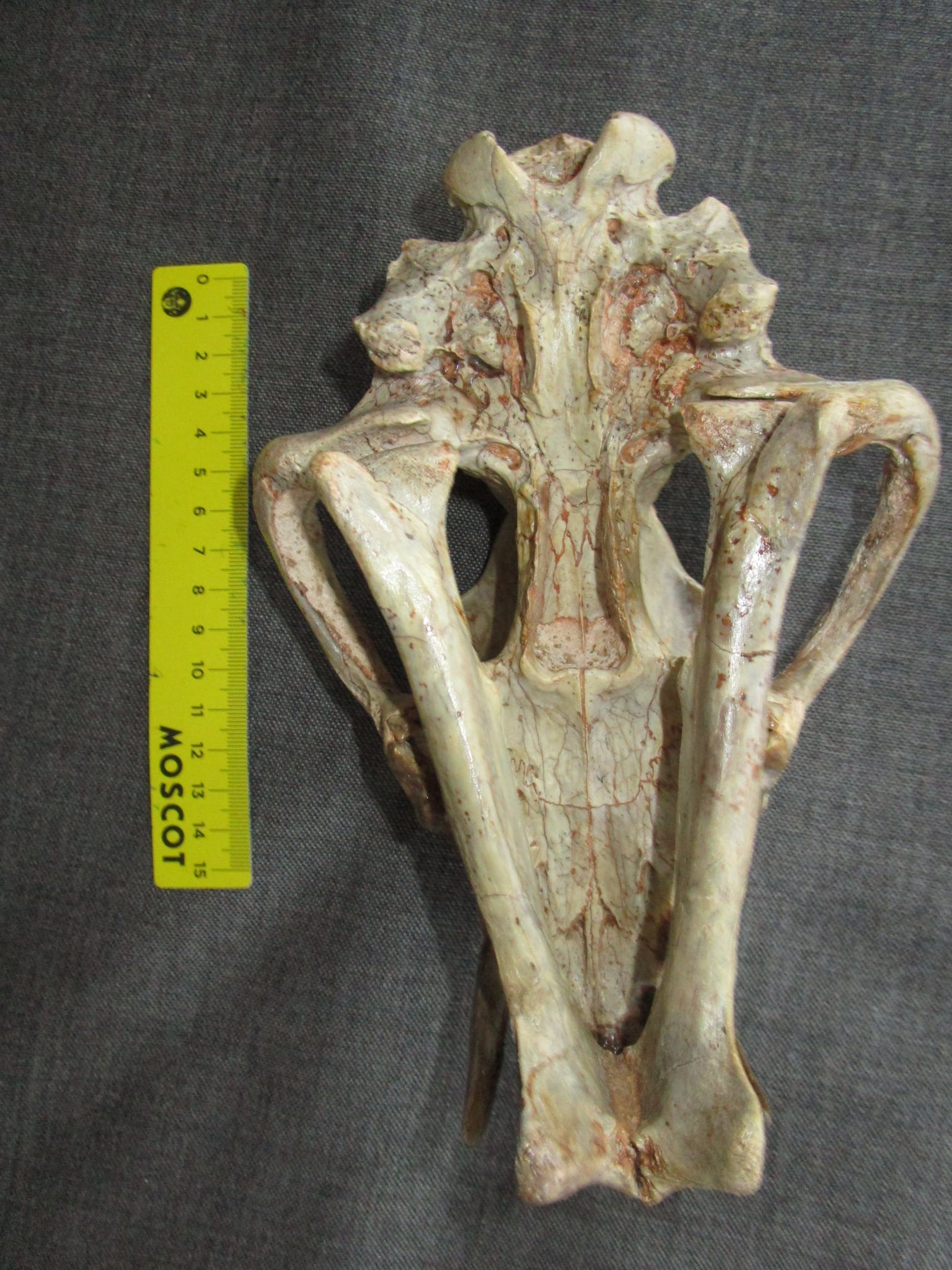
Large 8 inch (20cm) by 5.25 inch (14cm) extremely high quality skull. Easily one of our best.
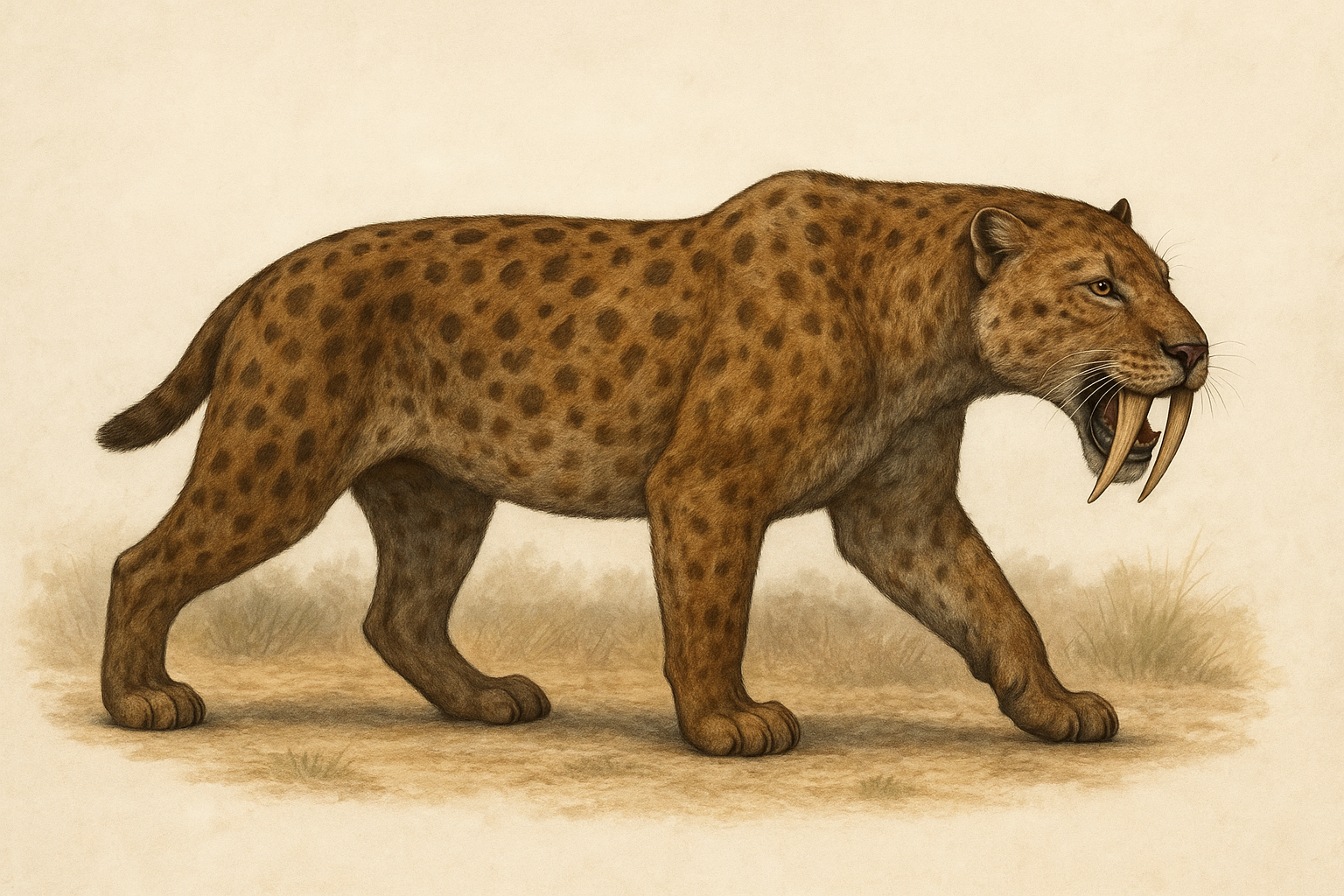
Hoplophoneus was a genus of saber-toothed cats (nimravids) that lived in North America during the Oligocene Epoch, roughly 30–25 million years ago. Although it looked very similar to the later and more famous Smilodon (the true saber-toothed cat), Hoplophoneus was not a true cat (Felidae) — instead, it belonged to an extinct family called Nimravidae, often nicknamed “false saber-toothed cats.” It was about the size of a modern cougar or leopard and featured long, curved saber-like canine teeth — though generally shorter and more robust than those of later saber-tooths. It had a muscular, catlike body, a short tail, and strong forelimbs, suggesting it was an ambush predator. The skull has deep flanges on the lower jaw that may have helped protect the long upper canines.
Hoplophoneus lived in open woodlands and grasslands of what is now North America and likely preyed on small to medium-sized herbivores, such as early horses and camels. Some fossil skulls show signs of healed bite marks — suggesting Hoplophoneus individuals fought each other, possibly over territory or mates.
Nimravids like Hoplophoneus went extinct before the rise of true saber-toothed cats (Machairodontinae), showing convergent evolution — different lineages evolving similar features (in this case, saber teeth).