

Description
Cowralepis mclachlani
Middle Devonian
Cowra, New South Wales
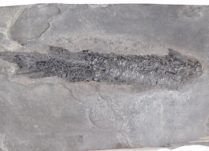
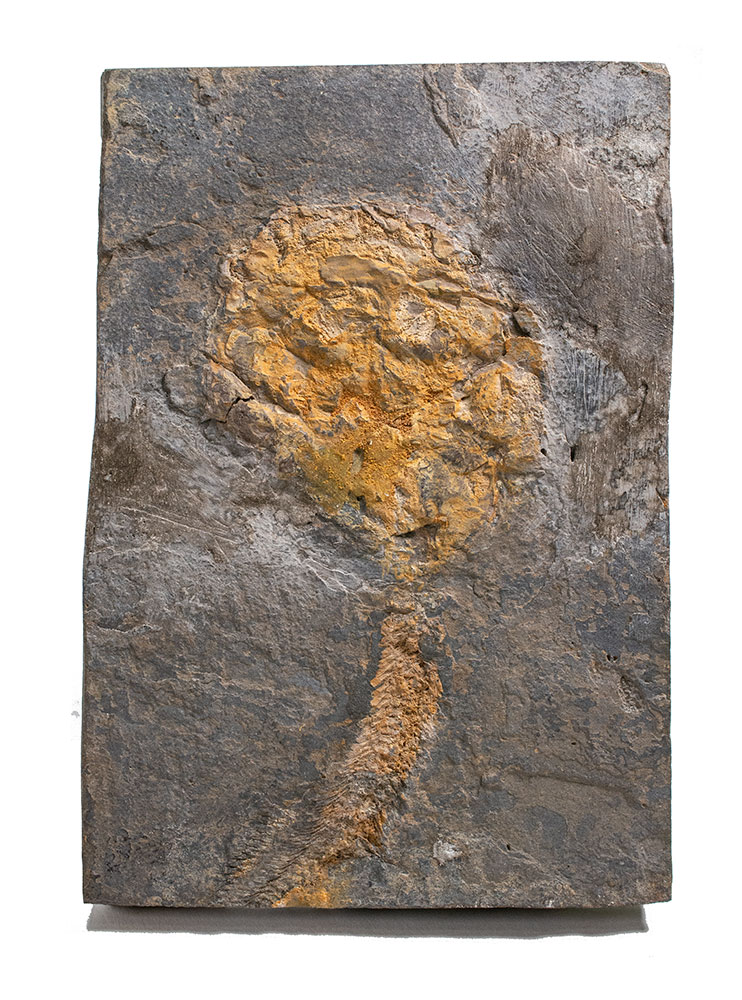
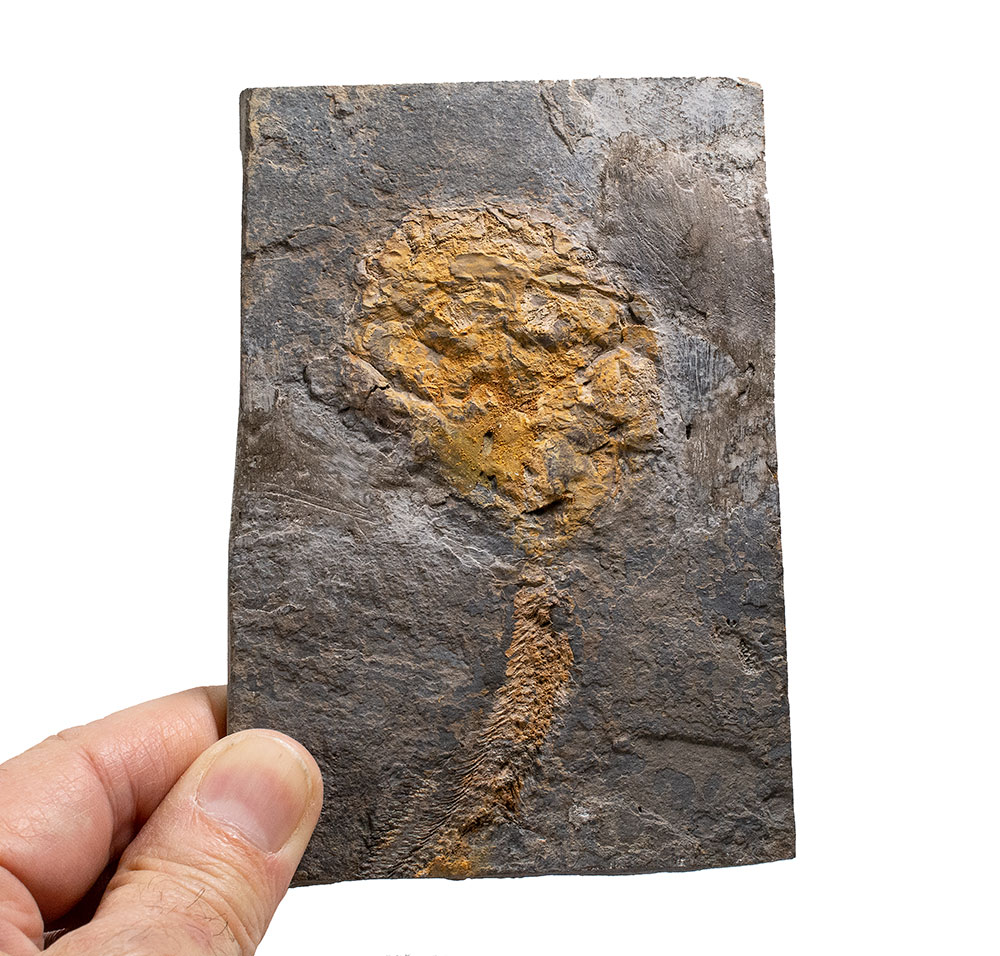
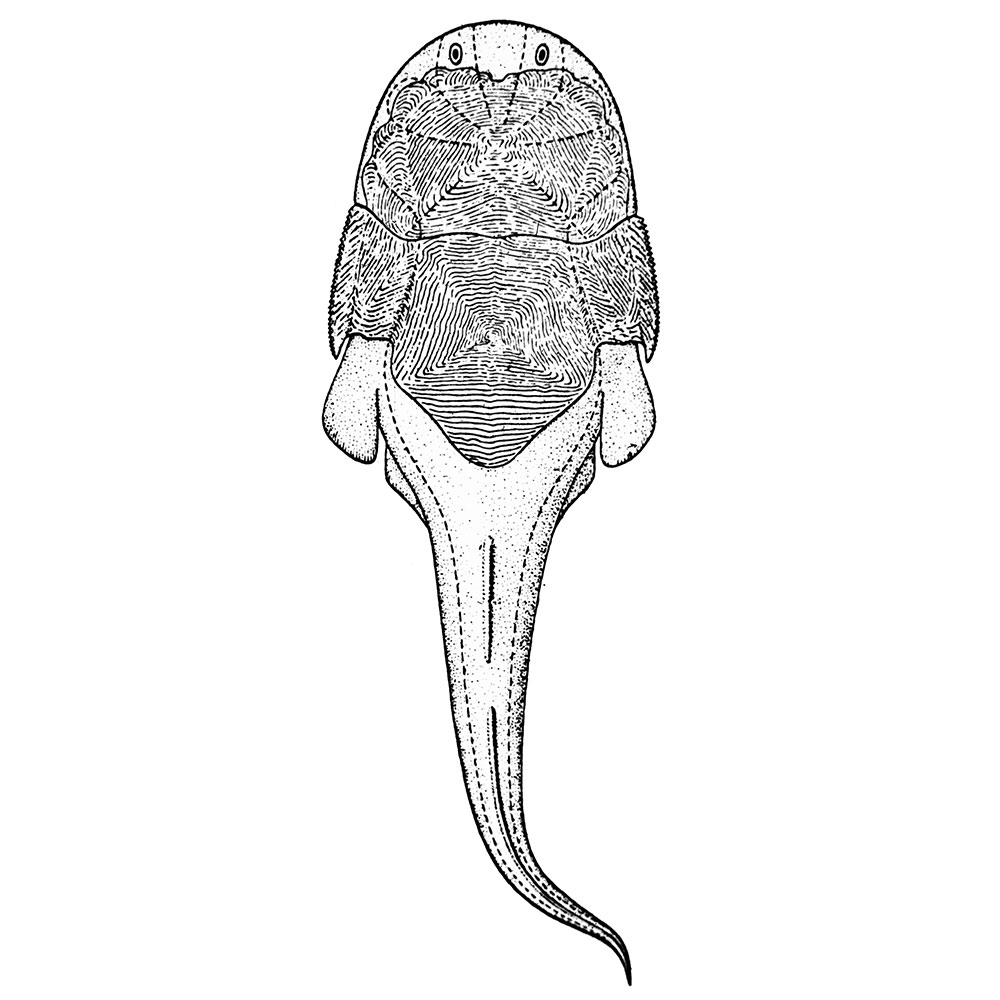
Large 110mm phyllolepid placoderm fish on 127mm slab. Extremely rare, especially as large as this one.
Cowralepis was an unusual armored jawed fish from the Early Devonian, about 410–400 million years ago. It lived in what is now New South Wales, Australia, and is particularly interesting because it helps illuminate the early evolution of placoderms and jawed vertebrates. Unlike the enormous predatory placoderm Dunkleosteus, Cowralepis was a small fish living in much earlier Devonian ecosystems.
The most obvious feature was the bony armor around the head and front part of the body. The armor protected the fish’s vital organs while leaving the posterior body relatively flexible. Cowralepis had an especially interesting arrangement of plates, helping researchers understand how the complicated armor of early jawed vertebrates evolved.
One reason Cowralepis attracts attention is its paired fins. Early jawed vertebrates were beginning to evolve increasingly sophisticated paired appendages, and placoderms provide some of the earliest evidence for how these structures were organized. The anatomy of Cowralepis shows that early jawed fishes were already experimenting with different ways of supporting and controlling their paired fins. This matters because the paired fins of fishes ultimately became the evolutionary foundation for not only later fish fins, but tetrapod arms and legs.
Placoderms are fascinating because they represent one of the earliest major radiations of jawed vertebrates (Gnathostomata). The exact relationships are complicated, but placoderms preserve a huge amount of information about the early evolution of jaws, paired fins, armor, and reproductive anatomy.
Cowralepis lived during the Early Devonian, when jawed fish were undergoing an extraordinary diversification. Its Australian environment included other early fishes and placoderms. This was just before the Devonian “Age of Fishes” reached its spectacular peak.
There were already:
armored placoderms
early sharks
acanthodian-grade fishes
early bony fishes
jawless fishes
The oceans were rapidly becoming dominated by jawed vertebrates.
Why Cowralepis is important
The importance of Cowralepis isn’t that it was a gigantic predator. It’s important because it represents one of the many early experiments in placoderm anatomy. Its anatomy helps researchers investigate questions such as:
How did placoderm armor evolve?
How were early paired fins supported?
How did early jawed vertebrates control their bodies?
What did the earliest armored jawed fishes look like?
It also illustrates how different early placoderms could be from the stereotypical image of a giant armored fish.
See: Cowralepis, a new genus of phyllolepid fish (Pisces, Placodermi) from the Late Middle Devonian of New South Wales, Australia (Opens in new tab)