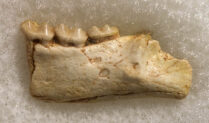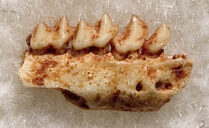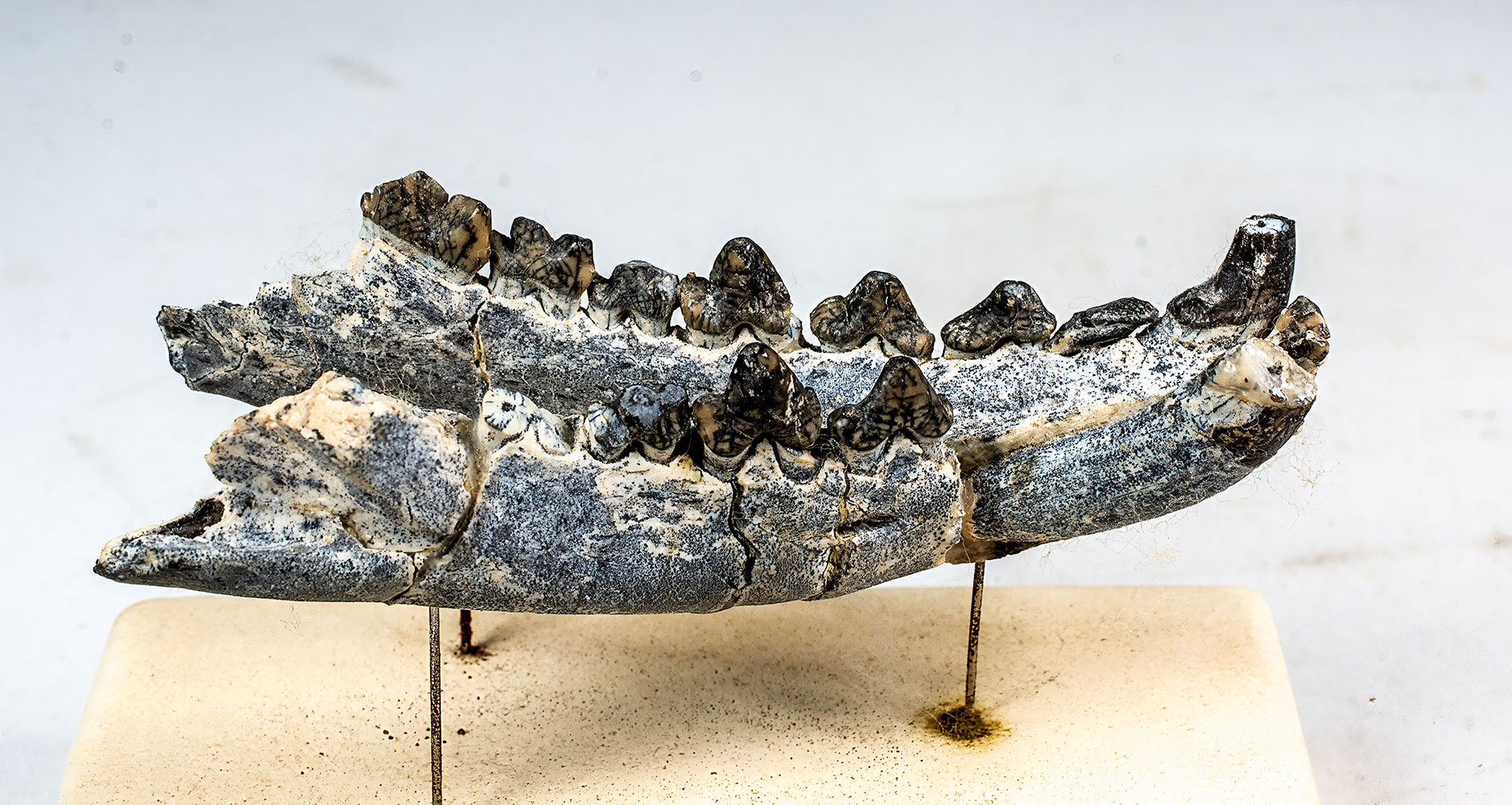
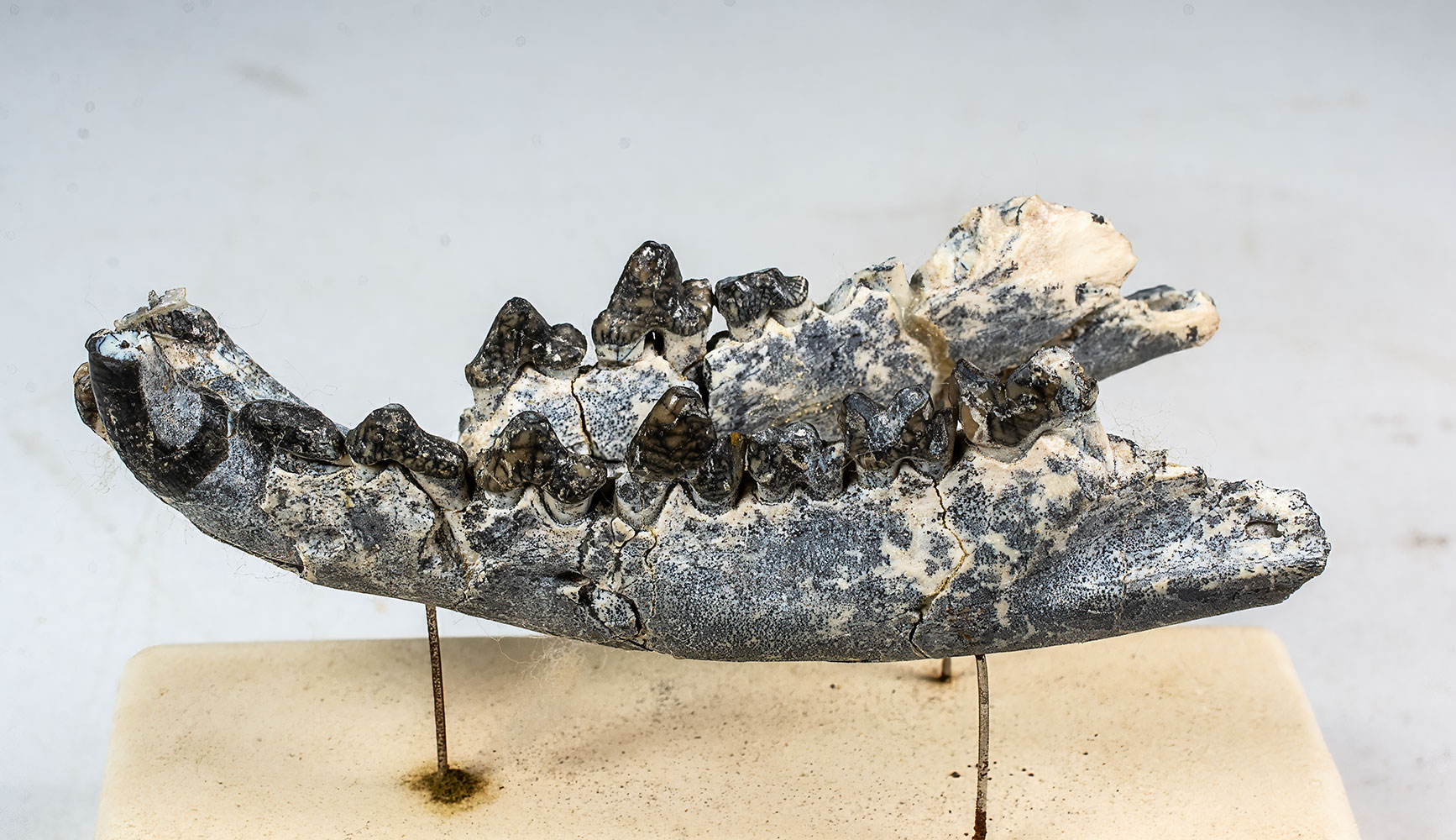
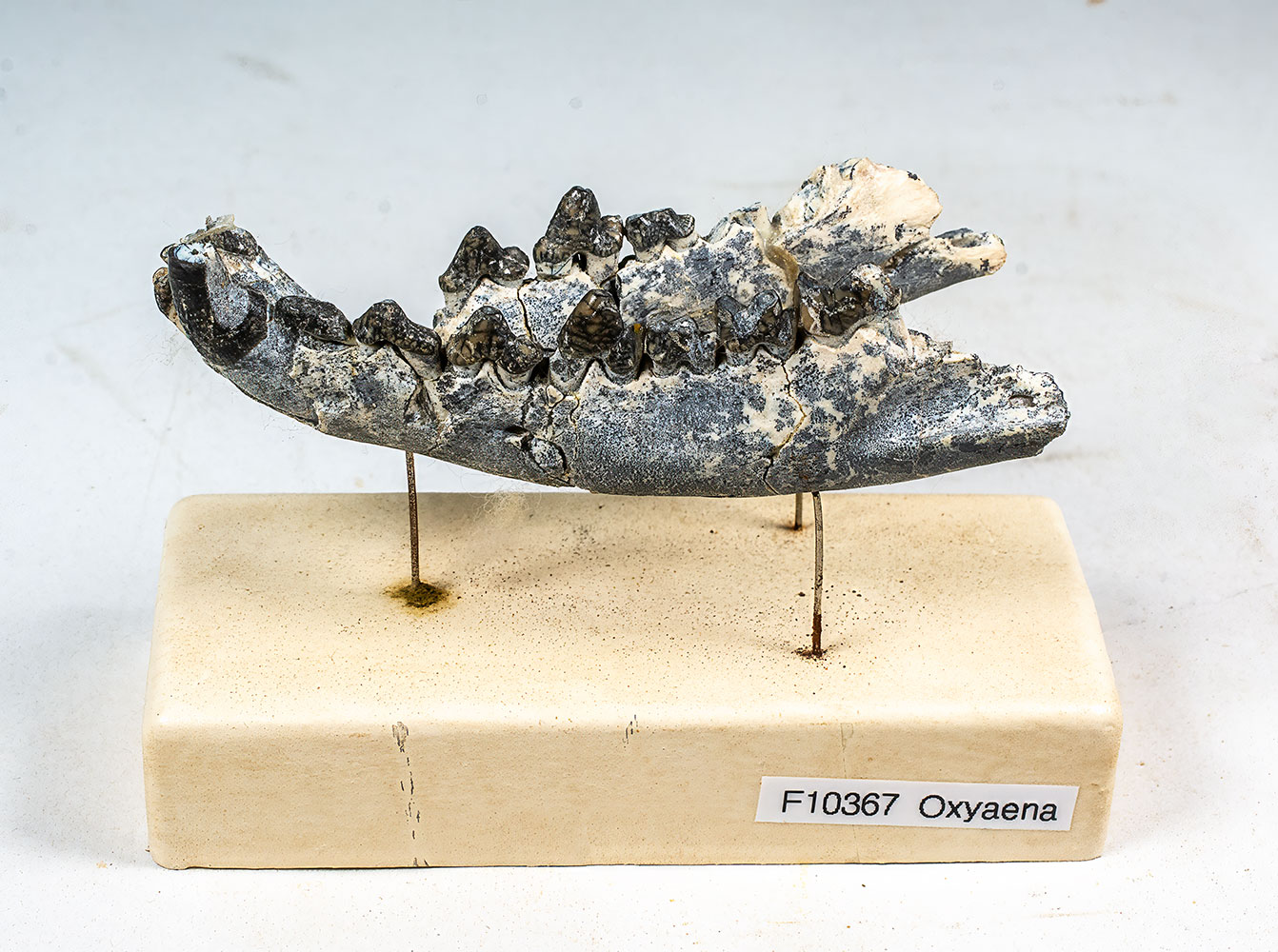
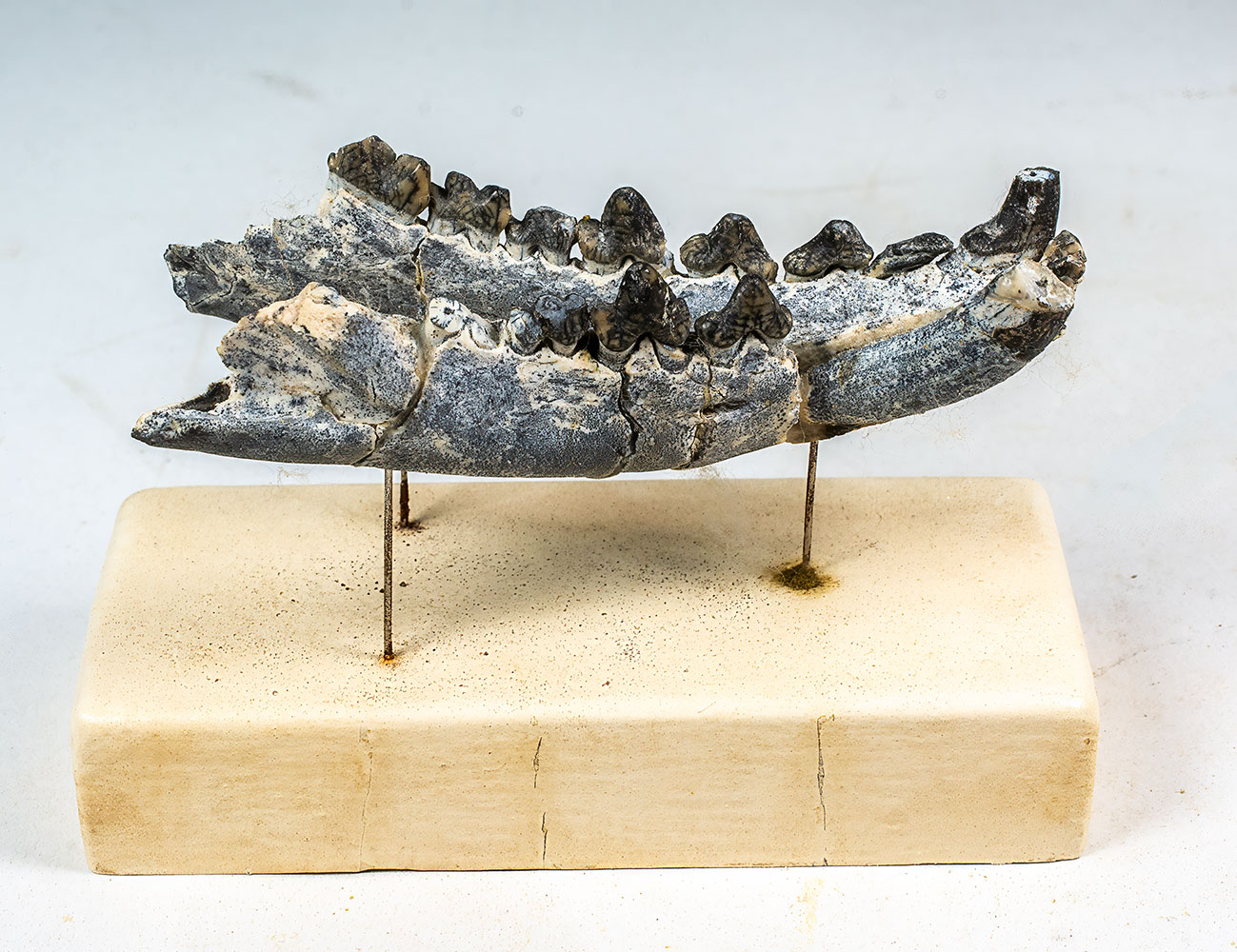


Description
Oxyaena sp.
Early Eocene (Wasatchian)
Willwood Formation
Powell,Wyoming
90mm near complete lower jaw
Oxyaena was a large, predatory mammal that lived in North America and Europe during the Paleocene and early Eocene, roughly 56–48 million years ago. Despite its somewhat cat-like appearance, it wasn’t a cat and wasn’t a true carnivoran. Oxyaena belonged to Oxyaenidae, an extinct family of predatory mammals. Oxyaenids were part of a larger group called hyaenodonts, which included many important mammalian predators of the Paleogene.
An adult Oxyaena was roughly the size of a large house cat to a small dog, depending on the species. It had a relatively long body, short limbs, and a powerful head. Its overall appearance probably resembled a stocky, long-bodied predator more than a modern wolf or big cat. Like many Eocene mammals, Oxyaena has some resemblance to modern mammals, but is instead an extincy offshoot. The resemblance is due to convergent evolution.
Oxyaena evolved its predatory adaptations independently of cats, dogs, bears, and other modern carnivorans. For example, modern cats and early oxyaenids both evolved:
Relatively short faces
Powerful jaws
Slicing teeth
Carnivorous diets
Compact bodies
But they weren’t closely related. The lineage leading to modern cats belongs to Carnivora, while Oxyaena belonged to a completely different branch of extinct predatory mammals. Oxyaena was essentially a “cat-like” predator produced by a separate experiment in mammalian evolution.