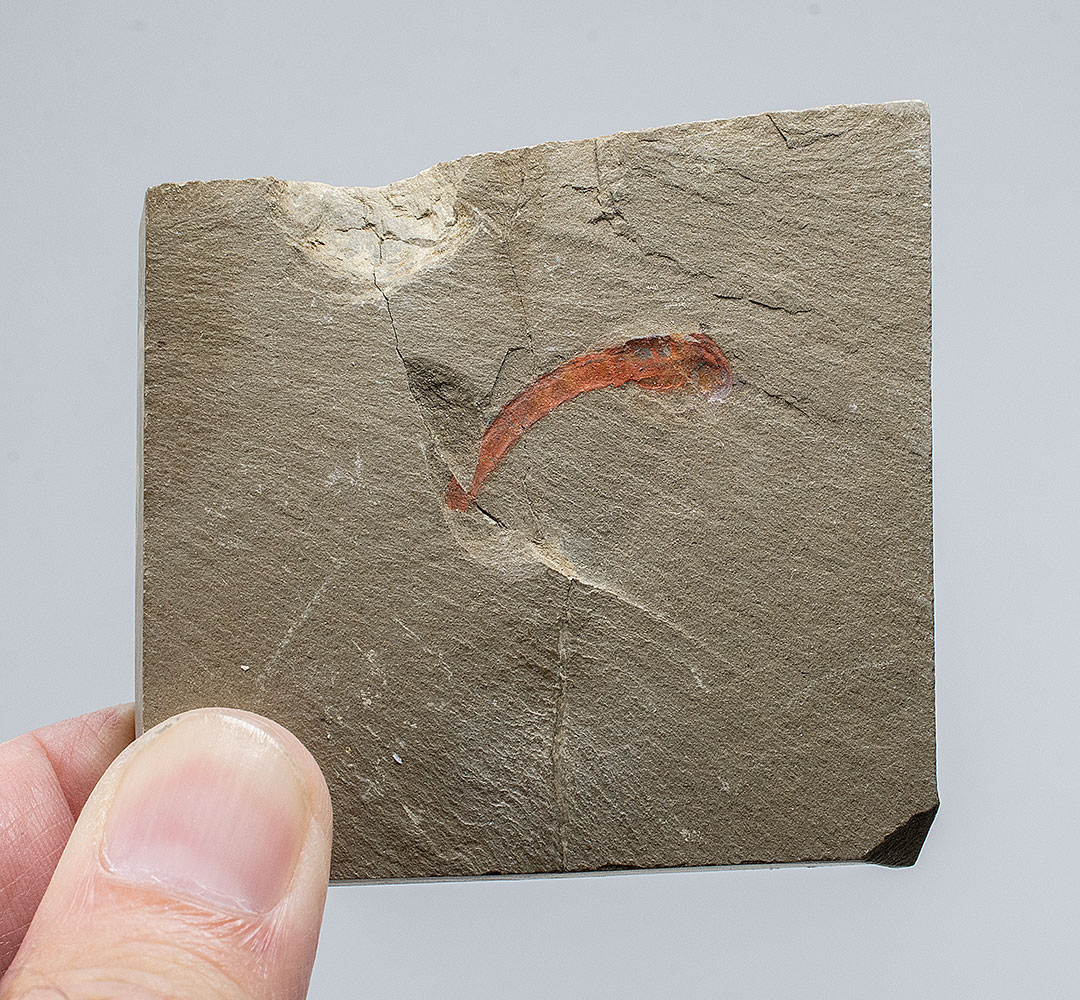


Description
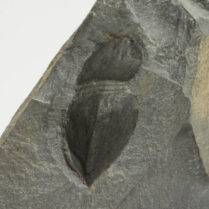
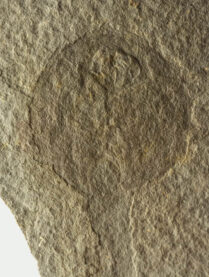
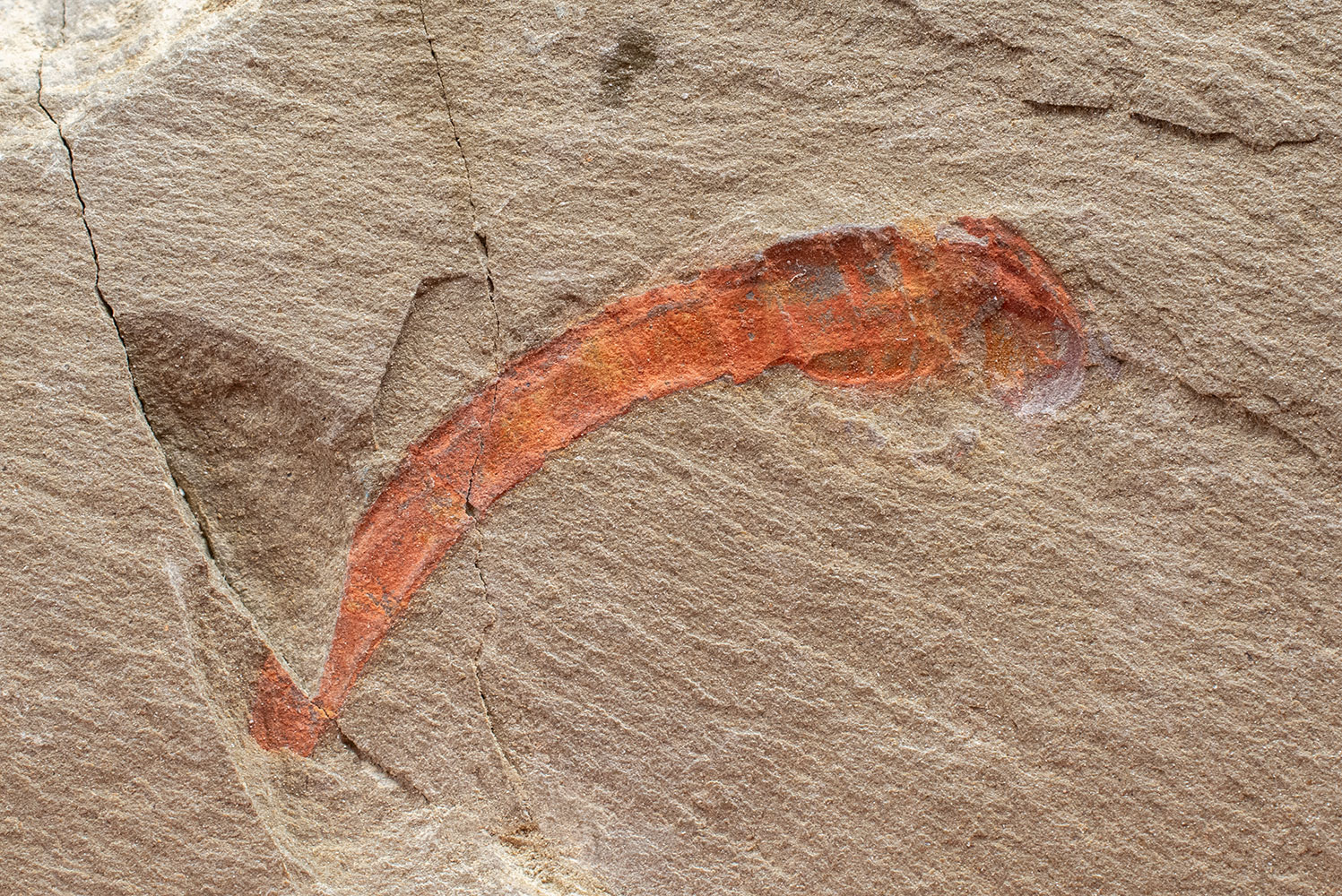
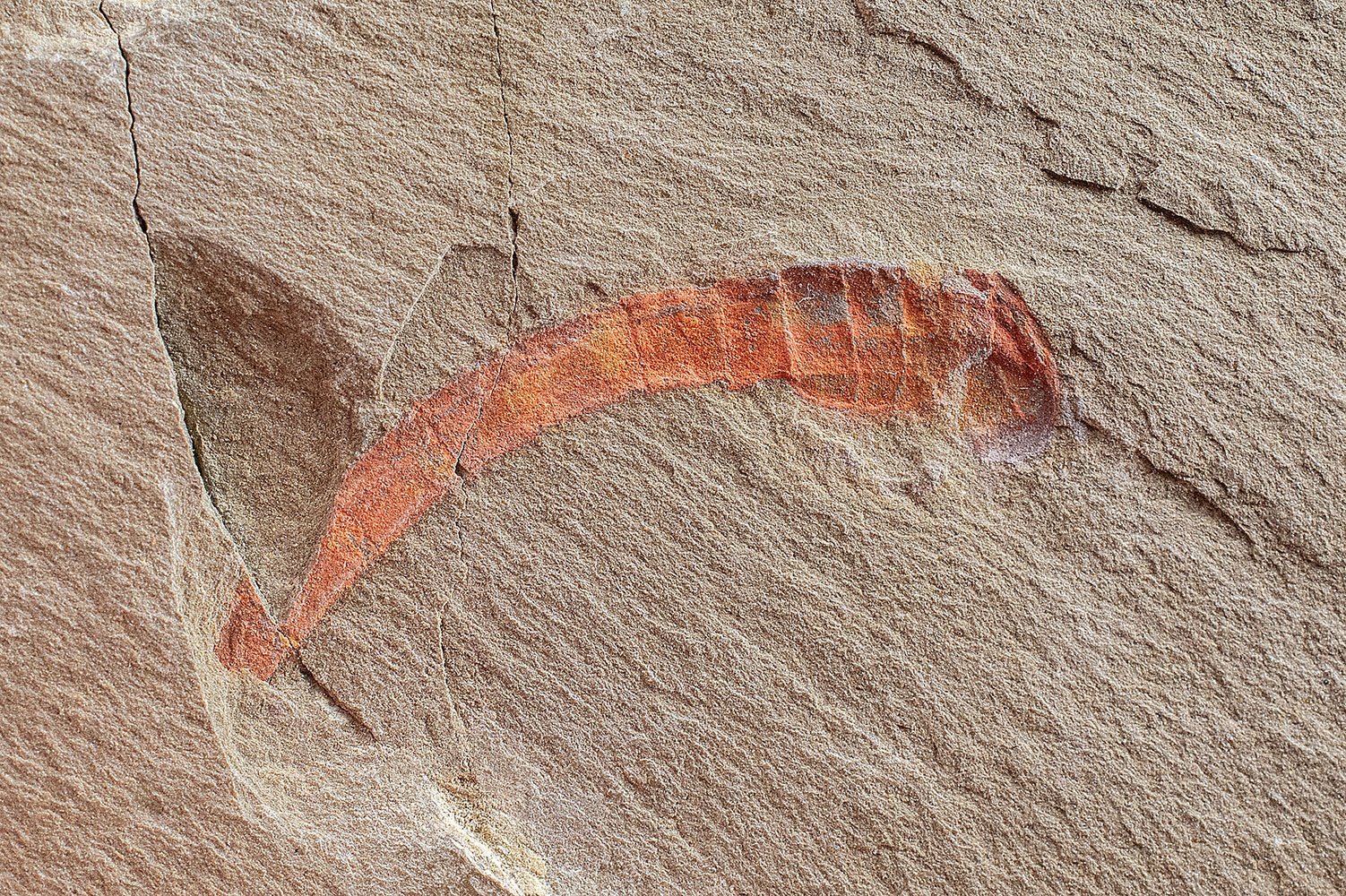
Undescribed Chasmataspid
Ordovician
Upper Fezouata Formation
Zagora, Draa Valley Morocco.
27mm arthropod on 70mm slab
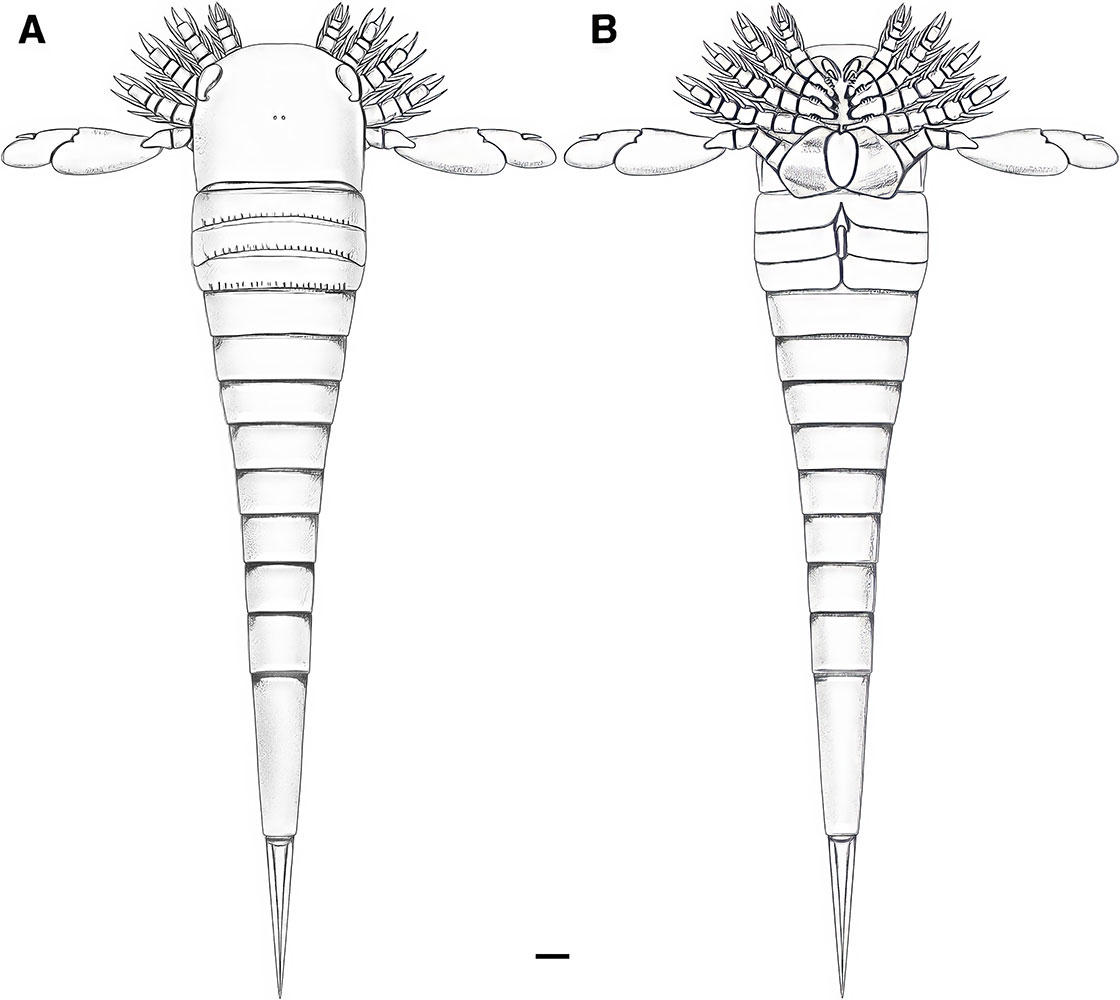
A chasmataspid is an extinct type of Paleozoic arthropod that Is part of the chelicerate lineage — the same broader group that includes horseshoe crabs, sea spiders, and arachnids. They lived from the Middle Ordovician to the Devonian (roughly 470–360 million years ago) and are generally considered to be close relatives of eurypterids (sea scorpions). Chasmataspids are sometimes seen as an intermediate form between eurypterids and xiphosurans (horseshoe crabs), though their exact evolutionary placement is still debated.
The body is divided into two main tagmata (sections), the Prosoma (head–thorax region) covered by a single large carapace and the Opisthosoma (abdomen), which is further divided into a short anterior portion (preabdomen) and a long segmented posterior portion (postabdomen/telson-bearing tail). Like other chelicerates, they had chelicerae (small pincer-like mouthparts) and walking/swimming legs and often a long, spike-like telson, sometimes resembling that of horseshoe crabs.